New City Trenchless explains why a firm sewer price should not be given before anyone looks inside the pipe. A lateral under a New City ranch built in 1958 and one under a Nyack house built in 1890 can be two different jobs at two different numbers. Below are estimated ranges by method, the factors that move a quote and a way to compare two proposals.
What Each Method Costs
| Work | Typical range |
|---|---|
| Sewer camera inspection | $250 to $500, often credited against the repair |
| Sectional spot repair | $1,500 to $4,000 |
| Full lateral CIPP lining | $4,000 to $12,000 |
| Pipe bursting replacement | $6,000 to $15,000 |
| Open cut, same line | Often 1.5x to 2x the trenchless price once excavation and landscape repair are counted |
Those are residential ranges for a typical Rockland County lateral. Long commercial runs, shared laterals in multi-family buildings and work that reaches into the public way are scoped on their own. The detail behind each figure sits on the sewer repair cost page.
Notice the spread inside each row. Lining is not a single price, it is a band roughly three times wide from bottom to top, and the rest of this article is about what moves you within that band.
Why Nobody Can Quote This Over the Phone
Four unknowns control the price and none of them are visible from the curb: how long the run is, how deep it sits, what the pipe is made of, and how you get to it. A contractor who names a firm figure on the phone is either quoting the top of the range to protect himself or quoting the bottom to win the appointment.
A sewer camera inspection resolves all four in about an hour. The camera reports the defects and their distance from the access point, and a locating sonde puts a mark on the ground with a depth reading. That $250 to $500 is the cheapest line item in this whole article and it controls every other one.
Length, Depth and Where the Defect Sits
Length
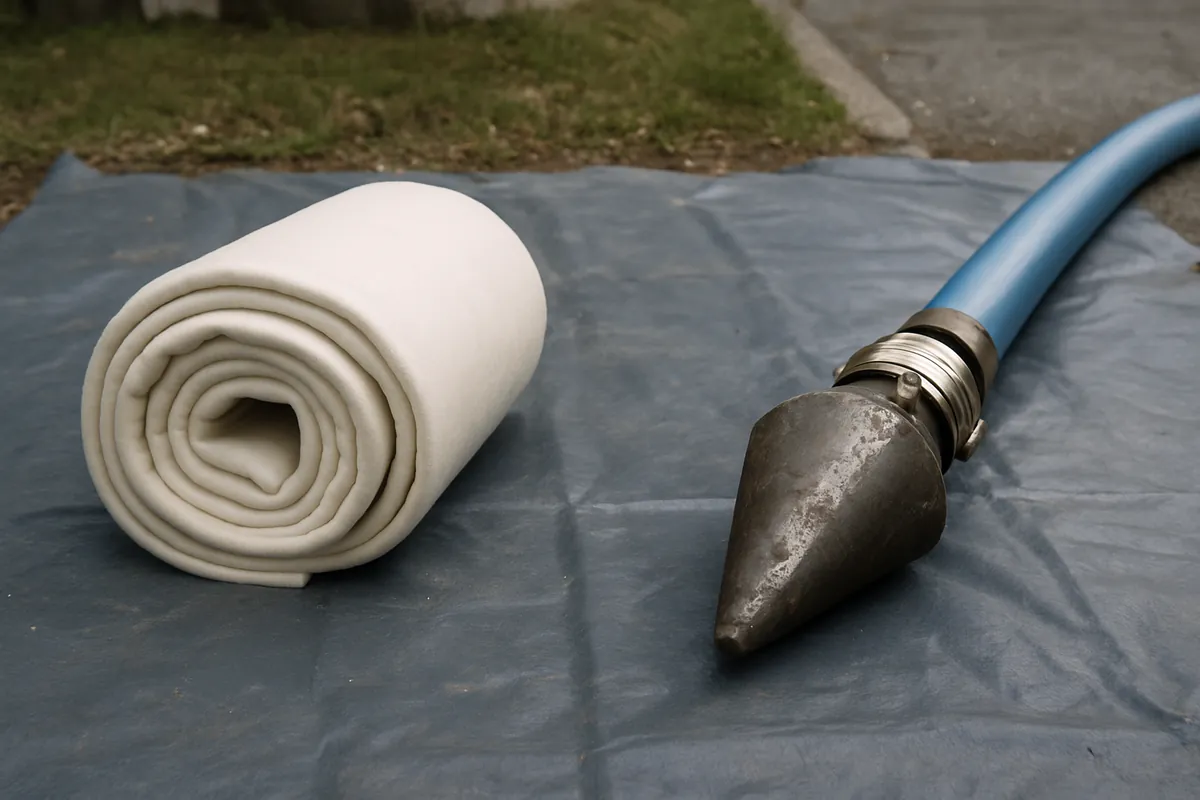
Lining is priced substantially by the foot. More run means more felt tube, more resin, longer cure time. On a bursting job it means more pulling distance and a bigger pull-back rig. A short lateral on a tight lot near the street in Spring Valley and a long run from a house set well back off the road are not comparable jobs even if both pipes failed the same way.
Depth
Vertical feet cost more than horizontal ones. A deep access pit needs shoring, more machine time and more spoil handling, and in Rockland the low-lying river blocks can put groundwater in that pit before the crew reaches pipe. Depth also decides whether an existing cleanout is usable or whether a new pit has to be opened.
Where the defect sits
One crack at 15 feet is a different job from one crack at 70 feet, because the second one is under whatever you built in between. Position along the run is often the single biggest surprise in a quote.
Pipe Material Sets the Method
Vitrified clay
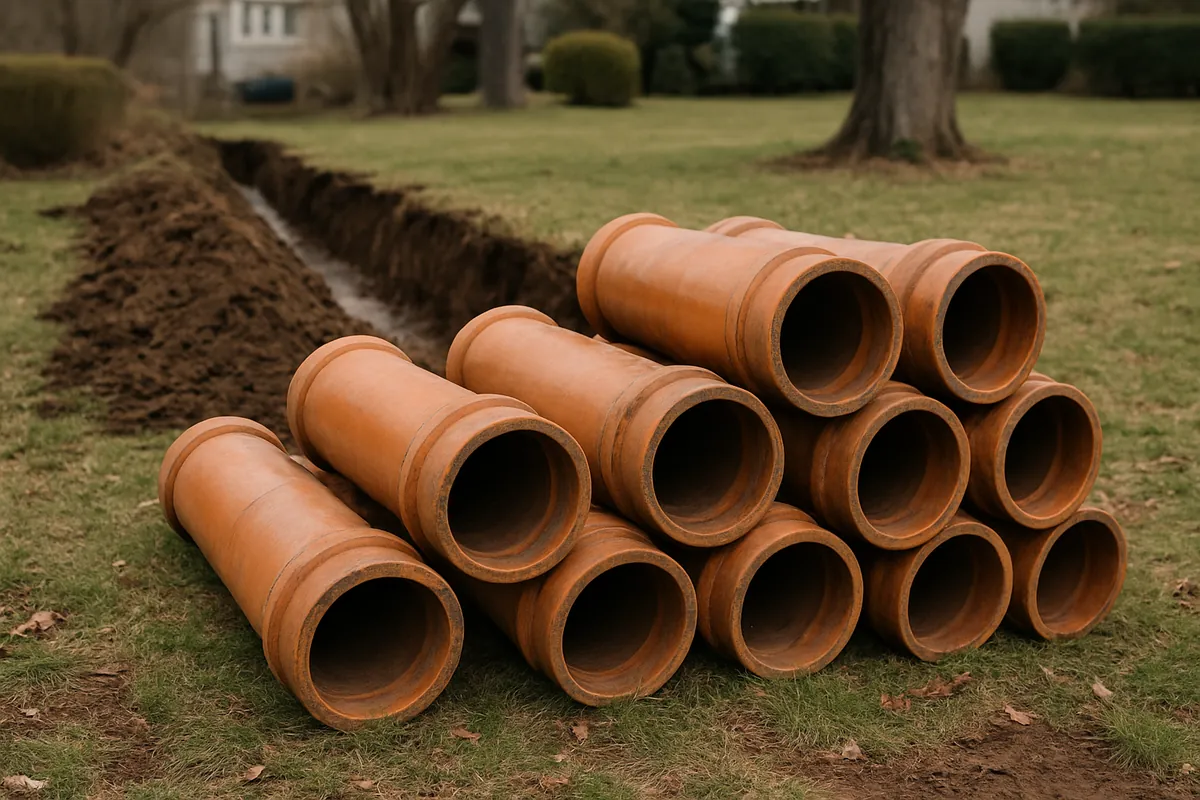
Clay tile laterals are common under the postwar tract housing that filled Nanuet, Bardonia, Congers and New City after the Tappan Zee Bridge opened in 1955. Clay is brittle and its short sections leave a joint every few feet, which is where roots get in, but a clay pipe that is still round is an excellent host for a liner. These are usually the most affordable full-lateral jobs.
Orangeburg
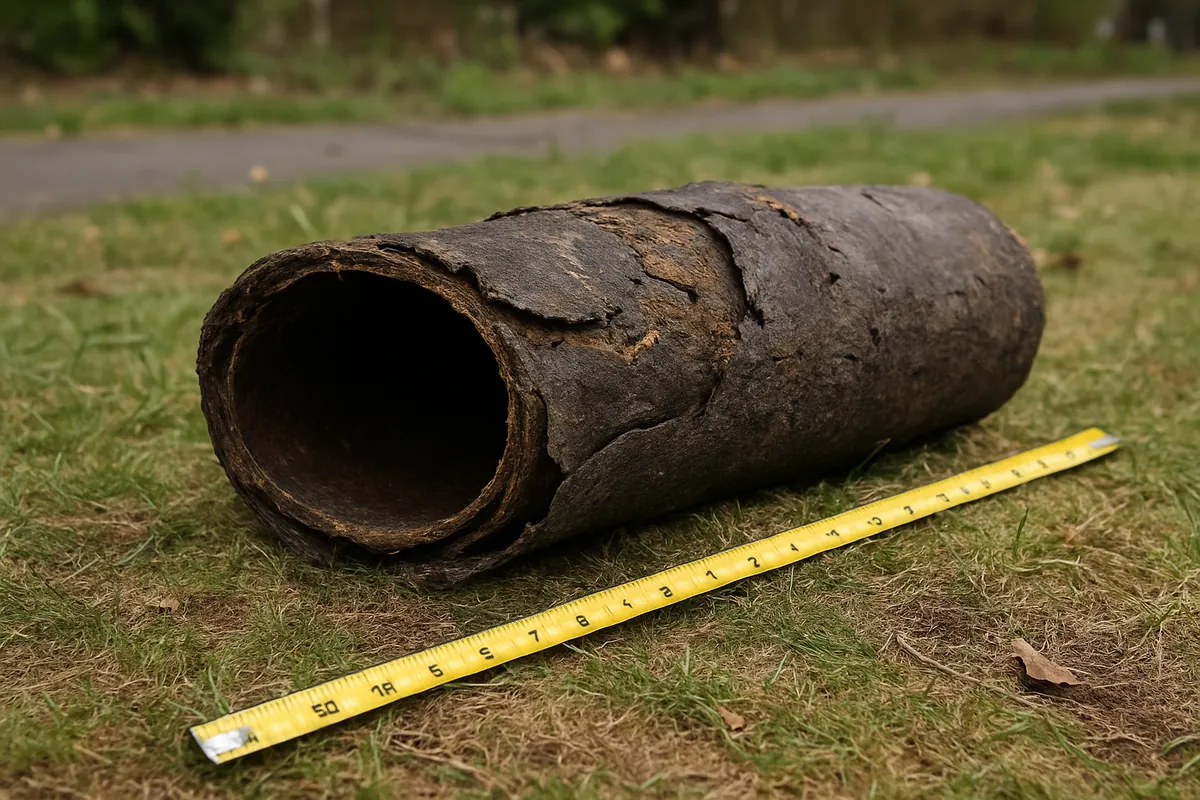
Bituminized fiber pipe was manufactured in Orangeburg, New York, roughly ten miles from New City, and went into laterals across this county between 1945 and 1972. It is essentially tar-impregnated wood pulp wound into a tube. It delaminates from the inside and deforms out of round under soil load, and once it has gone oval it cannot hold a liner, because there is no stable host pipe left to line against. That pushes the job to pipe bursting and toward the upper part of the range, and it is the most common reason a Rockland quote lands higher than the homeowner expected.
Cast iron
Cast iron scales internally as it corrodes, and that scale has to be cut back to bare wall by descaling and jetting before an epoxy liner will bond. That prep is real labor and it shows up in the number. Cast iron that has rotted through the bottom of the pipe, the classic channeling failure, is past lining entirely.
Access, Permits and Where Your Responsibility Ends
An existing two-way cleanout can eliminate a pit and take a meaningful chunk out of a quote. No cleanout means cutting one in or opening an access pit, and that is a fixed cost that lands on small jobs and large ones alike.
The other question is where your pipe stops being your pipe. Rockland County Sewer District No. 1 maintains the collection mains, and you can confirm district boundaries and contacts through Rockland County’s own site. The lateral from your house to the tap at that main is yours, including the length of it that runs under the street. Work that reaches the tap typically needs a road opening permit from your town or village, sometimes traffic control, and that package can add materially to a quote through no fault of the contractor. Ask whether permit and restoration costs are in the number or excluded from it.
Trenchless Against Open Cut on Total Cost
The open cut multiplier surprises people, because digging sounds like the basic, cheap option. The excavation is only part of what you buy.
Replacing a lateral in an open trench also means removing and rebuilding whatever sits above the pipe. On the mature lots typical of this county that list gets expensive fast: a paver walkway, a driveway apron, a retaining wall, a sprinkler zone, forty years of plantings, then regrading and reseeding the whole trench line. Freeze-thaw cycling then works on the backfill for the next several winters, and a trench line that was not compacted properly settles into a visible trough across the lawn.
| Cost element | Trenchless | Open cut |
|---|---|---|
| Pipe work | Liner or HDPE pull | New PVC in trench |
| Excavation | One or two small pits | Full trench along the run |
| Driveway or patio above the line | Usually untouched | Removed and rebuilt |
| Landscape restoration | Minimal | Regrade, reseed, replant |
| Time on site | Often one to two days | Typically longer |
That restoration column is why the same functional result costs 1.5x to 2x more when you dig for it. It is also why open cut still wins occasionally: a shallow failure ten feet outside the foundation, in a bare side yard, with no cleanout anywhere, can be cheaper to dig than to line. An honest contractor will tell you when that is your situation. Trenchless pipe lining is a tool, not a religion.
How to Compare Two Quotes Fairly
Two bids on the same house should be within a sensible distance of each other. When they are thousands apart, the usual cause is that they describe different work. Force both onto the same footing:
- Footage and method. How many feet, lined or burst, from where to where.
- What happens at the tap. Does the work reach the main connection or stop at the property line.
- Access. Cleanout included or extra. Number of pits.
- Permits and restoration. In the price or excluded.
- Post-work verification. A camera pass after the job, with footage handed to you.
Ask both contractors to code the defects they are pricing. Inspection reports written to the standard maintained by NASSCO describe each defect in a format any other contractor can read, which makes a second opinion meaningful instead of a coin flip. Repair methods themselves are covered by published standards through bodies like ASTM, so asking which standard a liner is installed to is a fair question, not an insult.
It also helps to remember what this is part of. Buried wastewater infrastructure across the country is aging out at the same time, as the national infrastructure report card tracks year after year, and private laterals are the least documented part of it. Nobody is coming to fix yours. Whether you are in Nanuet or up in Nyack, that pipe is on you.
Your Next Step
Get the line on camera before you get quotes, not after. A $250 to $500 inspection gives you footage, a defect list, a measured depth and a locate mark on the ground, and that package is what makes every number that follows comparable and defensible. Bring it to two contractors and let them price the same documented pipe. Then decide.
Related Rockland County Sewer Guides
Compare CIPP lining with pipe bursting, check the permit process for sewer work, and confirm where homeowner responsibility ends.
Common Questions
How much does it cost to replace a sewer line in Rockland County?
Full lateral CIPP lining typically runs $4,000 to $12,000 and pipe bursting replacement runs $6,000 to $15,000. Open cut of the same line is often 1.5x to 2x the trenchless price once excavation, pavement and landscape restoration are counted. A camera inspection at $250 to $500 is what turns those ranges into one number.
Why does the camera inspection cost money if I already know the line is broken?
Knowing it is broken does not tell anyone what to do about it. The footage establishes length, depth, material, the number of defects and whether the pipe can host a liner at all. That is the difference between a $1,500 spot repair and a $15,000 bursting pull. The fee is often credited against the repair.
Is a spot repair ever the wrong choice even though it is cheapest?
Yes. A sectional repair at $1,500 to $4,000 only makes sense when the rest of the run is sound. On a 1950s Orangeburg lateral that has gone oval along its whole length, patching one section buys you months and you pay for mobilization twice. The camera pass is what separates the two cases.
Does Rockland County pay for any of this?
No. Rockland County Sewer District No. 1 maintains the mains in the street. The lateral running from your house out to the tap is the homeowner's pipe and the homeowner's bill, including the portion that sits under the public right of way in most cases.
Why are two quotes for the same house thousands of dollars apart?
Usually because they are not quoting the same work. One may be lining 40 feet and the other replacing 80. One may include a cleanout, restoration and permits, the other may not. Get both to state footage, method, what happens at the tap and what restoration is included, then compare.