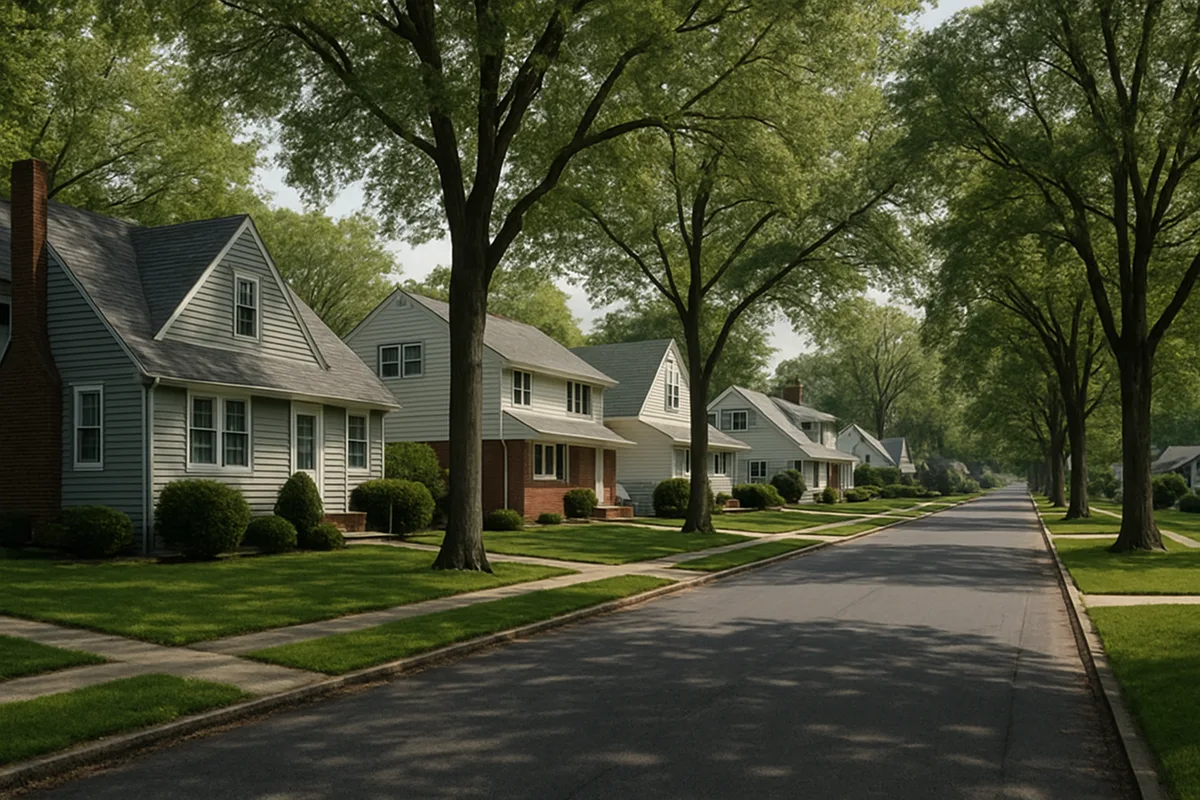
New City Trenchless covers cast iron restoration from the inside: mechanical descaling back to bare metal, then a structural liner cured in place under the slabs and basement floors of Rockland County’s 1950s and 60s ranches and split-levels. Cast iron drain lines often run 50 to 75 years in typical service, which puts many original installations in this county at or beyond that range.
How Cast Iron Fails from the Inside Out
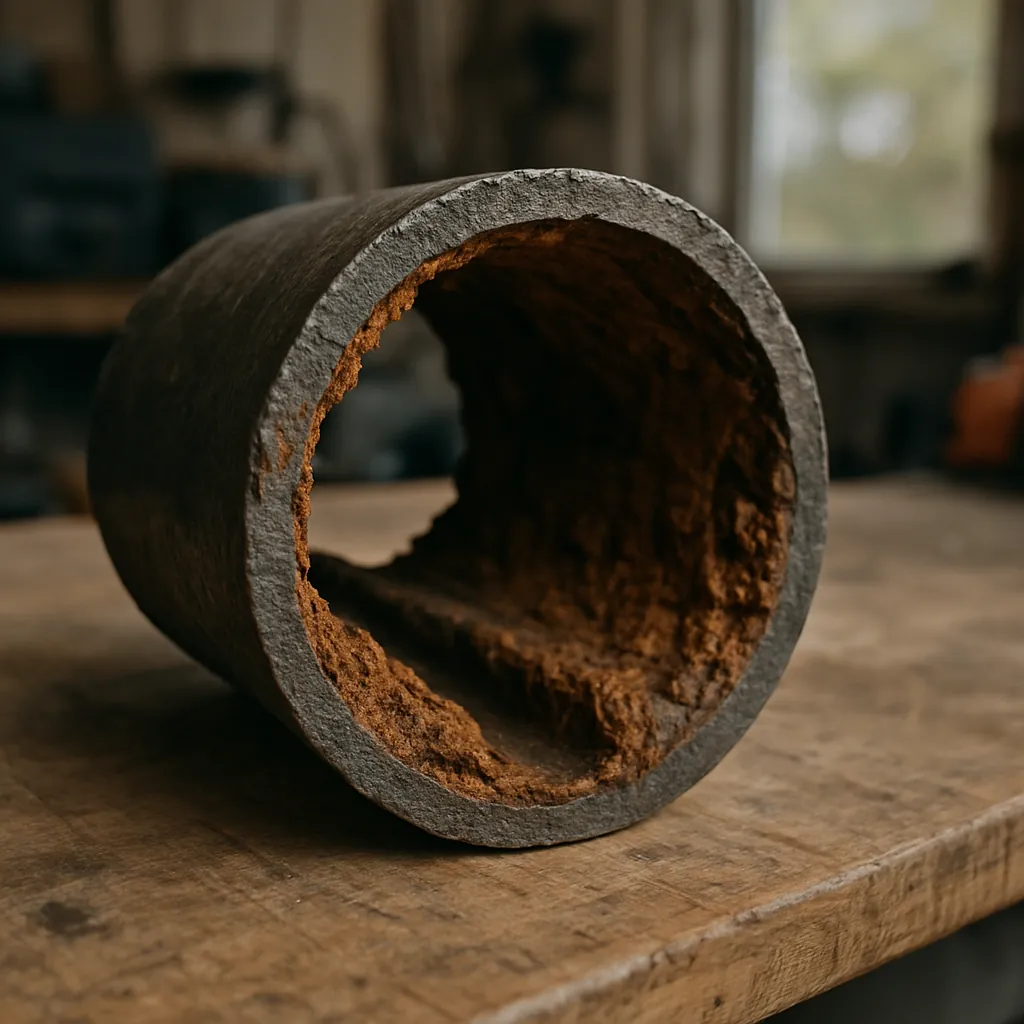
Cast iron rarely announces failure with a single break. It corrodes along three fronts at once. Scale buildup, called tuberculation, grows rust nodules that narrow the bore, snag paper and feed recurring grease blockage. Channeling erodes the invert, the bottom of the pipe where water actually runs, until a groove and eventually an open trench forms in the pipe floor. Graphitic corrosion is the quiet one: it leaches the iron out of the wall and leaves a soft graphite shell that photographs as sound pipe but can be pushed through with hand pressure. Meanwhile the bell-and-spigot joints, packed with lead and oakum when the house was built, loosen with decades of movement and admit root intrusion and groundwater infiltration at the hubs.
Those loose hubs matter beyond your basement. Groundwater entering a private drain becomes flow the treatment plant has to handle, which is the infiltration side of the problem regulated under the EPA’s NPDES program. On a Hudson slope lot or in a low-lying river village with a high water table, a corroded hub below the water line takes on clear water every wet week of the year.
Descaling Is Most of the Job
A liner bonded to scale is a liner waiting to delaminate, so every cast iron job starts with the wall, not the resin. Chain-fitted mechanical cutters knock the tuberculation off, hydro jetter passes flush the debris out, and the CCTV camera confirms bare metal end to end before anything else happens. Tooling and pressure get dialed back wherever footage shows thin, graphitized wall, because the point is to clean the pipe, not breach it. On a heavily scaled line, descaling takes longer than the lining itself, and that is where the labor hours go.
The tooling is matched to the pipe. Flexible-shaft chain knockers with carbide or steel chain flails sized to the pipe inside diameter do the bulk removal, a rotating cutter head follows on stubborn nodules, and residential jetting in the 3,000 to 4,000 psi range clears what the chains break loose. The camera goes back in between passes rather than only at the end, because the difference between clean metal and a thin polished layer of scale is visible on screen and invisible to the operator holding the machine.
What Goes Inside: Tube, Resin and Cure
The liner is a felt or fiberglass tube saturated with a two-part resin, inverted or pulled into the cleaned host pipe, inflated against the wall and cured hard. Cured in place it is a standalone structural pipe under ASTM F1216, not a coating, which is why it survives a host pipe that has already lost its invert. Wall thickness is a design number, driven by pipe diameter, depth of cover and whether the liner has to stand alone or only resist infiltration.
| Cure method | How it works | Where it fits |
|---|---|---|
| Ambient | Resin cures at pipe and ground temperature over several hours | Short sectional repairs, mild conditions |
| Hot water recirculation | Heated water is circulated through the inflated tube | Full laterals, cold Rockland ground |
| Steam | Steam brings the tube to cure temperature faster than water | Longer runs, tighter occupancy schedules |
| UV light train | An LED train is drawn through a glass-fiber liner | Larger diameters, mostly commercial work |
Cold soil slows an ambient cure, which is the practical reason winter jobs here lean on hot water or steam. The finished liner has no joints along its length, so the hub-by-hub root entry that defined the old iron system has nowhere left to start.
Under-Slab Cast Iron Without Breaking the Slab
Mid-century Rockland homes typically run their drains below the basement slab, often through a house trap buried under the floor. Replacing that pipe from above means saw-cutting finished floors, jackhammering and re-pouring. Lining runs through existing cleanouts and roof vents instead, and the epoxy liner cures against the old iron with the slab untouched. Many of these systems also change material at the foundation wall, cast iron under the house and vitrified clay pipe from there to the sewer main. A single liner can carry straight through that transition joint, a common leak point, without a separate repair. Slab-depth work has its own page at sewer repair under slab.
Access is the real constraint under a slab, not the resin. If the house has no cleanout, or only a buried one, the roof vent stack becomes the launch point, and the run has to be walked on camera first to confirm the tube can negotiate every fitting between the entry and the far end.
Diameters, Bends and Branch Reinstatement
Residential cast iron in these houses is usually two inch for branch waste, three inch for stacks and four inch for the building drain and lateral, and the method changes with the size. Tight two inch branches with multiple fittings are epoxy coating territory rather than structural lining. Three and four inch runs take a full structural tube. Long sweeps and combination wye fittings are fine for a liner to pass; a hard ninety at the foot of a stack is the fitting that decides whether a run can be lined end to end or has to be broken into two shots.
Where the new liner crosses live branch connections, a robotic reinstatement cutter reopens each wye from inside, and the camera verifies the opening is full width rather than a pinhole. That step is the difference between a lined main run and a laundry line that now drains into a closed wall.
When Lining Works and When the Iron Is Too Far Gone
The host pipe only has to do one thing: hold its shape as a mold while the liner cures. A channeled floor or even a missing invert is linable, because the cured liner bridges the gap and becomes the new pipe. A collapsed section is not; that segment gets pipe bursting or a short excavation, and the sound remainder is lined or fitted with a sectional point repair. The call comes off PACP defect grading of the camera footage, joint by joint, not off a guess at the curb. In the pre-1940 housing of Nyack and the older river villages, it is common to find cast iron inside the house feeding clay outside it, with two different repair answers on one property.
Living With a Lined Cast Iron Drain
The lined pipe behaves differently from the iron it replaced, and that changes maintenance. Tuberculation cannot grow on a cured resin wall, so the annual scale-and-grease cleanings that these houses accumulate usually stop being necessary. Jetting is still available for grease, but at controlled pressure and with a nozzle chosen for a lined pipe rather than for scaled metal. A camera pass a year after the work confirms the liner is tight at the terminations and the reinstated branches are still full bore, which is the only follow-up most of these lines need.
Cast Iron Pipe Lining Cost in New City
| Job | Typical range |
|---|---|
| Camera inspection and PACP grading | $250 to $500, often credited against the work |
| Sectional repair of one failed segment | $1,500 to $4,000 |
| Full lateral lining, descaling included | $4,000 to $12,000 |
Heavy tuberculation pushes a job toward the top of the lining range through descaling hours, not materials. Getting the camera in is the cheap step that prices everything else, and on a finished basement it is also the step that decides whether the floor has to come up at all.
Frequently Asked Questions
Do you have to descale cast iron before lining it?
Yes, always. A liner bonded over scale delaminates. Mechanical descaling and hydro jetting bring the wall back to bare metal, verified on camera, before any resin goes in.
How much does cast iron pipe lining cost in New City?
A full lateral runs $4,000 to $12,000 including descaling, a sectional repair of one segment $1,500 to $4,000, and the camera inspection $250 to $500, often credited against the work.
Can badly channeled cast iron still be lined?
Usually yes. As long as the pipe holds its shape, the cured liner bridges a missing invert and becomes the new structural pipe. Collapsed sections are the exception and get burst or excavated.
Can you line cast iron under a slab without breaking the floor?
Yes. The liner installs through existing cleanouts and roof vents, so basement slabs and finished floors stay intact.
How long does cast iron drain pipe last?
Typical service life is 50 to 75 years. Most Rockland County cast iron went in during the 1950s and 60s, so original lines are now at or past that range.
Does lining make the drain smaller?
The liner takes up a few millimeters of wall, but it replaces a rough, tuberculated surface with a smooth one. Flow through a lined pipe is usually better than flow through the scaled iron it replaced, which is why capacity complaints after lining are rare.