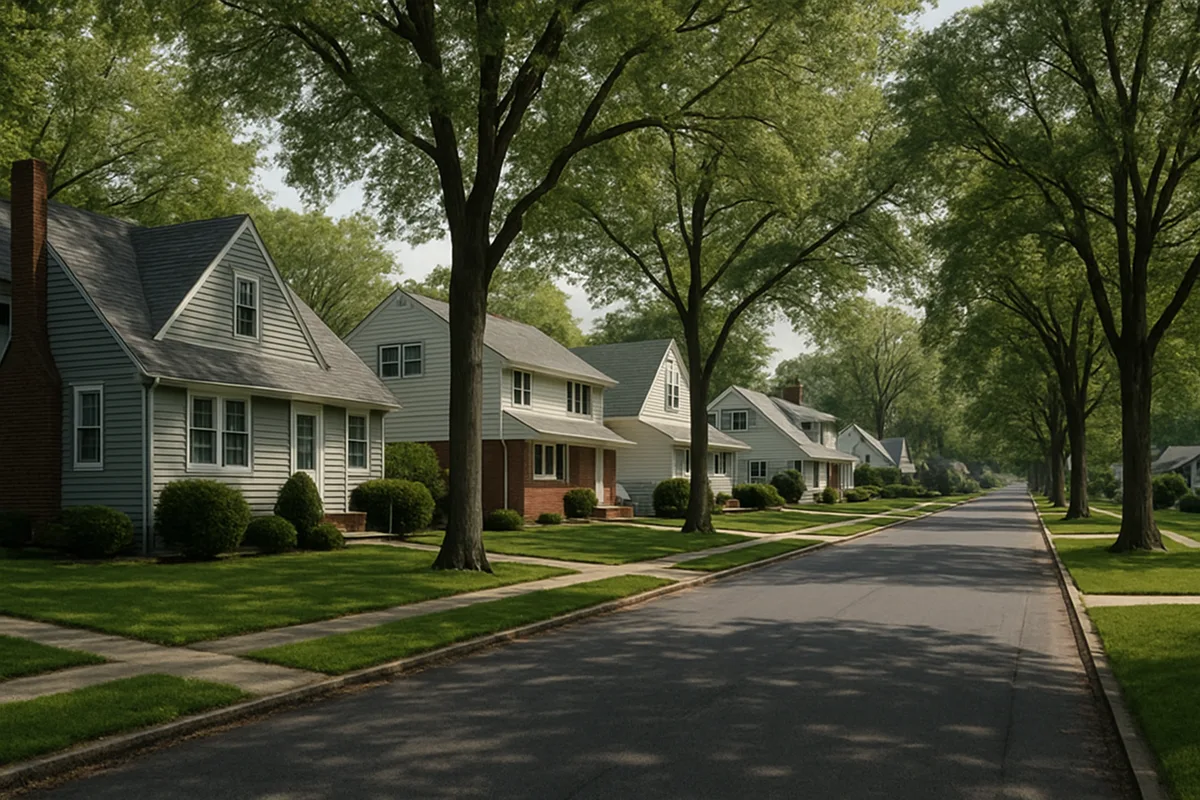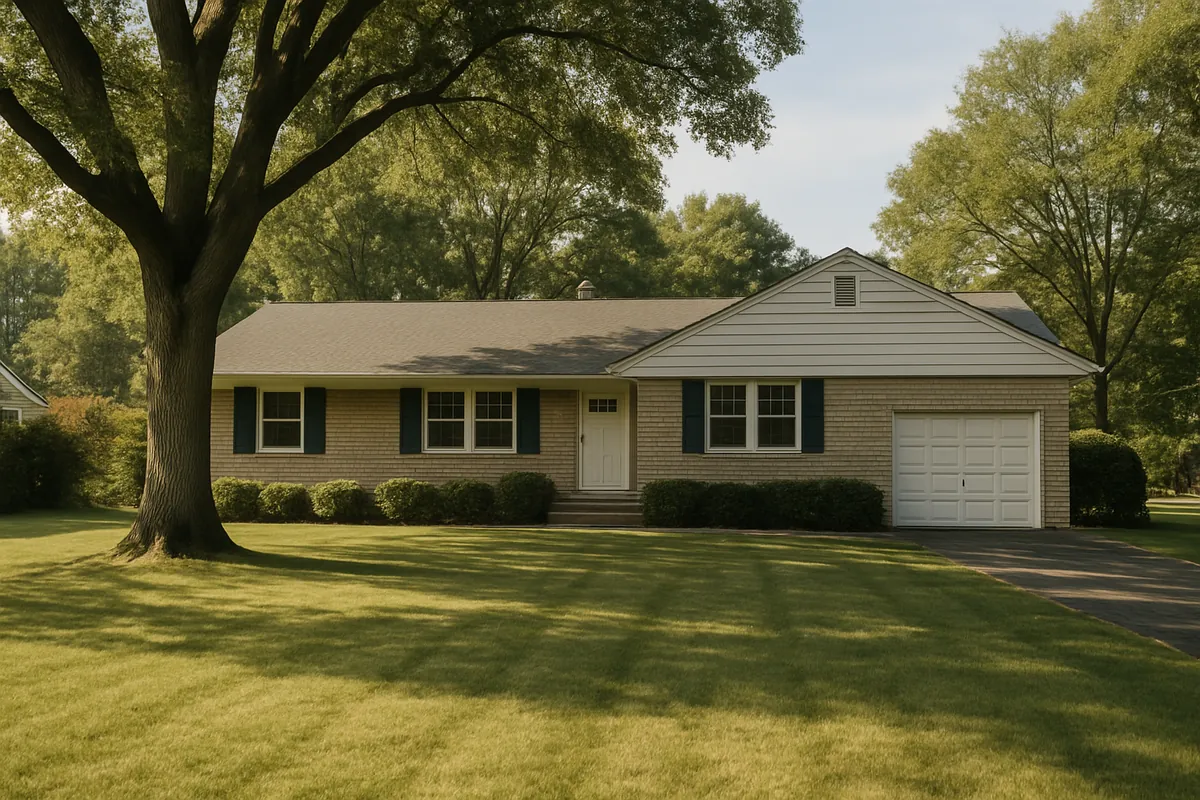
New City Trenchless covers trenchless sewer repair for Wesley Hills, a village of roughly 5,900 residents on open, flat tract ground between Monsey and New Hempstead in the Town of Ramapo. The housing stock here went up quickly during the postwar building boom, and the clay laterals buried under those lawns are now old enough that the mature street trees planted alongside the same construction have grown roots straight down to the pipe. That pairing, tree age and pipe age moving together, is the defining pattern behind sewer calls in this village.
A Postwar Tract Village Between Two Different Neighbors
Wesley Hills sits on flatter, more uniform ground than the wooded hill country closer to Suffern and Montebello, and the ranch and split-level construction that filled it in during the 1950s and 60s followed a standard builder’s layout: a single bathroom, one kitchen, a four-inch clay lateral run at a modest grade out to the street. Monsey, just to the west, shares that same building era but has since been reshaped by additions and expanded households that outgrew the original pipe sizing. New Hempstead, bordering to the south, shares the same clay-and-Orangeburg material questions on a similarly cautious, evidence-first basis.
Wesley Hills’ own pattern is different from both. Most homes here have stayed closer to their original footprint, and the fixture load most laterals carry has not grown the way it has on Monsey’s expanded ranches. What has grown, every year, is the root system of the trees the original developer planted along the same streets the pipe runs under.
Why Clay Joints, Not the Pipe Itself, Fail First
Vitrified clay tile is a rigid, durable material in its own right. It was laid in three- to four-foot sections, each one sealed to the next with a mortared or compression joint, and the pipe body itself rarely cracks under normal soil load. The joints are a different story. Ground movement, frost cycling and decades of settling gradually open a hairline gap at each joint, and that gap becomes the weak point in an otherwise sound run.
A hairline joint gap does two things at once. It lets a small amount of groundwater seep into the pipe, and it gives off exactly the moisture and nutrient signal a nearby root is drawn toward. Once a root tip finds that gap, it threads through as a fine hair, then thickens into a mass once it is inside a warm, nutrient-rich, slow-moving pipe. The joint did not fail because the pipe was defective. It failed because forty or more years is a long time for any mortared seam to hold against a determined root.
Street Trees Planted With the Tract, Roots Grown With Them
What makes Wesley Hills distinct from a mixed-age neighborhood is timing. The maples and oaks lining most of the village’s streets were planted as part of the same tract development that buried the clay laterals beneath the lawns, which means the trees and the pipe have been aging on the same clock for the same number of decades. A root system reaches a meaningful size and a meaningful reach at a fairly predictable point in a tree’s life, and across a block built in the same year or two, that point tends to arrive for every tree, and every lateral, at close to the same time.
That is the reason backups in this village often cluster by street and by decade rather than showing up as isolated, random events. A homeowner who has never had a sewer problem can suddenly join several neighbors reporting the same symptom within a year or two of each other, simply because the trees on that block all crossed the same root-reach threshold around the same time.
When Root Backups Tend to Show Up
| Time of year | What tends to happen | Why |
|---|---|---|
| Late spring into summer | First slow drains or gurgling after root growth resumes | Trees push new root growth hardest in the warmer, wetter months |
| Late summer dry spells | Sudden backup after weeks of no symptoms | Trees draw harder on any available underground moisture source, including a leaking joint |
| Late fall | A second seasonal uptick before dormancy | A final growth push before colder soil slows root activity |
| Winter | Symptoms usually quiet down | Root growth slows with soil temperature, though an already-established mass can still catch debris |
That pattern is a reason to get ahead of a known problem before the next growing season, not a reason to wait for the next backup to confirm it.
Flat Lawns Make Trenchless Access Simple
Unlike a wooded, sloped lot, a Wesley Hills tract lawn is usually flat, open and free of retaining walls or dramatic grade change, which keeps trenchless access about as straightforward as it gets in this part of Rockland County. A locating sonde run with the camera still confirms the exact path and depth, but it rarely turns up the kind of elevation surprise a hillside lot produces.
Trenchless pipe lining needs only two small pits, one near the foundation and one near the tap at the street main, and on flat, open ground those pits are quick to place and quick to restore afterward. The simplicity of the lawn is one of the few things working in a homeowner’s favor once a root problem is confirmed.
From Camera to a Sealed Joint
Every Wesley Hills job starts with a sewer camera inspection, which shows exactly which joints have opened, how far the roots have grown into the line, and whether the clay pipe itself still holds a round, lineable shape. Hydro jetting with a rotary cutting head clears the root mass back to bare pipe wall ahead of that inspection or the repair that follows, since a camera pass against root-fouled pipe can miss a joint defect the jetter would otherwise expose.
From there, sewer line repair and replacement covers the decision. A single open joint on an otherwise sound run is a sectional spot repair. A run with several root-affected joints along its length is a strong candidate for trenchless pipe lining, which seals every joint in the pipe at once and removes every entry point a root could use, rather than sealing one joint while leaving the next one open for next year’s growth. A clay section that has cracked, collapsed or gone out of round from long-term root pressure moves to pipe bursting instead, replacing the run outright through the same two small pits.
Wesley Hills Among Its Ramapo Neighbors
Wesley Hills falls under Rockland County Sewer District No. 1 along with the rest of the Town of Ramapo, which maintains the mains under its streets while the private lateral remains the homeowner’s responsibility from the foundation to the tap connection. The flat, open tract pattern here sits in contrast to the wooded, graded lots of Montebello a short drive west, even though both villages share the same county main system and the same Ramapo-wide ownership rule.
To the west, Monsey shares Wesley Hills’ postwar clay-lateral stock but carries a different problem, laterals outgrown by expanded households rather than roots alone. To the south, New Hempstead covers a similarly careful, camera-first approach to clay and Orangeburg questions on its own streets. East of the village, Hillcrest shares the same postwar clay-and-Orangeburg lateral mix on noticeably tighter lot lines. A camera inspection remains the fastest way to confirm which pattern, root intrusion, fixture overload, or something else entirely, actually applies to a given Wesley Hills lateral.
Frequently Asked Questions
Why do so many houses on the same Wesley Hills street seem to have root problems at once?
Because the street trees and the clay laterals under the lawns usually went in during the same tract build-out, their ages track together block by block. A root system that reaches the joint depth on one property is often at the same stage a few doors down, which is why neighbors on the same street tend to report backups within the same year or two rather than at random.
Is cast iron or Orangeburg common under Wesley Hills homes?
Less so than clay. The village's ranches and split levels were mostly plumbed in vitrified clay tile during the postwar building boom, and while an occasional Orangeburg stub or cast-iron drain line turns up on an individual property, a camera inspection here most often finds clay joints as the issue, not pipe material failure.
Will cutting the roots out permanently fix the backup?
Usually not by itself. A jetter's rotary head shears the root mass back to the pipe wall, but the open joint the root grew through is still open afterward, so a new root tip finds the same spot within a season or two. Sealing the joint, not just clearing the root, is what stops the cycle.
My lawn is flat and open. Does that make the repair easier?
It generally does. Wesley Hills' tract lots are flatter and more uniform than the wooded, sloped ground found closer to the Ramapo hills, so locating the lateral and placing the two small access pits trenchless work needs is usually straightforward, without the elevation surprises a hillside lot can produce.
Is my lateral my responsibility or the Town of Ramapo's?
The main under the street is maintained by Rockland County Sewer District No. 1, which serves Wesley Hills along with the rest of Ramapo. The lateral from your foundation out to the tap connection, tap included, belongs to the homeowner, and that private section is where nearly every residential sewer call in the village actually starts.