New City Trenchless is based in New City, so the hamlet that gives the company its name is also the one it knows best. New City is the seat of Rockland County and the commercial and governmental center of the Town of Clarkstown, which puts it in an odd position for a sewer company: the name on the truck doubles as the name of the town, but the pipe under any given New City lawn is exactly as private, and exactly as old, as the pipe under a lawn in Nanuet or Bardonia a few miles away.
A County Seat Without a County-Run Sewer
New City is unincorporated, which means there is no village hall and no village sewer department here. It is governed as a hamlet within the Town of Clarkstown, the same arrangement that covers Nanuet, Bardonia and West Nyack. What New City does have, clustered along and near South Main Street, is the county’s governmental core: the Rockland County Courthouse, the County Office Building and the legislative chamber all sit within the hamlet. That concentration of public buildings makes New City look like a county seat on paper and feel like a small Rockland hamlet at street level, because the housing around those buildings is ordinary residential stock on ordinary private laterals.
The practical effect for a homeowner is that county seat status buys nothing on sewer maintenance. Civic buildings are serviced on their own commercial connections, and a private house two streets away from the courthouse is maintained exactly the same way a private house in any other Clarkstown hamlet is maintained, lateral by lateral, owner by owner.
Two Build Eras Meet on Main Street
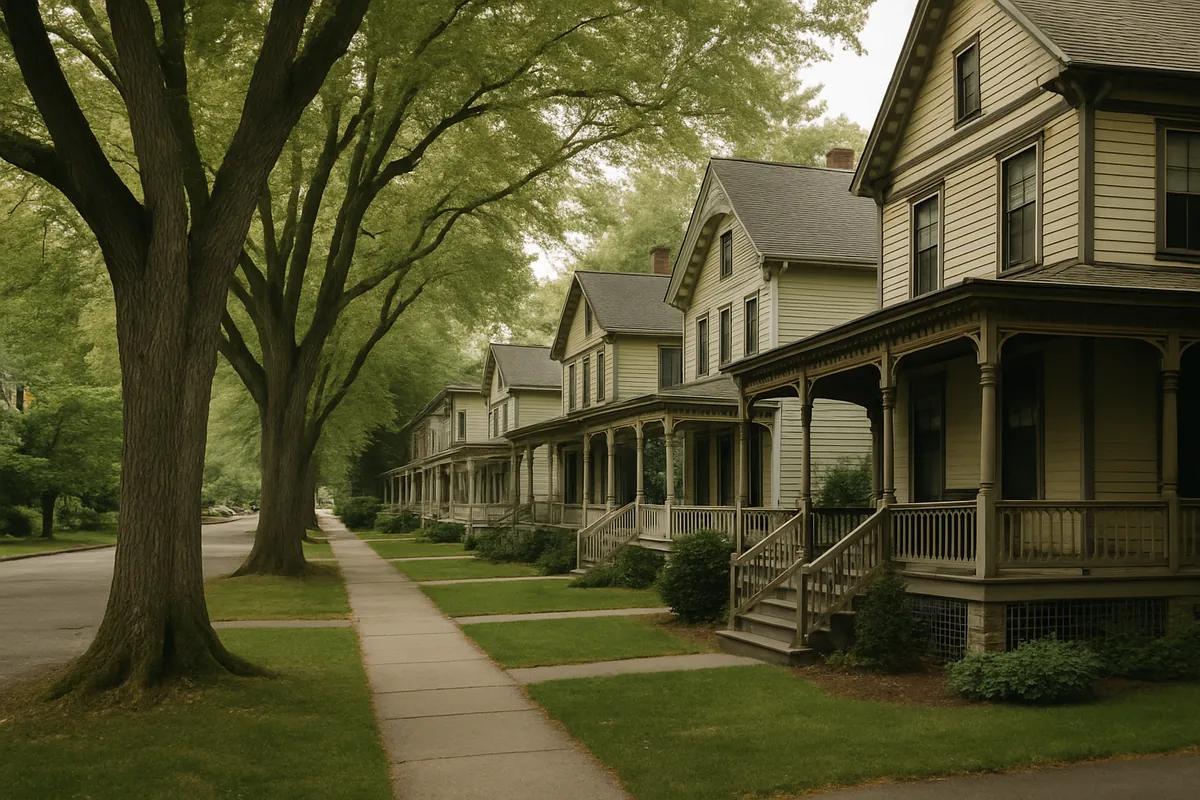
Main Street and South Main Street carry the oldest visible fabric of New City, a core of homes and small commercial buildings that predate the postwar boom and sit closer to how the hamlet looked before the Tappan Zee Bridge opened in 1955 and turned Clarkstown into commuter territory. Laterals under that older core tend to run cast iron from the house to the property line and vitrified clay from there to the main, frequently behind a house trap that was standard practice for the era and now mostly gets in the way of a clean camera pass until it is addressed.
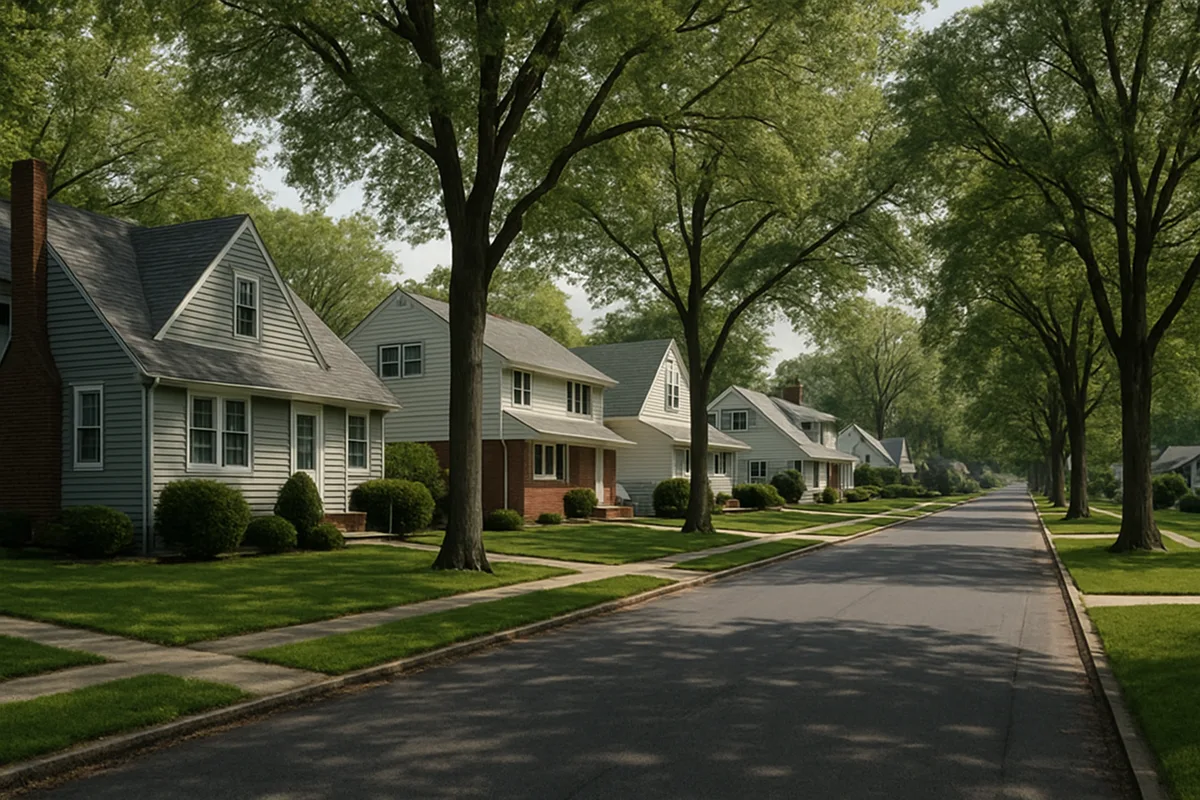
Everything built up around that older core in the fifteen or twenty years after the bridge opened is a different animal underground. Side streets off the Main Street corridor and the subdivisions that filled the land toward Little Tor Road and New Hempstead Road are classic postwar Clarkstown construction, short laterals in clay or bituminized fiber Orangeburg pipe, installed fast during the same build window that produced the tract streets of Nanuet and Bardonia. A New City lateral from this era behaves exactly like its counterparts in those towns: sound until the pipe wall goes oval, then a candidate for bursting rather than lining.
| New City build era | Likely lateral material | What the camera usually shows |
|---|---|---|
| Pre-1950, Main Street core | Cast iron under slab, vitrified clay to street | House trap at the foundation, scale in the iron, open clay joints further out |
| Mid-1950s to late 1960s side streets | Orangeburg fiber, or short clay runs | Oval deformation and delamination in the fiber pipe, root intrusion at clay joints |
| 1970s and later infill | PVC or ABS | Generally sound, occasional settlement belly near a poorly compacted trench |
The Reservoir Edge on the North Side
New City’s northern edge runs toward Lake DeForest, the Hackensack River reservoir that also borders Valley Cottage and Congers. Lots closest to that edge sit on the same kind of saturated, slow-draining ground that makes those neighboring hamlets lean toward pipe bursting rather than an open trench. Away from the reservoir, toward the higher ground near the county office campus, the soil drains better and a lateral is more likely to fail at the joints than from a rising water table.
That split is exactly why a camera inspection matters more here than a blanket assumption about New City as a whole. One end of the hamlet behaves like a wet valley floor, the other behaves like a dry upland street, and the only way to know which description fits a specific lot is to look at the pipe itself.
Reading a New City Lateral on Video
A sewer camera inspection run through an existing cleanout, with defects located and depth-checked by a locating sonde, is the starting point for any New City repair plan. On the Main Street side of the hamlet, that often means clearing a house trap first so the camera can travel past the foundation wall. On the postwar side streets, it more often means confirming whether an Orangeburg lateral is still round enough to line or has already gone oval.
Roots are a near-constant finding wherever clay joints run under mature street trees, which describes a large share of New City regardless of build era. Hydro jetting clears the immediate blockage, but jetting alone does not close the joint the roots came in through, which is why a camera-confirmed root problem usually ends in trenchless pipe lining rather than a repeat cleaning schedule. For the cable-and-jetter side of that work on a New City line, see drain cleaning, or prepare for a drain cleaning visit in New City, NY with guidance on what repeat blockages establish, the visit walkthrough and a blank card for disclosing products already used before the provider opens the line. If sewage is backing up in the house right now rather than draining slowly, start with emergency sewer repair, where the order is relief first and a camera second. If instead clean water is spraying under pressure from a split supply or service line, that is the pressurized version of the same emergency, and burst pipe repair in New City starts by shutting the water before anything else.
Choosing Between Lining and Bursting
Once the camera has a lateral graded, the method decision follows the same logic as everywhere else in the New City Trenchless service area. A line that is still round and structurally sound, with defects limited to open joints or root intrusion, is a candidate for trenchless pipe lining or, on interior cast iron runs near the Main Street core, epoxy pipe lining, which bonds well to older iron and resists the corrosion that originally weakened it. A line that has deformed, whether from decades of soil load on Orangeburg fiber or from a collapsed section of clay, needs Orangeburg pipe replacement or general pipe bursting instead, because a cured liner can only take the shape of the pipe it is pressed against.
Either way, the work runs through one or two small access pits rather than a trench the length of the yard, which matters on the smaller, more established lots near the hamlet center and on the newer side streets alike. For a fuller look at how a job gets scoped from the camera report through the finished repair, see sewer line repair and replacement, or our step-by-step walkthrough of sewer line repair in New City, NY.
Where the District’s Main Starts and Your Lateral Stops
New City drains to Rockland County Sewer District No. 1, the same district that serves Nanuet, Bardonia, West Nyack and most of the rest of Clarkstown. The district owns and maintains the main under the street. The lateral connecting a house to the tap at that main, including the stretch under the front lawn and any stretch under a driveway, belongs to the property owner. That boundary does not shift because the county’s own offices happen to sit nearby, and it is worth confirming before planning any work that reaches the street, since connections at the main are typically coordinated with the town. Restaurants, plazas and multi-tenant buildings around the county seat are a different scope from a single-family lateral; our commercial sewer repair in New City page covers that scope and offers an occupied-property example separating assessment requests, work approval and tenant access.
Being the company’s home hamlet does not change the facts on the ground here. New City’s laterals age and fail on the same schedule as its neighbors’, shaped mostly by when a given block was built rather than by its proximity to the county buildings. Nanuet, West Nyack and Bardonia share the same postwar construction window and the same Sewer District No. 1 boundary, so a camera finding in one of those towns is a reasonable preview of what the same build era looks like on a New City street.
Frequently Asked Questions
New City is the county seat. Does the county maintain my sewer line?
No. The county offices, courthouse and legislative buildings around New City are county property, but the sewer lateral running from your house to the main under your street is yours to maintain, the same as anywhere else in Clarkstown. County seat status changes the skyline, not the ownership line.
How do I know what kind of pipe is under a Main Street-area home?
Build date is the best clue. Homes that predate the 1950s build-out tend to run cast iron under the slab and vitrified clay out to the street, often with a house trap at the foundation wall. Houses from the postwar side streets are more often clay or Orangeburg on a shorter run. A camera inspection through an existing cleanout confirms which one you actually have.
Is the main in my street New City's or Rockland County's?
Most of New City drains to Rockland County Sewer District No. 1, which owns and maintains the main. The hamlet has no separate municipal sewer authority of its own, since New City is unincorporated and governed as part of the Town of Clarkstown.
Does being close to Lake DeForest change anything for sewer work on the north side of town?
It can. Lots near the reservoir's edge tend to hold groundwater closer to the surface than lots farther from it, which is the condition that pushes a job toward pipe bursting instead of a dewatered open-cut trench. A camera inspection with a locating sonde is what actually tells you whether your particular lot behaves that way.
Can an older home near the county offices still get trenchless repair?
Usually, yes. The access point matters more than the house's age. A working cleanout or an accessible vent stack is enough to run a camera and, in most cases, a liner. Where there is no cleanout and only a roof vent or a pulled fixture to work from, that gets added during the same visit so future access is easier.