New City Trenchless covers trenchless sewer repair for Pomona, the Ramapo village of roughly 4,050 residents along the Route 202 corridor in western Rockland County. Pomona’s lots run wooded and often sloped, the housing stock spans mid-century tract construction through later infill, and the laterals underneath split between vitrified clay and pockets of Orangeburg fiber pipe. That combination is why a camera inspection, not a guess from the symptom, decides every method here.
A Route 202 Village on Wooded, Uneven Ground
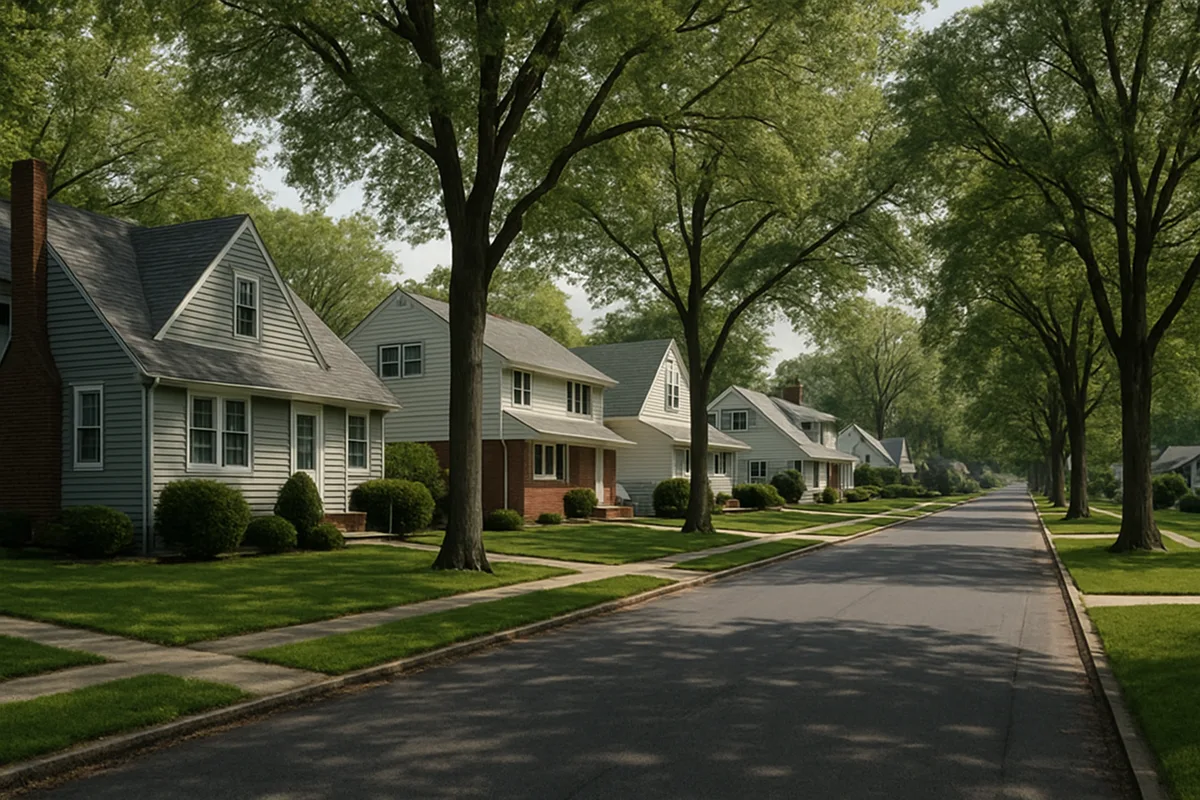
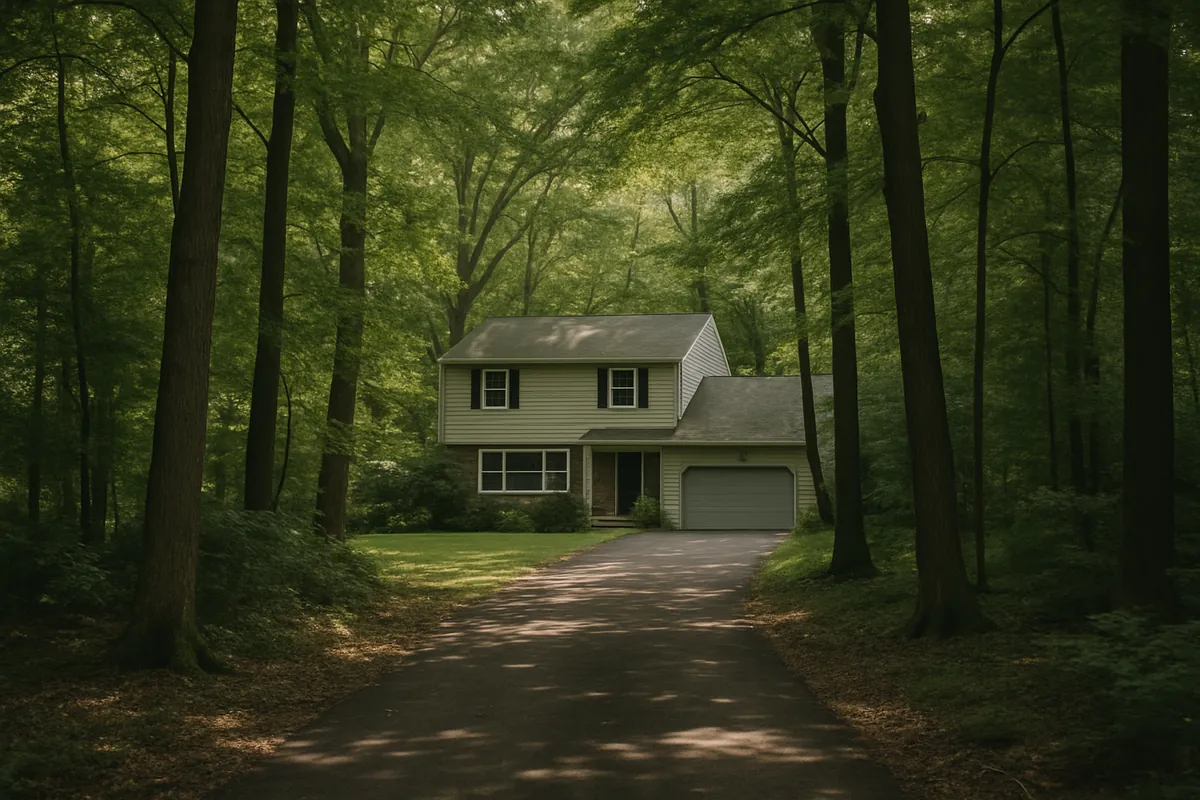
Pomona sits inside the Town of Ramapo, strung along Route 202 between the denser blocks of Suffern to the southwest and Monsey to the east. Unlike the flatter postwar tracts closer to the county’s center, much of Pomona was built on rolling, tree-covered terrain, and many lots still carry mature oak, maple and hemlock canopy close to the house.
That terrain shapes sewer work directly. A lateral on a sloped, wooded lot often runs at a steeper grade than a flatland tract house, crosses root zones from trees the original builder had no reason to avoid, and sits under landscaping that took decades to establish. Opening a trench the length of that run means cutting through root systems, regrading a slope, and rebuilding retaining structures that were never designed to be disturbed.
Clay Joints and Orangeburg Pockets Under the Same Streets
Pomona’s housing stock is not uniform, and neither is what runs under it. Tract construction from the 1950s through the early 1970s put vitrified clay tile under most lots, laid in short sections with a mortared joint every few feet. Budget-built homes from the same period, and some of the infill built afterward, carry Orangeburg instead, the bituminized wood fiber pipe manufactured a short drive away in Orangeburg, NY.
The two materials fail differently, and the difference matters for method selection. Clay cracks and separates at its joints, giving roots and groundwater a point of entry while the pipe itself often still holds a round shape that can be lined. Orangeburg pipe replacement covers the other failure mode: the fiber pipe delaminates under sustained moisture and squashes into an oval cross-section rather than cracking, and a pipe that has gone out of round has no shape left for a liner to cure against. A camera pass that reads the cross-section, not just the defect, is what tells the two apart.
Why Tree Roots Are a Bigger Factor Here
Root intrusion is common across Rockland’s clay-laterals towns, but Pomona’s wooded lots put mature trees closer to more laterals than in the open postwar tracts. A root follows the moisture and nutrient signal escaping through a cracked or separated clay joint, threads through as a hair-thin tip, and thickens into a mass once it is inside warm, wet, nutrient-rich pipe. Tree root removal clears the immediate blockage with a jetter’s rotary cutting head, but cutting a root mass out of a joint does not close the joint. The root returns within a season or two unless the joint itself is sealed, which is the job trenchless pipe lining actually does.
Why Trenchless Fits a Steep, Wooded Yard Better Than a Trench
Open-cut replacement needs a continuous trench from the house to the street main, wide and deep enough for a crew to work in, which on a Pomona hillside lot usually means cutting through root zones, regrading disturbed slope, and rebuilding any retaining wall or paved apron in the path. That work routinely runs 1.5 to 2 times the trenchless price once excavation, spoil removal, slope restoration and replanting are counted, and the finished yard rarely looks the way it did before the crew arrived.
Trenchless methods need only two small pits: one near the foundation, one near the tap at the street main. Everything between them, root zones, retaining walls, mature plantings and the grade itself, stays undisturbed. On a lot where the hardest part of the job is getting equipment to the pipe without removing a decade of landscaping, that difference is the whole case for choosing trenchless.
Pomona Build Era and the Pipe You Probably Have
| Build era | Likely lateral material | Usual failure mode |
|---|---|---|
| 1950s to early 1970s, standard tract build | Vitrified clay tile | Root intrusion and offsets at mortared joints |
| 1950s to early 1970s, budget-built homes | Orangeburg fiber pipe | Delamination, squashing out of round rather than cracking |
| Later infill and most additions | SDR-35 PVC | Settlement bellies, offset gasketed joints at the tie-in to older pipe |
The row that catches people out is the last one. A newer addition is almost always plumbed in modern PVC, but that branch typically ties into the original clay or Orangeburg run a short distance outside the foundation. New pipe upstream does not change what the rest of the lateral is made of, and the camera has to trace the full run, not just the section nearest the house, to know what is actually down there.
What a Pomona Camera Inspection Usually Finds
Because the village’s lot grading varies more than a flat tract street, depth is its own variable here. A lateral on a sloped lot can run noticeably deeper near the street than it does at the foundation, and that depth affects both the access pits trenchless work needs and how long a root mass has had to establish before anyone notices a symptom. A locating sonde run with the camera marks the actual path and depth across the yard rather than assuming a straight line at a uniform grade, which on a hillside lot is rarely the case.
Clearing the line with hydro jetting ahead of the camera pass is common here specifically because wooded lots tend to accumulate more root material between inspections than open tract lots do. A camera run against grease- or root-fouled pipe wall can miss a joint defect the jetter would otherwise expose.
From Call to a Finished Repair
Every job starts with a sewer camera inspection at $250 to $500, usually credited against the repair. The camera reads the pipe material, the depth, the shape of the cross-section and the exact footage of any defect, which is the only reliable way to separate a clay joint problem from an Orangeburg shape problem on a Pomona lot before committing to a method.
From there the path splits along fairly predictable lines, all falling under sewer line repair and replacement. A single failed joint on an otherwise sound run is a sectional spot repair at $1,500 to $4,000. A clay lateral with distributed joint failure but a still-round cross-section is a candidate for trenchless pipe lining at $4,000 to $12,000, which seals every joint in the run at once and gives roots nowhere left to enter. A line that has collapsed, gone oval, or needs to carry more capacity than it was built for goes to pipe bursting at $6,000 to $15,000, which replaces the run outright through the same two small pits. All of those figures are typical planning ranges, not a bid; the camera footage is what turns a range into an actual number.
Pomona Among Its Ramapo Neighbors
Pomona sits inside Rockland County Sewer District No. 1 along with the rest of the Town of Ramapo, which maintains the mains under the village’s streets. The lateral from your foundation out to the tap connection, tap included, is the property owner’s responsibility, and that is where nearly every residential question we get in Pomona actually lands.
The wooded, sloped lot pattern here is closer to Suffern a few miles southwest than to the denser, flatter tracts of Monsey to the east, even though all three villages share the same county main and the same ownership rule for the private lateral. A camera inspection is the fastest way to find out which pattern your own lot actually follows.
Frequently Asked Questions
Is Orangeburg pipe common under Pomona homes?
It shows up in pockets, mostly on budget-built homes from the 1950s through the early 1970s. Orangeburg does not crack the way clay does; it delaminates and squashes into an oval, and once it has gone out of round it cannot be lined. A camera inspection confirms the material and its shape before any method is priced.
Who is responsible for my sewer lateral in Pomona, me or Rockland County Sewer District No. 1?
Sewer District No. 1 maintains the main under the street. The lateral running from your foundation out to the tap connection on that main, including the tap itself, is the property owner's responsibility. Almost every residential repair question in the village falls on that private section of pipe.
Why does every job start with a camera inspection?
A camera inspection at $250 to $500, usually credited against the repair, is the only way to see the material, the depth and the actual defect instead of guessing from symptoms. On a wooded, sloped lot where digging is expensive and disruptive, pricing a method before looking at the pipe is a guess, not a quote.
How do you decide between lining and pipe bursting?
Lining fits a round, structurally sound host pipe, typically clay or cast iron, and runs $4,000 to $12,000. Bursting is for a line that has gone out of round, collapsed, or needs to be upsized, and runs $6,000 to $15,000. A single failed joint on an otherwise good run may only need a $1,500 to $4,000 spot repair. The camera footage decides which category a given lateral falls into.
My lot is wooded and sloped. Does that rule out trenchless work?
It is usually the reason to choose trenchless, not a reason to avoid it. Both lining and bursting work from two small pits, one near the foundation and one near the tap, so mature trees, retaining walls and a hillside grade between them stay undisturbed. An open-cut trench on the same lot means removing some of that landscaping to dig the run.