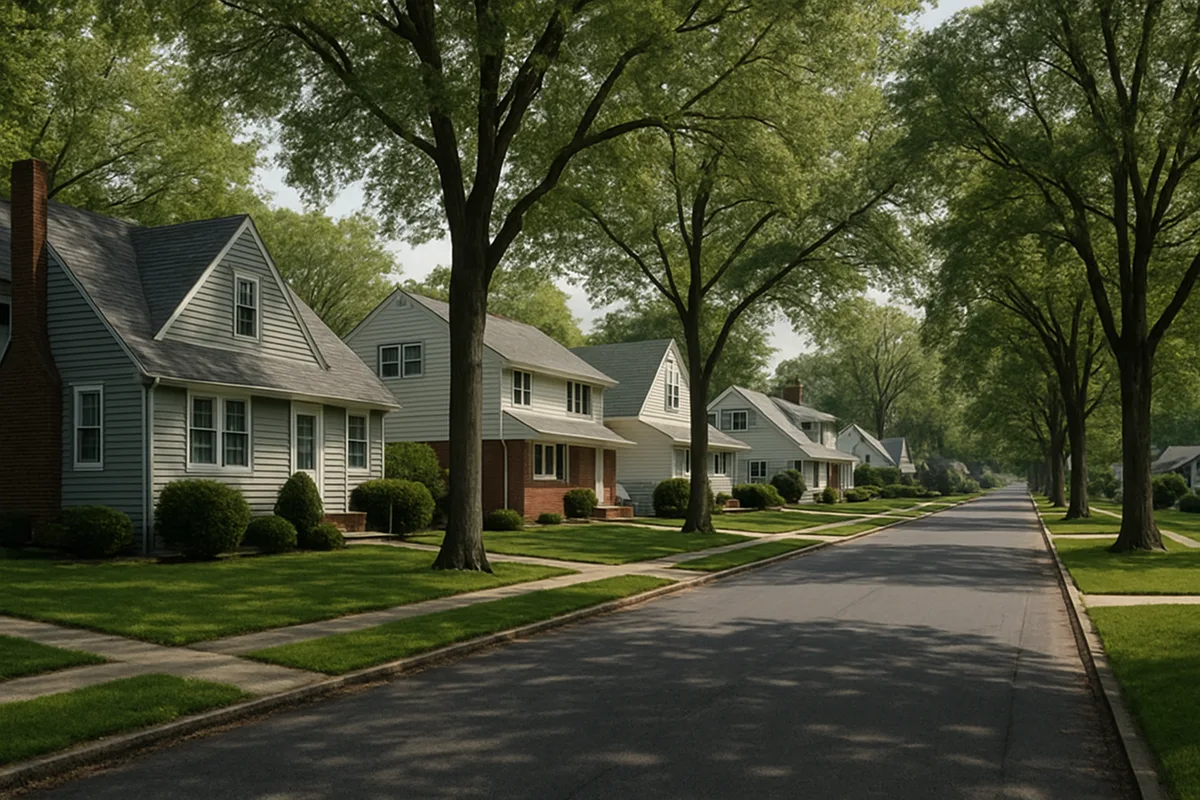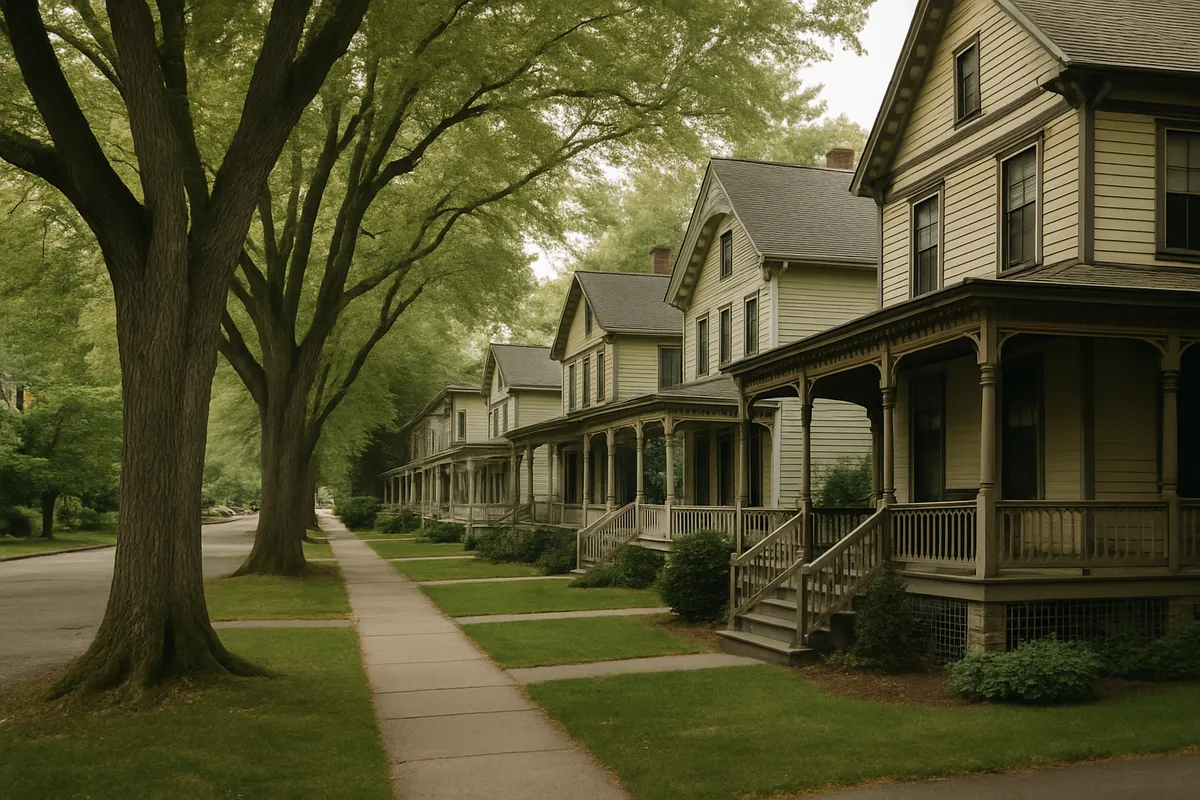
New City Trenchless accepts quote requests for lining and other trenchless options in Tarrytown, where hillside streets and century-old vitrified clay laterals create distinct access and grade challenges.
Why a Rockland Crew Works the Tarrytown Side
The bridge connects both riverbanks, landing in Nyack with Tarrytown at the first exit on the far side. The lateral problem here resembles the Rockland river villages, only older: housing that boomed with the railroad, sitting on clay pipe laid when clay was the standard material.
What changes at the bridge is jurisdiction, not method. The village drains into Westchester County’s wastewater system rather than any Rockland sewer district, and permits for lateral work go through the Village of Tarrytown building department. The paperwork switches counties even though the pipe does not.
The 1849 Railroad Set the Age of the Pipe
The Hudson River Railroad reached Tarrytown in 1849 and the village incorporated in 1870. That sequence is why the housing stock skews so much older than anything in Rockland’s postwar suburbs. Add the Hudson estate era around it, Lyndhurst and Sunnyside and the properties strung along Broadway, and the Old Croton Aqueduct cut through the village in the early 1840s, and you get a place that was fully built out generations before Orangeburg pipe was ever manufactured.
The practical result is a pipe-age map you can read off a build date:
| Era of build | What the lateral usually is | Usual answer |
|---|---|---|
| Pre-1900 village core | Vitrified clay in short sections, a joint every few feet, cast iron building drain inside | Root removal, then a full liner |
| 1900 to 1940 | Vitrified clay outside, cast iron under the slab | Line the lateral; line the cast iron if it is scaling |
| 1945 to 1972 infill | Clay or Orangeburg, depending on the builder | Camera first, burst if it has deformed |
| 1975 onward | SDR-35 PVC | Spot repair, usually at a single crushed or offset point |
Century-Old Clay Under Mature Street Trees
The blocks between the Hudson Line station and Broadway hold housing from the 1800s, and many laterals under them are still original vitrified clay laid in short sections with a joint every few feet. Street trees planted generations ago found those joints long ago.
Root intrusion here is a cycle, not an event. A drain auger clears the mat, the roots regrow from the same joint, the drain slows again the next season, and the homeowner ends up on an annual cleaning contract that never resolves anything. Breaking the cycle is what tree root removal done properly means: cut the mats out mechanically or with a hydro jetter, then line the run so the entry points stop existing. A cured liner is jointless, and a root cannot enter a pipe with no joint or crack to follow.
Cast Iron Inside the House, Clay Under the Front Yard
Old Tarrytown houses usually have two different problems on one drain line. Outside, clay. Inside and under the basement slab, cast iron, which fails on a different clock. Cast iron does not crack at joints so much as it scales: decades of corrosion build tuberculation on the inner wall, the effective diameter shrinks, waste catches on the rough surface, and the drain gets slower every year while the pipe is technically still intact.
Snaking a scaled cast iron drain buys a few months at a time. Cast iron pipe lining cleans the scale back to bare metal and puts a smooth, jointless wall inside the old pipe, which matters in a house where the alternative is breaking up a finished basement floor. On a pre-1900 property the honest scope is usually both: line the iron inside, line the clay outside, one mobilization.
What a Hillside Does to a Buried Lateral
Main Street climbs hard from the waterfront to Broadway, and the residential streets stacked behind it, up toward Neperan Road and the Tarrytown Lakes, do the same. Steep ground gives a lateral far more fall than the code minimum it was designed around.
Excess slope lets water outrun solids on a long run, so the solids strand and build. It also loads old tile downhill, so sections creep and joints pull open into offsets. On a hillside those open joints leak both ways: infiltration when the ground is saturated after a storm, exfiltration when it is dry, and the exfiltration slowly washes bedding soil out from under the pipe until the run loses its support and sags. Infiltration through defects like these is exactly what the EPA’s NPDES program targets when it presses systems on wet weather flow.
Open-cut repair on a steep paved grade is the worst version of the job: shoring, traffic control on a narrow street with parked cars on both sides, and repaving on an incline. Trenchless pipe lining works from a cleanout at the top of the run and touches none of it.
Camera First on Any Older Village Sale
Tarrytown houses turn over at Westchester prices, and the lateral is the one major system no home inspector opens. A pre-purchase sewer inspection at $250 to $500 is the cheapest contingency available on a 120 year old house. Footage of a root-choked clay run or a belly holding standing water is a line item you negotiate before closing, not a discovery you make in your first winter.
Method and Cost Do Not Change at the River
Three tools cover most situations here. A sectional point repair handles a single failed joint, while a full cured-in-place liner, standardized in ASTM F1216, creates one jointless wall from the house to the main. Pipe bursting with new HDPE applies where clay has already collapsed. The published planning ranges used on this site also apply in nearby Piermont, but every property requires its own inspection and quote.
Open-cut on these streets runs the other way. Between the grade, the road restoration and the mature plantings that are half the value of an older lot, a dig here lands at the high end of the usual 1.5x to 2x premium over the trenchless price.
Frequently Asked Questions
Do you really come out to Tarrytown from Rockland County?
Yes. Tarrytown is included in the listed service area, about twelve miles from New City over the Mario Cuomo Bridge. Availability is confirmed when a quote request is reviewed.
What does a sewer camera inspection cost in Tarrytown?
$250 to $500, often credited against repair work that follows. On century-old clay it is worth doing before any real estate closing, since a root-choked or offset lateral is a negotiating item, not a surprise you want after moving in.
Can a lateral on a steep street be lined?
Yes. The liner inverts downhill from a cleanout at the house and cures in place, so grade does not limit the method and nothing on the slope gets excavated. Steep runs actually favor lining, because open-cut on an incline is the most expensive dig there is.
My basement sits below the street. Does that change the repair?
It changes what the repair can promise. Where the house floor is lower than the sewer main, waste is lifted by an ejector pump rather than flowing on gravity, and lining the gravity portion downstream does not remove the pump from the picture. It is still worth doing, because a sealed jointless lateral stops groundwater loading the line, but the pump and its check valve stay part of the system and need their own attention.
Will a lined lateral disturb the street or a historic property?
That is most of the reason people on the older Tarrytown blocks choose it. A cured-in-place liner works from a cleanout at the house, so there is no road cut on Main Street, no trench across a slate walk, and no excavator working between mature trees on an estate lot. Permitting still goes through the village, so ask the building department what your address needs before work starts.