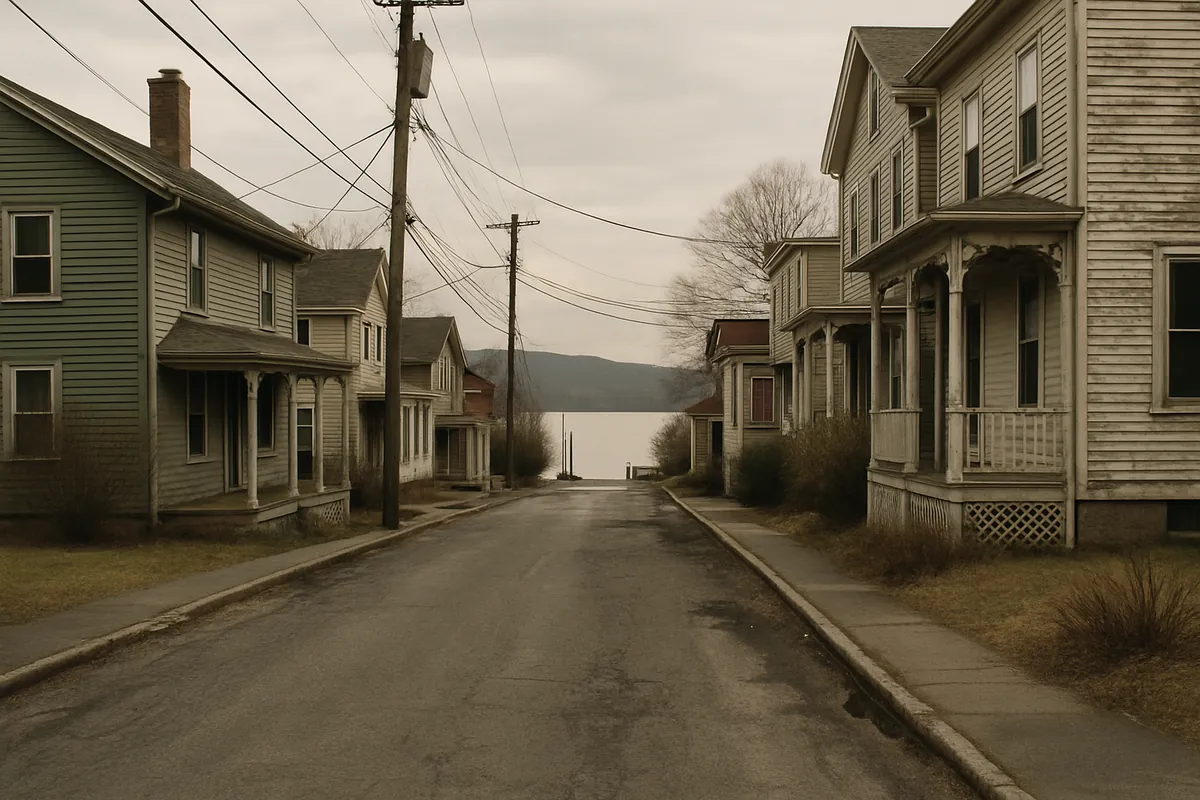
New City Trenchless covers trenchless sewer lateral repair in Grand View-on-Hudson, the tiny Hudson riverfront village on the Palisades shore between Nyack and Piermont. Cliff-edge homes and river-road lots can leave little room between a foundation, a retaining wall and the route toward the water. Here, a repair plan needs to explain both what the pipe needs and how equipment will reach it. Inspection comes first, followed by a supported choice between lining, pipe bursting and focused excavation.
A Narrow Shoreline Changes the Access Question
Grand View-on-Hudson’s defining repair constraint is the relationship between the slope and the shore. A lateral may run through a narrow side yard, pass beneath steps or turn toward the river below the house. The visible lawn does not necessarily offer a usable excavation route. A driveway might be the only staging area, while the space beside it provides the only way residents can reach the entrance.
For scheduling purposes, the population marker of roughly 300 and the approximate eight-mile distance from New City describe a small service area, not a census statement or a travel-time promise. The useful information for a visit is more specific: the driveway approach, any gates or stairs, known cleanouts and the location of recurring backups. Photos of the access route can help explain constraints before equipment arrives.
This setting differs from Nyack’s village-center streets, South Nyack’s hillside and bridge corridor, and Piermont’s pier and marsh. Those neighboring pages offer context, but none establishes the condition of a Grand View lateral. A house close to the Hudson should not automatically receive a wet-ground diagnosis, just as a steep yard should not automatically be assumed to have good pipe fall.
Locate the Pipe Before Choosing Where to Dig
A sewer camera inspection should record visible defects, pipe materials, changes in diameter and any branches along the accessible run. Locating the camera at important points helps relate that footage to the lot above. On a narrow property, the difference between a route under a walkway and one beside a wall can change the entire access plan.
Tell the inspector about earlier repairs and any drawings available from the property records. An older lateral may contain several materials, with a newer section concealing an unresolved problem farther downstream. If the camera stops at an obstruction, the report should identify what remains unseen rather than describe the whole line as inspected. Safe cleaning or another entry point may be needed to complete the assessment.
A pipe heading toward the water does not reveal its final connection, ownership boundary or permitted work area. Confirm those details before authorizing work beyond the property. Similarly, a located route near a neighbor’s side yard does not establish an easement. Access rights and the physical repair route need to agree before a crew opens the ground.
Steep Ground Can Conceal a Flat or Sagging Run
The slope above a sewer and the slope inside it are different measurements. A line can drop sharply from the house, flatten beneath a terrace and retain water at a displaced joint. Solids may collect in that low section even though the overall property descends toward the river. Repeated clearing can restore flow while leaving the underlying geometry unchanged.
Standing water on camera is a reason to investigate, not a complete grade survey. Cleaning, locating and additional measurements may be needed to determine whether the problem is an obstruction, an offset or a settled section. The written recommendation should connect that finding to a method capable of correcting it.
Lining forms a new interior surface along the existing route. It does not raise a belly or remove an abrupt change in alignment. Bursting also generally follows the existing path. Where a grade correction is necessary, sewer line repair and replacement may require a targeted opening, even if other portions of the lateral can be repaired without a continuous trench.
When Lining Fits a Confined Riverfront Lot
Trenchless pipe lining can suit a lateral with repairable wall defects or leaking joints when the host pipe can be cleaned and prepared for the proposed system. Access through a usable cleanout may reduce excavation, which matters where a full trench would cross steps, paving and a narrow side passage. The crew still needs space for equipment and a safe route to that entry point.
Where roots obstruct the line, tree root removal may be part of preparation. Cleaning must suit the remaining condition of the pipe. Opening the blockage alone does not seal the defect that admitted the roots, so the follow-up footage should show whether lining or another repair is appropriate.
Before approving lining, ask which section will be treated, how transitions and branches will be handled, and how completion will be documented. A short repair may fit an isolated defect; a longer liner needs evidence that the proposed run is suitable throughout. Riverfront location alone is not a reason to prescribe a particular curing process or promise that every part of the job will be excavation-free.
Pipe Bursting Needs Room at Both Ends
Pipe bursting can replace a suitable existing lateral by displacing the host pipe while pulling replacement pipe through its route. It may be considered when the old pipe is unsuitable for lining, but the route, nearby utilities and access conditions must support the method. A collapse requires particular evaluation rather than an automatic promise that a pull will pass through it.
On a Grand View lot, access pits are only part of the footprint. The plan also needs room for equipment and replacement pipe, plus a way to move materials along the slope. Narrow river-road frontage, tight turns and retaining walls may limit that setup. Confirm where staging will occur and how the house entrance will remain accessible during the work.
| Lot condition | Question for the repair proposal |
|---|---|
| Lateral beneath a narrow side yard | Can preparation and installation use the available passage? |
| Proposed pit beside a retaining wall | How will excavation protect the wall’s support? |
| Driveway serving as the staging area | Where will equipment and replacement pipe fit? |
| Route descending toward the river road | What connection, boundary and access details are confirmed? |
Confirm Requirements and Restoration Before Work
Before excavation, owners should confirm requirements with Orangetown and the village contact for the property. Ask about permits, utility marking, inspections and work affecting a road, sidewalk or connection outside the lot. Do not borrow a sewer-district assumption or approval process from a neighboring village. Keep the confirmed requirements with the scope of work.
Restoration deserves the same detail as the pipe repair. Identify the proposed openings, affected paving and plantings, and the approach to backfilling on the slope. Where steps or walls are nearby, the proposal should explain how they will be protected. Trenchless methods can reduce disturbance between entry points, but the actual access locations determine what needs restoring afterward.
Nearby Piermont brings a pier and marsh setting, while South Nyack focuses on hillside homes near the bridge corridor. Nyack adds village-center streets and older laterals beneath mature trees. Grand View-on-Hudson’s narrow shore lots call for their own inspection and access plan. To arrange one, contact New City Trenchless with the backup pattern, known pipe history and any constraints between the road and the cleanout.
Frequently Asked Questions
Does a lateral running toward the Hudson necessarily discharge into the river?
Direction alone does not establish the connection point. Have the accessible pipe inspected and its route located, then compare the findings with available property records and confirmed connection information before planning repairs.
Can lining equipment work from a river-road driveway with little staging space?
It may be possible, but the crew needs to assess the cleanout, equipment route and safe working space first. Include driveway width, turns and any shared access in the inspection request so the proposal reflects the actual setup.
Will a liner fix a sharp drop followed by standing water?
A liner follows the existing pipe and does not correct a low section after a drop. The inspection should identify where water collects, with additional grade measurements when needed, before choosing lining or a repair that changes the alignment.
What if the only proposed access pit is beside a cliff-edge retaining wall?
That location needs a specific assessment of depth, wall support and safe excavation space. A different entry point or repair method may be needed. Small access pits still require a plan that protects the surrounding structures.
Should I notify a neighbor when the lateral route appears to cross a narrow side yard boundary?
First establish the route and review the property records. If access or work would involve neighboring land, resolve permission and any applicable easement questions before scheduling excavation; a camera location alone does not establish a legal right to enter.