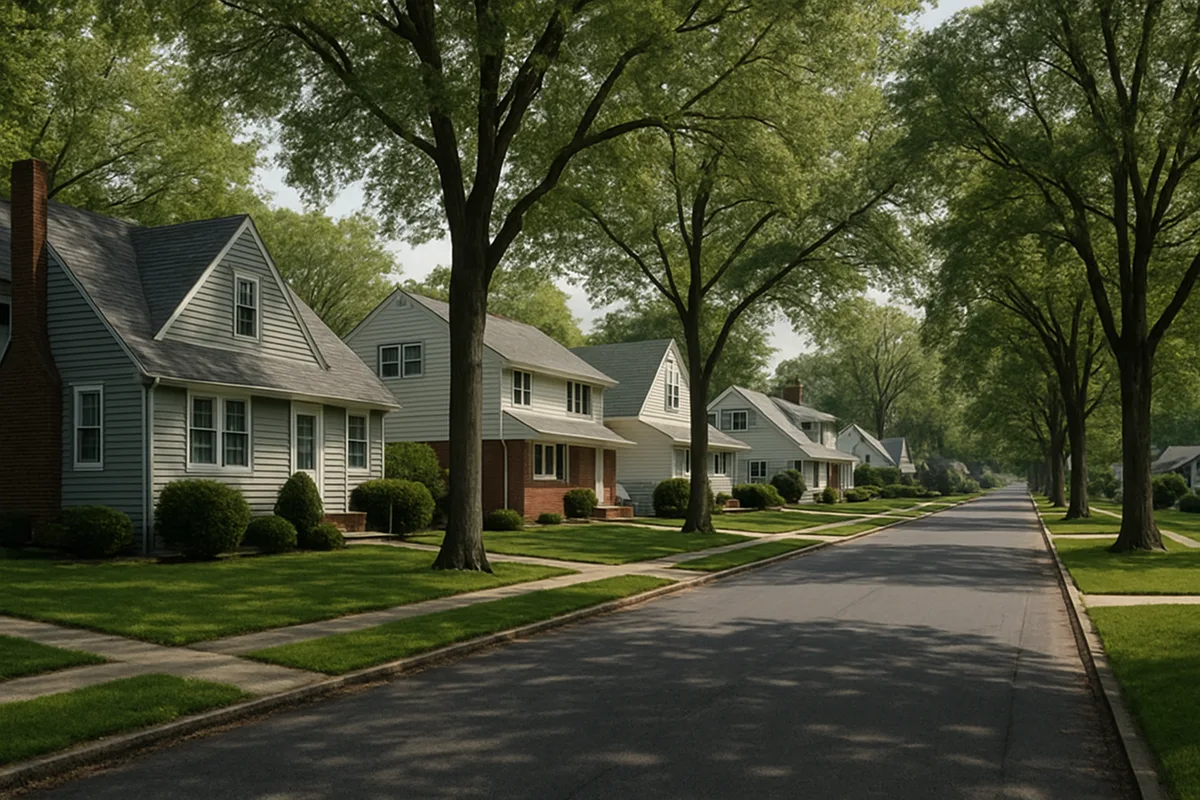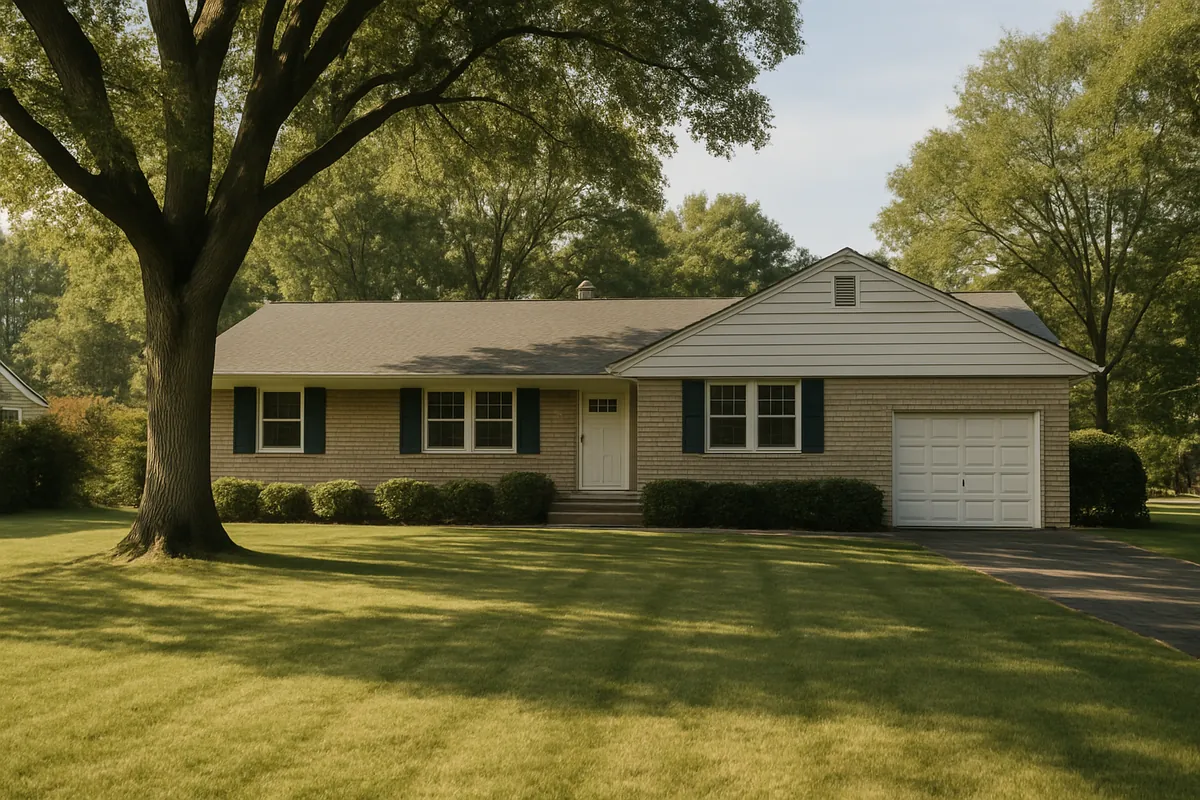
New City Trenchless covers replacement options for failing sewer laterals in Orangeburg, the Rockland County hamlet that gave its name to bituminized fiber pipe. The local factory shipped the material through the 1950s and 60s, so a camera inspection is especially important for homes built during that period.
The Factory That Named Both the Hamlet and the Pipe
The Fibre Conduit Company began winding wood pulp and coal tar pitch into pipe here in the 1890s, renamed itself the Orangeburg Manufacturing Company in 1948, and put this hamlet’s name on sewer laterals in half the states in the country. Local builders had the shortest supply run in the business. When a plumber working in Orangetown needed lateral pipe in 1958, the cheapest product sitting on any supply yard nearby was the one made down the road.
The result is a concentration you will not find anywhere else. Bituminized fiber went into homes nationwide between roughly 1945 and 1972, but here it went in at the source, on the cheapest freight in America, into a hamlet that was building out at exactly the moment the factory was running flat out.
Camp Shanks, Shanks Village and a Single Generation of Build-Out
Orangeburg’s growth ran on the same clock as the factory’s peak output. Camp Shanks, the World War II embarkation camp nicknamed Last Stop USA, occupied a large part of the hamlet, and after the war its barracks were converted into Shanks Village housing for returning veterans and their families. Through the 1950s and 60s permanent subdivisions filled in around Route 303, Western Highway, the state hospital grounds and what is now Dominican University.
That compression is the whole story. Most towns accumulate housing across a century and end up with a mixed bag of pipe. Orangeburg got essentially one generation of construction, which means one generation of lateral, which means one expiry window. The houses that went up together are reaching the end of their sewer laterals together, and that is why full replacement, rather than a single spot repair, is the likelier answer on a street here.
Sixty Years On, Fiber Fails in a Specific Order
Bituminized fiber is layers of wound wood fiber bound in pitch, and it fails the way wet cardboard fails. Slowly, and then all at once.
First the walls absorb moisture and the laminations separate, which is delamination, and it does not reverse. Then soil load presses the softened pipe out of round, which is ovality. The inner layers swell inward into blisters that choke the channel and catch paper. The run loses its slope where it has deformed, so solids stop clearing. Roots pierce seams that clay and cast iron would have shrugged off. The end state is a collapsed pipe, and it is almost always discovered on a holiday weekend.
The part that matters to a homeowner is that every stage of that is visible on camera years before the first backup. The ASCE infrastructure report card makes the general case about buried assets aging out of service unseen. On an Orangeburg fiber lateral it is not a general case, it is a timetable.
Orangetown Owns the Main, You Own the Lateral
Orangetown handles its own sewer system rather than sitting inside Rockland County Sewer District No. 1, and the Orangetown wastewater treatment plant is right here in the hamlet on Route 303. The main under your street and the tap your lateral connects to are town assets. Everything from the foundation wall out to that tap is yours, including the connection at the tap itself.
That boundary matters more here than in most places. A fiber lateral tends to deform worst under the heaviest cover, which is often out near the street, so the failure can sit within a few feet of the point where responsibility changes hands. A camera run with a locating sonde establishes where the defect actually is, and how deep, before anyone starts arguing about who pays for it.
What the Camera Grades, and Which Method Follows
A sewer camera inspection at $250 to $500 does not just confirm the pipe is fiber. It grades how far gone it is, with defects coded to NASSCO PACP standards, so the report is a condition record you can hand to a buyer, a lender or a second opinion rather than a salesman’s description.
| What the camera shows | Fiber condition | Realistic method |
|---|---|---|
| Round bore, tight seams, fine root hairs only | Early | CIPP lining is genuinely on the table |
| Slight ovality, first blisters forming | Middle | Lining is possible, bursting is the safer spend |
| Clear ovality, separated laminations, sagging run | Late | Pipe bursting |
| Flattened or collapsed section, camera cannot pass | Terminal | Pipe bursting, scheduled as an emergency |
An early-stage fiber run can host a cured-in-place liner, because the calibration tube presses out minor ovality before the epoxy resin sets and the cured liner then carries the structural load itself, to ASTM F1216. Once the pipe is clearly deformed or blistered, lining comes off the table. There is no sound host pipe left to line against.
Then pipe bursting takes over. The bursting head splits the soft fiber outward into the surrounding soil while towing in fused HDPE with no joints for roots or groundwater to find, working from two small pits rather than a trench across the front lawn. The Orangeburg pipe replacement page covers those decision points in detail.
Buying or Selling a House From That Window
Anyone under contract on an Orangeburg house built between 1945 and 1972 should scope the lateral before closing. A pre-purchase sewer inspection at $250 to $500 is the cheapest line item in the entire transaction and the only one that looks directly at a $6,000 to $15,000 liability sitting three feet under the yard.
Sellers get the same value from the same visit, in reverse. A graded report showing a sound line removes a negotiating lever before a buyer’s inspector can invent one. A report showing a failing line lets you price it deliberately instead of discovering it during attorney review with a closing date already set.
What Replacement Costs, and Why Fiber Skews to Bursting
Pipe bursting commonly runs $6,000 to $15,000 and full lateral CIPP lining $4,000 to $12,000, with camera inspection often priced at $250 to $500. Actual quotes depend on length, depth, access, permits, and site conditions. Open-cut replacement can cost substantially more once excavation, driveway repair, and landscape restoration are counted.
Fiber laterals land on the bursting side more often than clay laterals because deformation, rather than root intrusion, is frequently the terminal failure, and a liner cannot correct a deformed host pipe. Similar older laterals appear in Blauvelt, Tappan, and Piermont.
Frequently Asked Questions
How do I know if my Orangeburg home has Orangeburg pipe?
If the house went up between 1945 and 1972 and the lateral has never been replaced, the odds are high, and higher here than anywhere else in the country. A camera inspection settles it in about an hour and shows exactly how far the deformation has progressed.
Does homeowners insurance cover Orangeburg pipe replacement?
Standard policies typically treat the wear-out of buried service lines as excluded, unless you have added a service line endorsement. Check your policy before work is scheduled, not after the line collapses.
My drains work fine. Should I still get the line inspected?
In this hamlet, yes. Blistering and ovaling show on camera years before the first backup, and a $250 to $500 inspection lets you plan the replacement instead of booking it during an emergency.
Is the main under my street Rockland County's or Orangetown's?
Orangetown runs its own sewer district and its own treatment plant, which happens to sit here in Orangeburg on Route 303, rather than draining to Rockland County Sewer District No. 1. Either way the lateral from your foundation out to the tap is yours.
Can Orangeburg pipe be lined instead of replaced?
Only while it is still close to round. A calibration tube can press out slight ovality before the resin cures, so an early-stage fiber run can host a liner. Once the pipe has clearly deformed or delaminated there is no sound host pipe left to line against, and pipe bursting is the only structural answer.