New City Trenchless covers pipe bursting and cured-in-place lining options for Congers, the Clarkstown hamlet wedged between Congers Lake and the Lake DeForest reservoir. Groundwater can keep trench soil saturated for much of the year, which affects repair access and method selection.
Low Ground Between Two Lakes
Congers occupies the low ground on the Hackensack River drainage. Lake DeForest, impounded on the river west of the hamlet in the 1950s and still a working drinking water reservoir, and Congers Lake to the east bracket the housing in between. Hook Mountain and Rockland Lake rise to the east beyond that, so what water does not run east over the traprock ridge collects here.
The practical result is a water table that rides high under many streets year round rather than seasonally. Wet ground is hard on buried pipe twice over. The trench backfill around a lateral settles and resettles as it saturates and drains, and every joint that opens under that movement becomes a two-way leak. Neighbouring Valley Cottage has a dry ridge side to balance its wet side. Congers mostly does not.
Ice Village, Summer Cottages, Postwar Capes
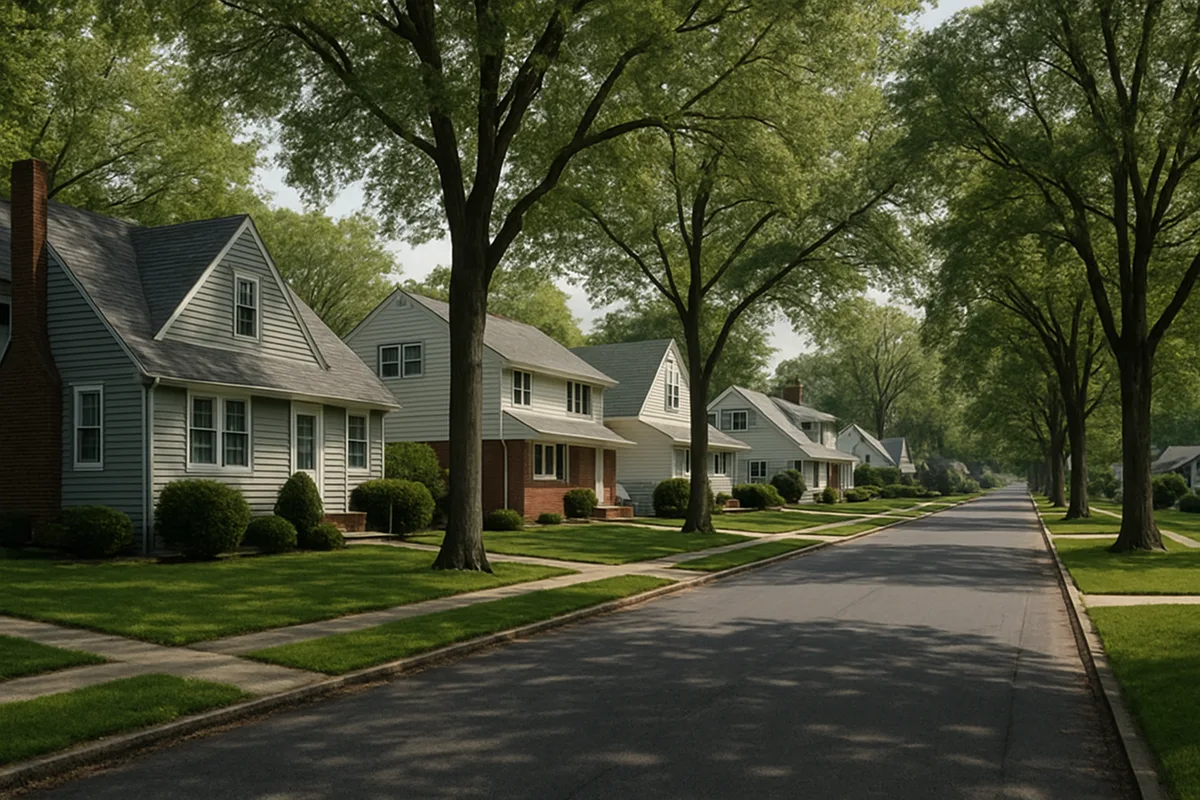
Congers housing came in distinct waves and the pipe under it follows the same order. The nineteenth century brought the ice trade, when the Knickerbocker Ice Company cut and shipped Rockland Lake ice to New York City and the West Shore Railroad ran a station through the hamlet. The ice village itself was cleared when Rockland Lake State Park was assembled in the middle of the twentieth century, but the pattern it set, small workers’ housing near the lakes and the rail line, is still legible on the older streets.
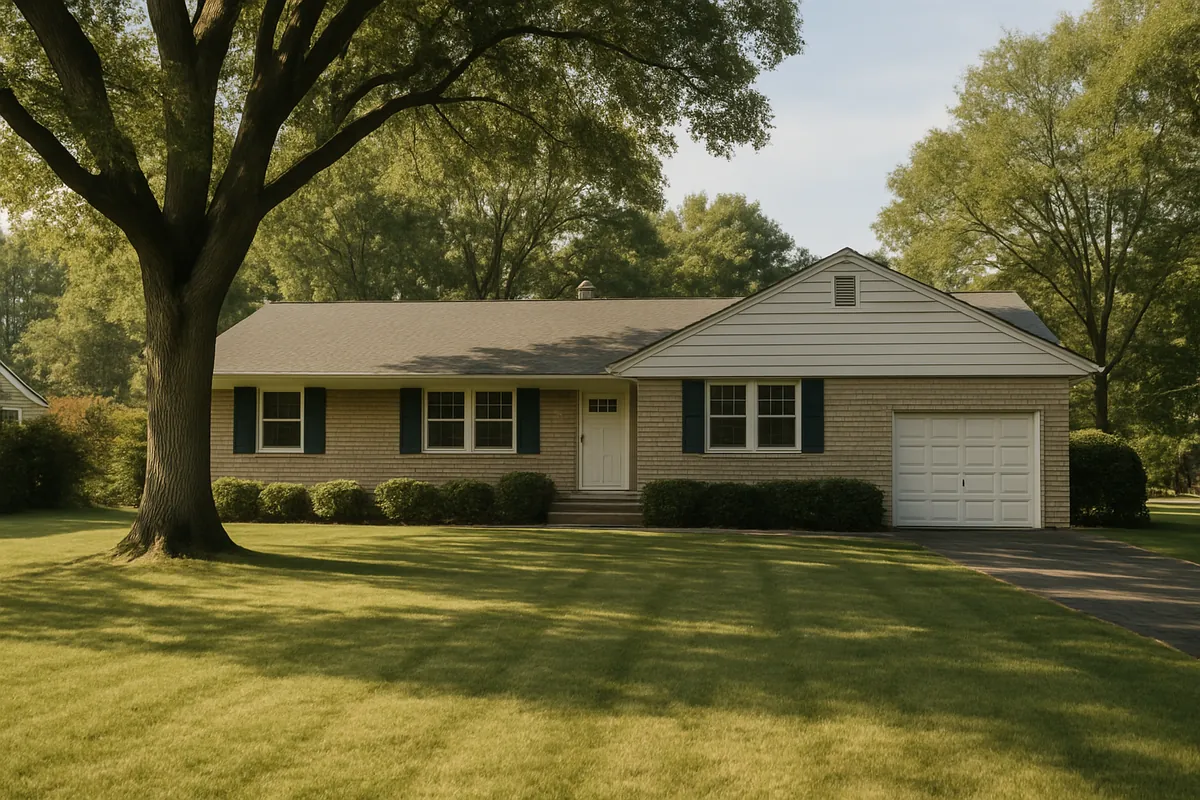
Then came the lake-community cottages, many of them seasonal buildings winterized into year-round homes decades later. Those conversions carry some of the least predictable plumbing in Rockland: cast iron mixed with clay, a length of something added during a 1960s bathroom addition, occasionally a house trap still sitting near the foundation. Finally the postwar capes and ranches filled in around them along Route 303 and the streets off Route 9W, which is standard vitrified clay and Orangeburg territory.
Saturated Backfill Is the Cause Behind Most Failures Here
The classic Congers failure sequence starts with the trench, not the pipe. A section of lateral settles, the slope goes flat or negative, and a bellied length starts holding water and solids between flushes. Meanwhile the offset joints that opened during that settlement let groundwater in and sewage out.
| What you notice | What it usually means underground | What actually fixes it |
|---|---|---|
| Slow drains that snaking fixes for a few months | Belly holding solids, or a root mat at a joint | Re-grade the low spot, or line the run to seal the joints |
| Gurgling and backups only in wet weather | Infiltration through open joints, or a surcharged main | Line the lateral, add a backwater valve |
| Clear water running in the line on a dry day | Groundwater entering through joints or cracks | Full lateral lining |
| Auger will not pass a fixed point | Deformed Orangeburg or a collapsed section | Pipe bursting |
| Wet or unusually green ground over the line | Exfiltration into saturated soil | Bursting, or lining if the grade is sound |
Exfiltration Counts For More Next to a Reservoir
Infiltration is the failure homeowners notice, because it shows up as wet weather backups. Exfiltration is the one that matters more here. Congers drains toward a reservoir that supplies drinking water, and the state’s watershed and wetland rules exist precisely because what leaks into shallow saturated soil does not stay put. Both the New York State Department of Environmental Conservation and the EPA treat source water protection as a matter of keeping contamination out of the ground in the first place, not treating it downstream.
None of that turns a private lateral into a public work order, but it does change how seriously a leaking joint deserves to be taken on a Congers lot compared with the same defect on a hilltop somewhere dry.
Bursting Through Wet Ground From Two Small Pits
Excavating a full trench below the water table means dewatering pumps, shoring, a week of mud, and new pipe bedded back into the same unstable backfill that failed the old line. Pipe bursting sidesteps the whole exercise. From two small pits, a bursting head fractures the old clay or Orangeburg shell outward into the surrounding soil while towing in continuous HDPE.
Fused HDPE has no gasketed joints for wet ground to work on, which is the property that matters most in Congers. Nothing to pull apart as the soil moves, nothing to seep through when the table rises. Bursting typically runs $6,000 to $15,000 on a residential line, usually one to two days of work.
When Lining Is Still the Right Answer
Not every wet-ground lateral needs bursting. If the camera shows the pipe holding its grade with leaking joints as the main defect, trenchless pipe lining seals the entire run jointlessly for $4,000 to $12,000, and a sectional point repair handles a single open joint for $1,500 to $4,000. What a liner cannot do is fix a belly, because it follows the sag it is cured against.
That is the most important call a sewer camera inspection makes in this hamlet, and it costs $250 to $500 to make it properly with a locating sonde: hold the grade and line it, or lose the grade and burst it. Guessing between those two is how people pay twice.
Wet Weather Backups on the Low Streets
On the lowest-lying Congers streets, a backwater valve is worth adding during any repair while the line is already open. A sewer main surcharged by a storm has nowhere to push but back up the laterals connected to it, and the valve is the only device that stops that flow at your foundation. If it has already happened, sewer backup repair covers the cleanup and the prevention work together.
Trenchless sewer repair in Congers NY comes down to respecting the water table. Work through pits, keep the trench closed, and put a jointless pipe into ground that punishes joints. The same logic applies up the river road in Haverstraw, though the housing there is a good deal older than anything in Congers.
Frequently Asked Questions
Why does my Congers drain back up during wet weather?
High groundwater. Infiltration through open joints adds clear water to the line, and a surcharged main can push flow back toward the house. A camera inspection shows which is happening; sealing the joints by lining and adding a backwater valve are the usual fixes.
Can a bellied sewer line in Congers be fixed by lining?
No. A liner follows the shape of the host pipe, sag included. A short belly can be corrected with a small excavation at the low spot, or the run can be replaced by pipe bursting, $6,000 to $15,000 for most residential lines.
Does the high water table make trenchless work harder?
It makes open-cut work harder. Trenchless methods need only one or two small pits, so there is far less saturated ground to open, shore and pump.
Is a leaking lateral really a problem this close to Lake DeForest?
It is worth taking seriously. Lake DeForest is a drinking water reservoir on the Hackensack River, and a lateral that leaks sewage into saturated soil above that drainage is not a private matter in the way a leaking hose bib is. Sealing the run by lining or replacing it by bursting ends the discharge.
My Congers house started as a summer cottage. Does that change the repair?
Often, yes. Converted cottages tend to have mixed pipe materials and improvised connections rather than one clean run, sometimes with an old house trap near the foundation. The camera inspection matters more on these houses because the line is rarely what the age of the property would suggest.