New City Trenchless covers trenchless sewer repair in Airmont NY, a Ramapo village that only incorporated in 1991 and inherited a patchwork underground: one street drains to Rockland County Sewer District No. 1 while the next still runs on private septic systems, and nothing visible from the curb tells you which.
A 1991 Village Sitting on Much Older Ground
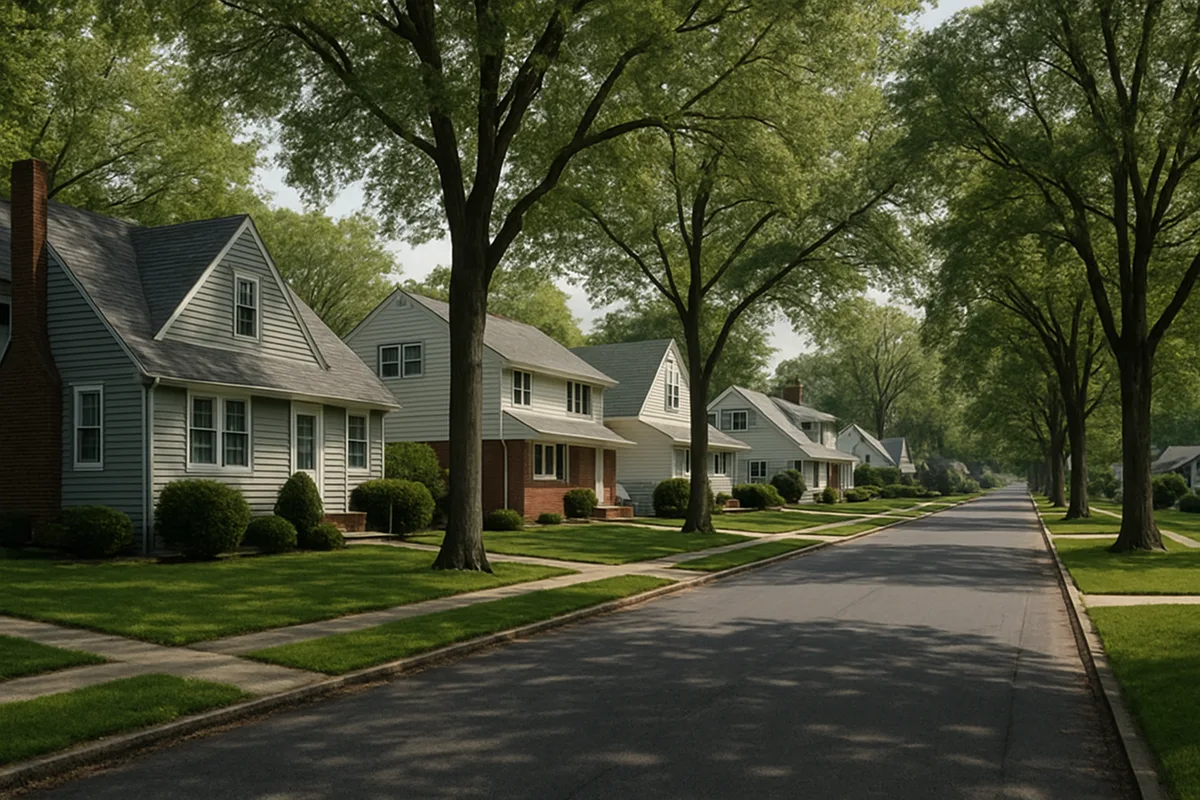
Airmont incorporated in 1991, but nothing underground incorporated with it. The houses, the roads and the buried service lines all went in under the Town of Ramapo across four earlier decades, and the new village boundary was simply drawn around a development pattern that was already finished. The Village of Airmont is young. Its sewer laterals are not.
That gap is why an Airmont evaluation should not assume what a house is connected to before checking. Some streets tie into Rockland County Sewer District No. 1. Others still run on private septic systems. Both conditions can exist within a few hundred feet of each other, and the curb gives away nothing.
Establishing Sewer or Septic Before Anything Else Happens
Village and county records are the starting point, but they are not always current for a property that has changed hands and been renovated a few times over thirty years. The physical answer is faster and it is not open to interpretation.
A sewer camera inspection with a locating sonde, $250 to $500, traces the line from the cleanout to wherever it actually terminates, records its depth, and marks the run on the surface. One visit answers three separate questions: what the house is connected to, what the pipe is made of, and what condition it is in.
On a septic property, the same inspection draws an important line. A failure in the house-to-tank run is pipe work. A failure in the tank or leach field requires a septic specialist rather than a pipe-repair quote.
| What the locate finds | Practical options | Typical range |
|---|---|---|
| Live lateral to a district main at the street | Line it, spot repair it, or burst and upsize it | $1,500 to $15,000 by method |
| Septic in service, defect in the house-to-tank run | Sectional repair or replace that run | $1,500 to $4,000 |
| Septic failing, district sewer available at the street | New trenchless lateral to the tap, field abandoned | $6,000 to $15,000 for the pipe work |
| Septic failing, no sewer in the street | Septic rebuild, which is outside trenchless pipe scope | Refer to a septic specialist |
Shallow Ramapo Bedrock and What It Does to a Trench Price
Airmont sits at the eastern foot of the Ramapo Mountains, and shallow bedrock turns up on plenty of lots here in a way it does not out on the flatter ground east of Spring Valley. Rock is the single most expensive thing an excavator can meet. A trench that would have been a machine day becomes a hammer day, spoil handling changes completely, and restoration is worse afterward because rock does not backfill like soil.
Frost depth compounds it. A lateral has to sit below the frost line, so a trench cannot simply be made shallower to dodge the rock, and the freeze-thaw cycling this region gets every winter is exactly why that depth requirement exists.
This is the concrete reason open-cut comparisons in Airmont skew hard. The county-wide rule of thumb is that digging costs 1.5x to 2x the trenchless price once excavation and landscape repair are counted, and a rocky Airmont lot sits at the top of that band. Trenchless work needs two pits, not a rock trench running across the property.
Long Runs Across Large Lots Change the Arithmetic
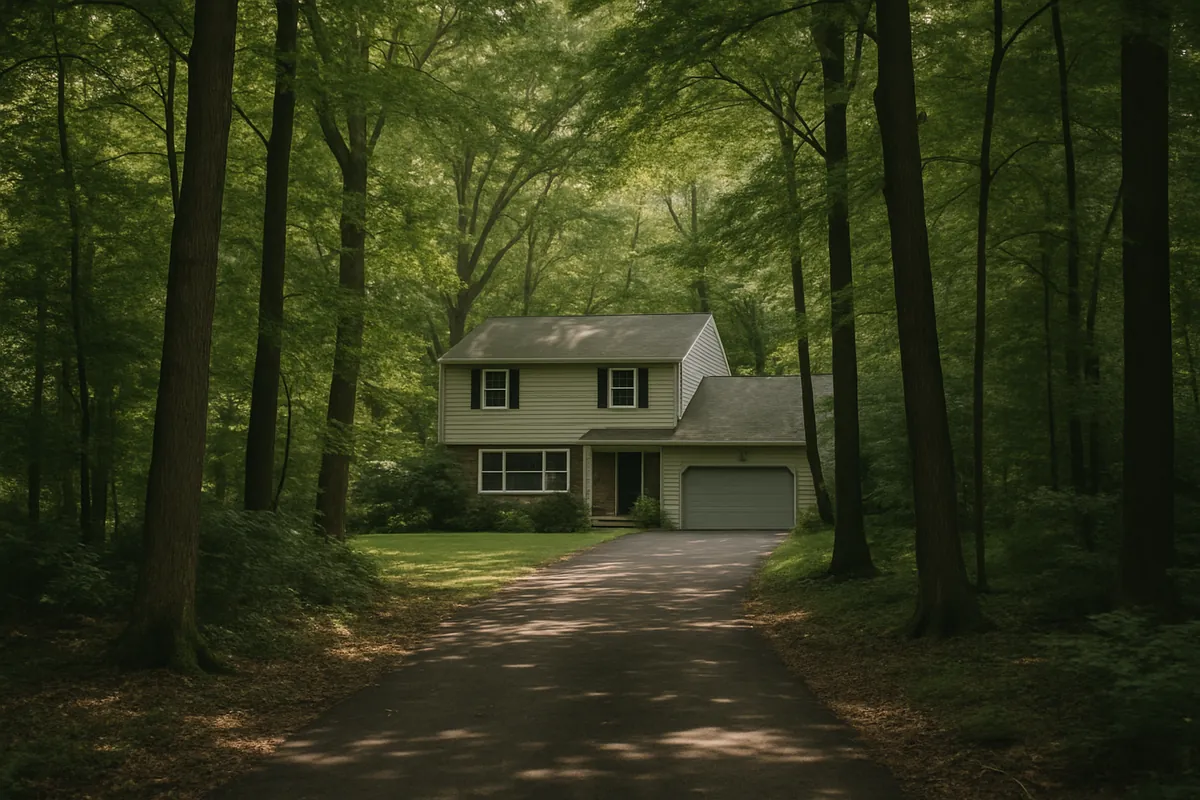
Much of the village is zoned for larger residential parcels, and deep setbacks mean long laterals compared with the short runs typical closer to New City. Length changes almost every number in the job.
Lining is priced substantially by the foot. A long clay run carries proportionally more joints for roots and groundwater to exploit. A defect can hide anywhere along a hundred feet of pipe nobody has ever seen. And a long run under mature trees on a wooded Airmont lot is a root problem waiting to be found.
On long runs, a two-way cleanout near the foundation can make future inspection or hydro jetting possible without pulling a fixture. Full lateral lining and pipe bursting should be priced after the run’s length, depth, and access are confirmed.
Three Generations of Pipe Inside One Village Boundary
Airmont’s housing spans more eras than most of its neighbors: ranches and colonials from the 1950s through the 1970s, then subdivisions added around and after incorporation. Material follows era, and the method follows the material.
The older streets sit on vitrified clay laterals, with bituminized fiber pipe possible on anything plumbed before the early 1970s. Fiber that has deformed out of round cannot be lined, because there is no sound host pipe left to line against, so those runs get burst. Leaking but structurally intact clay is ideal lining work. The newer streets were plumbed in SDR-35 PVC, which neither rots nor delaminates but still fails where the bedding was poor, usually as an offset joint or a bellied run rather than a collapse, and one bad PVC joint is a sectional repair at $1,500 to $4,000.
When a Failing Leach Field Forces the Decision
The distinctly Airmont job is the transition off septic. A leach field that has stopped accepting flow leaves two options: rebuild the septic system, or, where district sewer is available at the street, abandon the field and run a new lateral to the main. The EPA’s septic systems guidance is a fair primer on how a field saturates and why it rarely recovers once it has.
For the pipe side of that decision, a new run can go in through small pits to the tap connection under trenchless sewer replacement, without trenching the length of a half-acre lot. Connection approval and district fees come from the village and district, vary by street, and should be confirmed directly with those authorities.
The same price ranges apply in Suffern just west, Monsey to the north and Spring Valley to the east. What is different in Airmont is that run length and depth to rock push more jobs toward the upper half of every range, and that half the calls start with a question the other towns never have to ask.
Frequently Asked Questions
How do I find out if my Airmont street has public sewer?
The village and Rockland County Sewer District No. 1 hold the records, but the fastest physical answer is a camera and locate down your own line, $250 to $500, which shows exactly where the pipe runs and what it connects to.
My Airmont house was built in the 1990s. Can the sewer line still fail?
Yes. SDR-35 PVC does not rot like older materials, but poorly bedded runs settle into bellies and its gasketed joints can open. A single failed joint is usually a $1,500 to $4,000 sectional repair, not a full replacement.
Can you connect my house to the sewer without trenching the whole yard?
Where district sewer is available at the street, the new lateral can usually be installed trenchlessly through small pits, leaving the yard intact. District connection approval and fees are separate and come from the village and the district.
There is rock everywhere on my lot. Does that change the job?
It changes an open-cut job enormously and a trenchless job very little. Shallow bedrock is common on the Ramapo side of the village, and it turns a machine day into a hammer day for an excavator. Two access pits are a far smaller exposure to rock than a trench running the length of the property.
My lateral runs over a hundred feet to the street. Is that a problem?
It is normal on Airmont's larger lots. Length raises the price of lining, which is quoted substantially by the foot, and it gives a defect more places to hide. It also makes a two-way cleanout near the foundation worth adding while the crew is already on site.