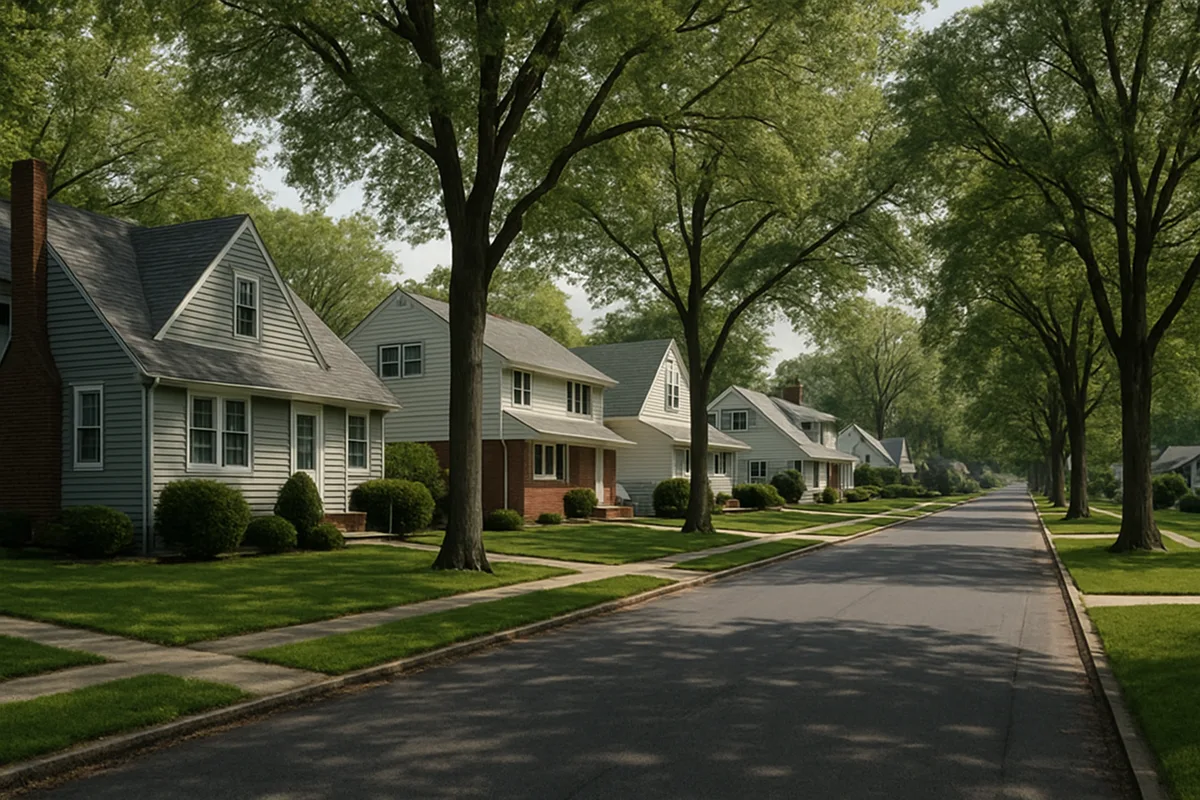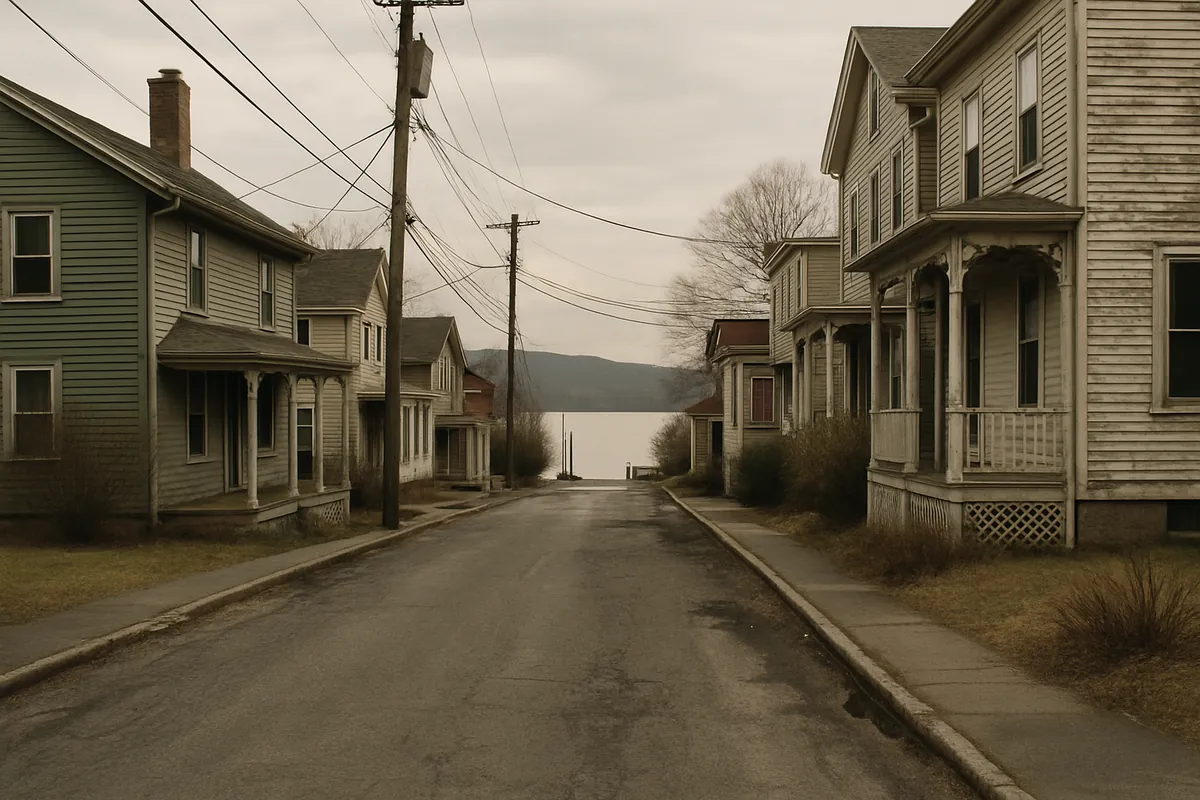
New City Trenchless covers trenchless sewer repair in West Haverstraw, an incorporated village inside the Town of Haverstraw along the Hudson River corridor. A lateral here can be clay tile from an older river block, Orangeburg fiber pipe from the postwar building years, or cast iron near the foundation of a house that has been patched more than once. A camera inspection is what separates one from the other, not the street a house happens to sit on.
A Village Inside the Town of Haverstraw
West Haverstraw is its own incorporated village, distinct from the neighboring Village of Haverstraw even though both fall under the Town of Haverstraw for permitting and parcel records. That distinction matters more than it sounds. A homeowner calling about a sewer permit or a parcel boundary question needs the town-level office that actually holds those records, not an assumption that the two villages share an address book because their names overlap.
The practical sewer question does not change with that boundary. Whichever village a house sits in, the lateral running from the foundation to the public main is private pipe, and its condition depends on when it went into the ground and what the local soil has done to it since, not on which village line it falls inside.
Hudson River Corridor Clay Under the Lawn
West Haverstraw sits on the river corridor’s dense, fine-grained clay, the same general deposit that runs through this stretch of Rockland’s Hudson shoreline. That clay holds water, swells when saturated, and shrinks back as it dries, and a buried lateral sitting in it takes that movement one joint at a time. Clay tile is the material most exposed to this, since every joint between sections is a place the shifting ground can pry open a gap for roots or groundwater to use.
Cast iron and Orangeburg fail along different lines in the same clay. Cast iron corrodes faster where the surrounding soil holds moisture against the pipe wall year round, losing material from the invert until the bottom of the pipe channels out. Orangeburg does not corrode at all, but a water-saturated clay bed gives it nothing firm to hold its shape against, so it ovals and eventually blisters from the inside. None of these failure patterns is visible from the surface. They show up on a camera run, and only there.
Postwar and Mid-Century Streets, Three Likely Materials
| West Haverstraw housing | Typical era | Likely lateral | First thing we check |
|---|---|---|---|
| Older blocks near the river | Pre-1940s | Clay tile or cast iron | Whether any outside cleanout exists |
| Postwar village streets | 1940s to 1960s | Clay tile or Orangeburg | Whether the fiber pipe still holds round |
| Mid-century infill farther from the water | 1950s to 1970s | Orangeburg or clay tile | Ovaling, blistering, or offset joints |
| Later replacement sections | 1980s onward | Plastic | Settlement where new pipe meets old |
A single block can mix two or three of these rows. A house built in the 1950s may have had one section replaced after a prior failure while the rest of the run stayed original, and the only way to know where that boundary sits is to follow the camera the full length of the lateral rather than stopping at the first clear section.
Denser Village Lots Versus the Outlying Acreage
Village lots in West Haverstraw tend to run narrower and closer together than parcels farther out in the Town of Haverstraw, where houses sit on larger acreage with more room between structures. That density changes what a repair actually looks like on the ground, even when the pipe problem itself is identical.
On a tight village lot, a lateral may run close to a shared driveway, a side-yard fence, or a neighbor’s foundation, and there is rarely space to park heavy equipment without affecting someone else’s property for the duration of the job. Outside the village, a longer run across open acreage gives a crew more room to stage work, but it also means more linear feet of pipe exposed to the same clay and the same decades of settling. Neither setting is simpler by default. Trenchless access through an existing cleanout, or a single compact pit at a wye, is what keeps either kind of lot from turning into a full-yard excavation.
Camera Inspection Before Choosing Lining or Bursting
Every repair decision in West Haverstraw starts with a sewer camera inspection run the full length of the accessible lateral. The footage shows the material, the condition of the joints or the pipe wall, whether a section has bellied or gone out of round, and how far a defect sits from the house or from the connection at the main.
A pipe that is still structurally round with distributed joint failure, scale, or interior corrosion is typically a candidate for trenchless pipe lining, which cures a new wall in place through an existing cleanout or a small access pit. A run that has collapsed, flattened, or needs a larger working diameter than the original pipe calls for bursting instead, which replaces the line through the same path using new pipe pulled behind a bursting head. Orangeburg that has already gone noticeably out of round is past the point lining can help; that condition belongs to Orangeburg pipe replacement rather than a liner. Cast iron that still holds its shape but has lost wall material to corrosion fits the same lining approach used elsewhere along the river corridor.
Private Lateral, Public Main
The sewer main running under a West Haverstraw street is a municipal asset, maintained at the Town of Haverstraw level. The lateral connecting a house to that main, including the connection itself, belongs to the property owner, and nearly every repair call we take in this village involves that private section rather than the public main. Confirming which office at the town handles permitting for work in the street right of way is worth doing before a job is scheduled, since that answer can vary by block and by what the work actually touches.
That ownership line is also why a camera inspection matters as much here as anywhere in the county. Knowing exactly where a defect sits, close to the foundation, mid-run under the lawn, or right at the connection, decides who is actually responsible for fixing it and how much of the yard a repair needs to reach.
Matching the Method to the Lateral
The sewer line repair and replacement decision in West Haverstraw follows the same ladder it does across the rest of the river corridor. A single failed joint on an otherwise sound clay or cast-iron run is a candidate for a sectional spot repair. A run with distributed joint failure or corrosion along a structurally intact pipe supports a full liner. A collapsed, badly ovaled, or undersized line goes to bursting, which installs new pipe through the existing route without a continuous open trench.
Open-cut excavation remains the fallback when the camera finds a condition trenchless cannot cross, but on the village’s narrower lots it usually means disturbing more of a driveway, a shared fence line, or a neighbor’s yard than the job itself requires.
West Haverstraw Among Its Northern Rockland Neighbors
West Haverstraw sits between Haverstraw, the pre-1940 village just east along the river with its own dense clay and cast-iron pattern, and Stony Point to the north, where postwar subdivisions sit on rockier ground. Inland, Thiells and Garnerville cover the same Haverstraw-area clay and cast-iron questions on hamlet lots with more room than the village affords. A camera inspection remains the fastest way to confirm which of those patterns, or which mix of them, actually applies to a specific West Haverstraw lateral.
Burst Pipe Repair in West Haverstraw: Which Pipe Failed?
A search for burst pipe repair in West Haverstraw can describe different problems. Water escaping from a supply pipe, wastewater backing up through fixtures and a damaged underground sewer lateral need different assessments. Tell the provider what you can observe rather than choosing a repair method before the pipe has been identified.
Incoming Water or Wastewater?
Describe whether water is leaking continuously, whether pressure has changed and whether the problem appears when fixtures drain. Report any wastewater backup and which fixtures are affected. These observations help frame the request, but they do not establish the cause on their own.
For wastewater problems, review emergency sewer repair. For the buried incoming-water service, see trenchless water line replacement. Indoor plumbing repairs, frozen-pipe thawing and water-damage restoration require confirmation of a provider’s separate service scope; do not assume a sewer-lining request includes them.
Pipe Bursting Is a Replacement Method
Pipe bursting is the name of a method used to replace a buried pipe. It does not mean the same thing as repairing every pipe that has burst. Ask the provider to explain whether the inspected route, nearby utilities and available access make that method suitable for the property.
A liner follows the existing route. If the problem includes inadequate fall or a sag, the proposal needs to explain how that condition will be addressed rather than treating a new inner surface as a correction to the pipe’s slope.
What to Include in a West Haverstraw Repair Request
Include the property location, affected fixtures, visible symptoms and any earlier inspection or repair records. Mention known cleanouts and whether access is beside a driveway, fence or neighboring property. If a camera could not pass part of the drain, include that limitation with the request.
Access, Restoration and Responsibility
Before authorizing work, ask for the proposed access locations, the pipe section included and the surfaces that may need restoration. Request a written explanation of exclusions and what happens if preparation reveals additional damage. Confirm the responsible sewer authority and property-specific ownership boundary rather than relying on a general description of private and public pipe.
Repairing the pipe and drying or restoring water-damaged rooms are separate scopes. Ask who handles each part and what the proposed work includes.
For a West Haverstraw sewer assessment request, send the property details. Confirm availability and the specific service scope with the assigned provider before booking.
Frequently Asked Questions
Is West Haverstraw the same as the Village of Haverstraw?
No. West Haverstraw is its own incorporated village, separate from the Village of Haverstraw next door, though both sit inside the Town of Haverstraw. Permit and parcel questions for a given address are handled at the town level, so it is worth confirming which village office applies before assuming the two share records.
What kind of sewer lateral is typical under a West Haverstraw house?
It depends on when the block was built. Older sections close to the river can still carry clay tile or cast iron, while the postwar and mid-century streets more often run on vitrified clay or Orangeburg fiber pipe. A camera inspection identifies which one is actually under a given lot rather than guessing from the house's age.
My lot is small compared to a house a few blocks outside the village. Does that change the repair?
It can. A tighter village lot usually means a shorter run but less room to stage equipment or open a trench without affecting a driveway, a fence line, or a neighbor's yard. Trenchless access through a cleanout or a single small pit matters more on a dense lot than it does on an acre outside the village line.
How do you decide between lining and bursting for an Orangeburg or clay lateral?
The camera inspection decides it. A pipe that still holds a round shape with distributed joint or wall failure is usually a lining candidate. A run that has gone out of round, collapsed, or needs a larger diameter than the original goes to bursting instead, which replaces the pipe through the same path.
Who is responsible for the sewer line, me or the town?
The public main under the street is a municipal responsibility, handled at the Town of Haverstraw level rather than by the village alone. The lateral running from your foundation out to the connection at that main, including the connection itself, is the homeowner's private pipe, and that is where almost every residential repair question actually starts.
Is burst pipe repair the same as pipe bursting?
No. A burst pipe describes a failure. Pipe bursting describes a method for replacing a buried pipe when the site and pipe route are suitable.
Can a sewer-lining request include frozen indoor water pipes?
Do not assume so. Explain which pipe appears affected and confirm that the provider handles frozen-pipe or indoor supply-pipe work before scheduling.
Does a pipe repair quote include water-damage cleanup?
Only if the written scope says it does. Ask separately about water removal, drying and restoration, as well as the pipe repair itself.