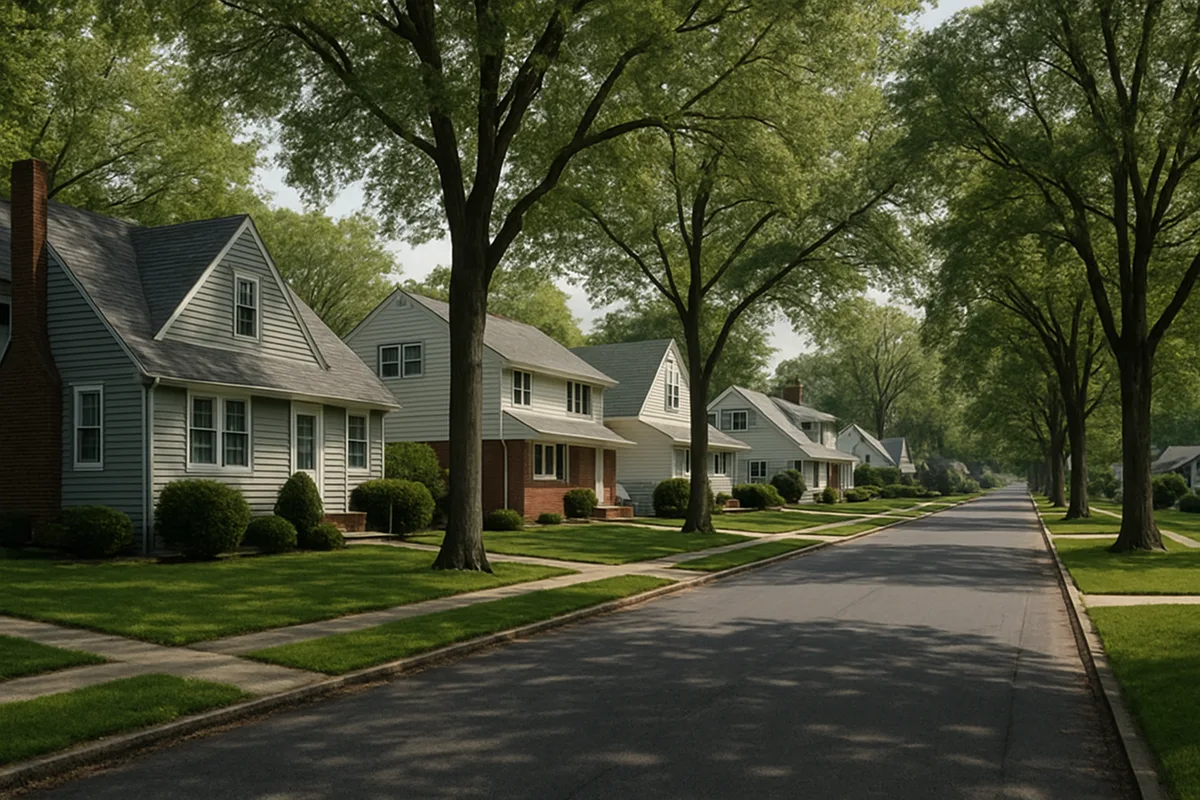
New City Trenchless covers pipe bursting and cured-in-place lining options for Stony Point, the northernmost town in Rockland County. Many subdivisions here were built between the 1950s and the 1970s, which puts original laterals at roughly 50 to 75 years old, and the ground under them can be notably rocky.
Who Owns What on the Joint Regional Sewerage Board System
Stony Point’s wastewater runs to the Joint Regional Sewerage Board, the authority the town shares with its Haverstraw neighbors. The board’s plant and the sewer mains in the street are public. The lateral from your foundation to the tap at that main is yours, including any stretch crossing a sewer easement in the front yard, and including the connection at the main itself.
That ownership line is why the exact position of a defect matters more than the fact of it. The locating sonde behind the camera head marks the spot and its depth from the surface, so a fault at 62 feet under the driveway and a fault at 91 feet out in the road shoulder get answered differently. Even a failure right at the tap can usually be reached from the house side without cutting the road above the main. The Town of Stony Point can confirm which district a given address falls in, and that is worth a phone call before anyone starts quoting.
Where the Sewer District Ends and Septic Begins
Not every property in town is sewered. Stony Point covers a lot of ground, and the more rural western lots run on septic systems rather than a public tap. On those properties the failing pipe is a building sewer running from the house to the tank, and it fails in exactly the same ways a lateral does: root mats at the joints, offsets, bellies holding standing water, collapsed Orangeburg.
Trenchless works there too. What it cannot fix is a saturated leach field or a cracked tank, which is a different repair with different rules, and the EPA’s septic guidance sets out how those components are supposed to behave. A camera run separates the two problems before you spend money on the wrong one.
Three Decades of Subdivision, Three Generations of Pipe
Stony Point filled in across the exact years lateral materials were changing over. Fifties builds got vitrified clay tile or Orangeburg, the bituminized fiber pipe pressed in Orangeburg NY about ten miles down the county. Sixties builds sit squarely in the peak Orangeburg installation years. By the mid seventies SDR-35 PVC had taken over. A 1958 ranch and a 1974 colonial two streets apart can carry entirely different pipe with entirely different failure modes, which is why the method gets picked from footage rather than from the deed date.
Orangeburg is the urgent case. The fiber pipe ovals under soil load, blisters and delaminates on the inside, and finishes as a collapsed line no drain auger will reopen. A deformed but still passable lateral is the right moment for Orangeburg pipe replacement, because pipe bursting needs a bore the head can still be pulled through. Wait until it has flattened completely and the trenchless window can close.
Rock Is Why Open-Cut Quotes Get Ugly Here
The land west of the Palisades Interstate Parkway climbs toward Bear Mountain and Harriman, Dunderberg stands over the north end of town, and limestone was quarried commercially at Tomkins Cove through the 1800s. Boulders turn up in yards well east of the ridge. Rock is what wrecks an open-cut budget in Stony Point: an excavator that hits ledge stops digging and starts hammering, and hammering is billed by the hour with no ceiling anyone can promise you up front.
Trenchless avoids the argument entirely. A bursting head follows the existing bore and tows new HDPE behind it through ground nobody has to break, and lining needs nothing more than access at a cleanout or a small pit over a wye. Freeze-thaw cycling is the second reason to stay out of the ground here. Every winter works frost down through the soil column and back out, and ground that has been opened and backfilled settles differently from ground that never was, which is how a repaired trench line shows up as a strip of sunken lawn three springs later.
Grassy Point, Tomkins Cove and Water at Pipe Depth
Down on the river at Grassy Point and Tomkins Cove the problem flips from rock to water. The Hudson is tidal this far north, the marsh at Iona Island rises and falls with it, and low riverfront ground holds the water table at or near pipe depth. Aged joints under a standing water table do not leak occasionally, they take on groundwater steadily, and that infiltration loads the main along with everyone else’s.
The same low streets have flooded in storm tides before, which pushes a surcharged main back toward the house. You can check whether a specific address sits in a mapped flood zone through the FEMA Flood Map Service Center. Riverfront homes here get two recommendations rather than one: line the lateral so the joints stop taking water in, and fit a backwater valve so a surcharge cannot reverse into the basement. Sewer backup repair on a low-lying lot is only finished when both directions are closed off.
What the Camera Decides Before Anything Is Quoted
Every one of the choices above comes off footage, not off a guess. A sewer camera inspection run to the main tells you the material, the slope, whether a belly is holding water, whether roots are at one joint or thirty, and whether an Orangeburg run is still round enough to burst. Defects get described against the NASSCO condition coding standard so a crack, a fracture and a full break are not all called “damage” on the quote.
Stony Point Trenchless Costs at a Glance
Trenchless sewer repair in Stony Point prices the same way it does in Congers and everywhere else in the county:
| Job | Typical range |
|---|---|
| Camera inspection | $250 to $500, usually credited toward repair work |
| Sectional spot repair | $1,500 to $4,000 |
| Full lateral lining | $4,000 to $12,000 |
| Pipe bursting with new HDPE | $6,000 to $15,000 |
Rock and groundwater move a job within these ranges, not outside them. Both of them raise an open-cut bid far faster, which is how a dig on a rocky Stony Point lot ends up at 1.5x to 2x the trenchless price once excavation, rock work and putting the yard back are counted.
Frequently Asked Questions
My house was built in 1962. Should I assume Orangeburg pipe?
Treat it as a live possibility, not a certainty. Clay tile went in during the same years, and some laterals were replaced with PVC later. Only camera footage settles it, and the difference matters because a deformed Orangeburg line needs replacement, not another cleaning.
Can a sewer line be replaced through rock?
Usually, yes. Pipe bursting follows the path of the existing pipe, so rock that would stall an excavator never has to be dug. The only excavation is the small launch and receiving pits at each end of the run.
My street has no sewer main. Does trenchless still apply?
Yes, with a different target. Parts of Stony Point sit outside the sewer district and run on septic, and the pipe from the house to the tank is a building sewer that fails the same ways a lateral does: roots, offsets, bellies, collapsed Orangeburg. It can be lined or burst just like a sewered lateral. What trenchless cannot fix is a failed tank or leach field, so the camera run tells you which problem you actually have before anyone quotes.
What does a backwater valve add for a Grassy Point home?
It closes automatically when the public main surcharges, so floodwater in the system cannot reverse through the lateral into the basement. Paired with a lined, sealed lateral it protects a riverfront home from both directions: groundwater leaking in and sewage backing up.
How long does trenchless work take in Stony Point?
Most full lateral linings finish in one day. Pipe bursting takes one to two days including the access pits, and the line is back in service the same day the work wraps up.