New City Trenchless explains CCTV sewer inspections for Rockland County houses under contract. A home built between 1945 and 1972 in this county may drain through vitrified clay, cast iron or Orangeburg fiber pipe, and none of the three ages quietly. A sewer inspection before buying a house commonly costs $250 to $500 and takes about an hour. The repair it can surface varies widely depending on what the camera finds, and the inspection contingency is when a buyer still has leverage to negotiate.
Why 1945 to 1972 Rockland Houses Get Scoped
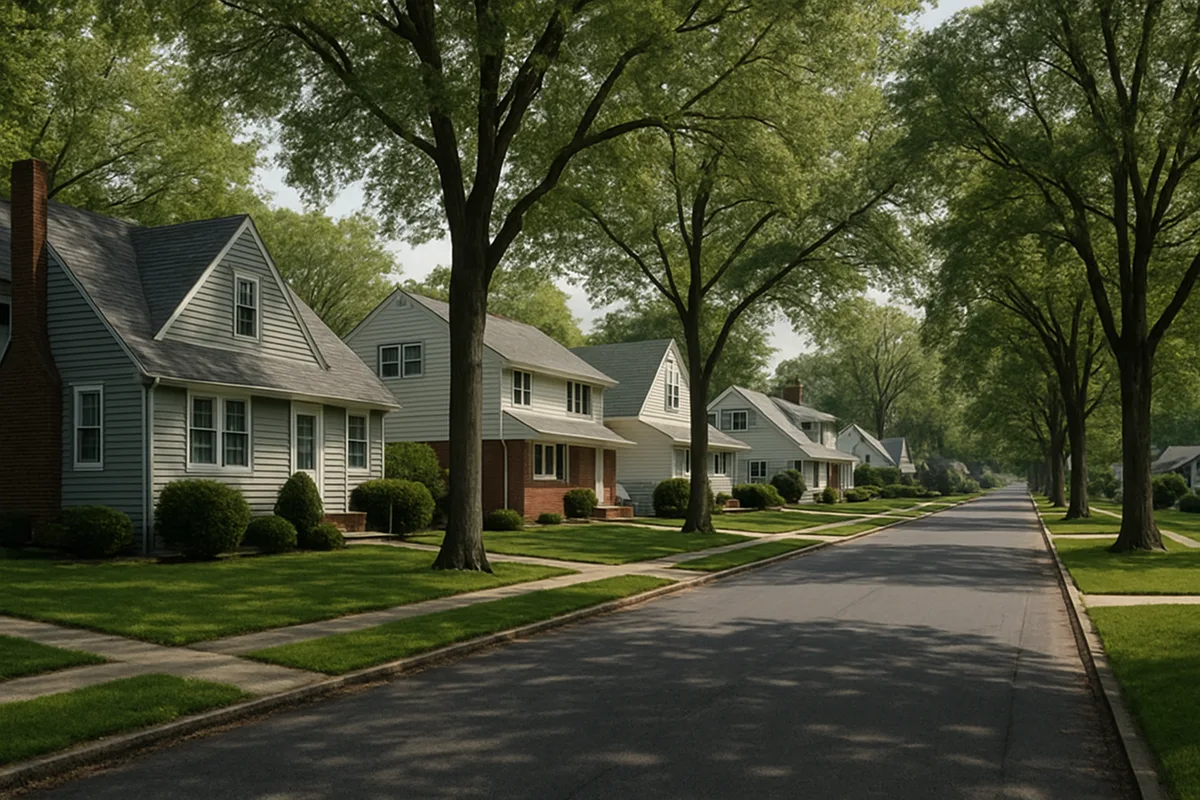
The postwar subdivision boom that built Nanuet, Bardonia, Valley Cottage and most of New City itself put laterals in the ground in the materials of the day. Clay tile joints have had sixty-plus years for roots to find. Cast iron of that era is at the age where scale buildup and channeling narrow and thin the pipe. And this county sits ten miles from the Orangeburg NY factory that made bituminized fiber pipe, so the hometown product went into local trenches by the mile, and most of it is now past its design life.
The build-out accelerated after the Tappan Zee Bridge opened in 1955, which is why so much of the county’s housing shares a single construction window and therefore a single set of underground materials. Housing age data collected through the American Community Survey tells the same story at the county level that a camera tells one house at a time.
A fresh bathroom renovation says nothing about any of this. The lateral is the one system a buyer cannot see, cannot test from a tap, and fully owns from the foundation wall to the tap connection at the sewer main.
What Happens on the Day
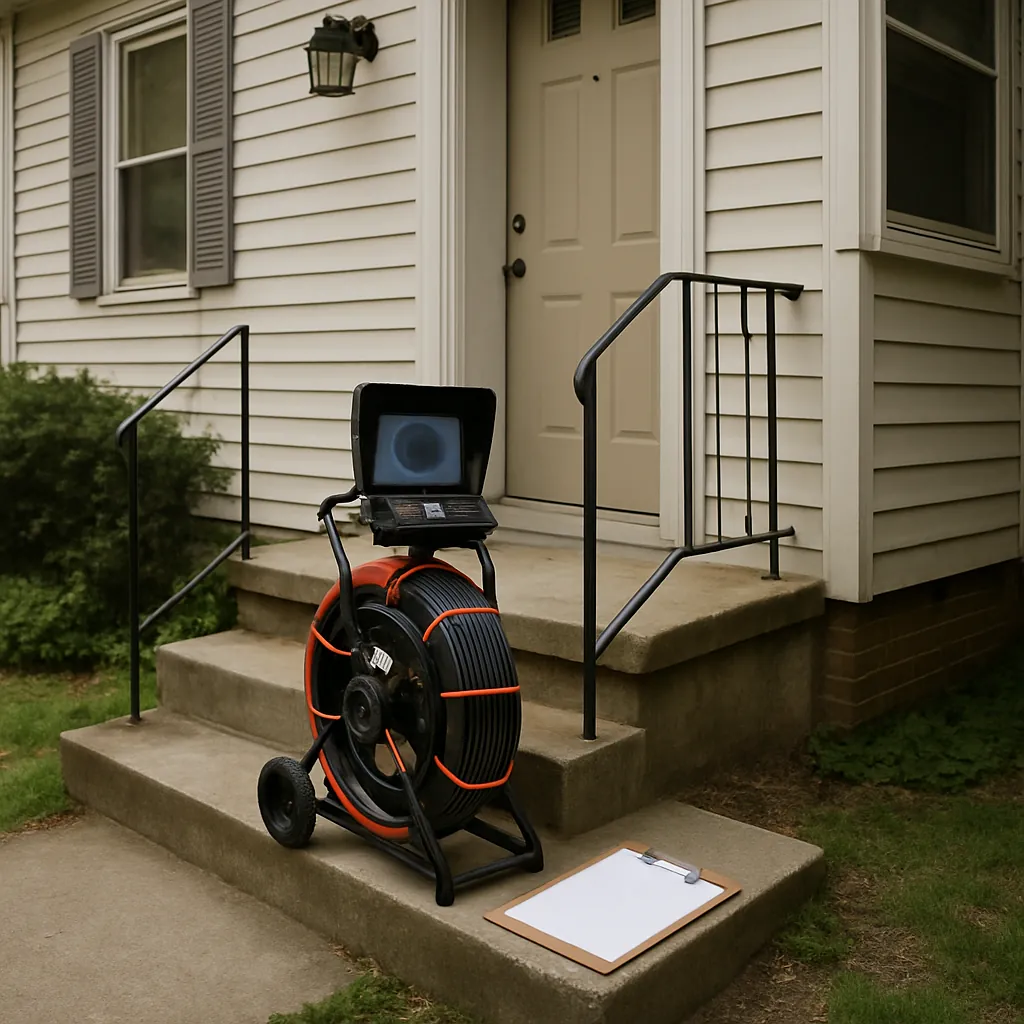
The scope is non-invasive and it does not need the house to be empty, only accessible. The camera enters through an existing cleanout where the property has one, ideally a two-way cleanout that lets the head run toward the house and toward the street from the same opening. Where there is no exterior cleanout, access is through a house trap or a roof vent, and the report notes which route was used, because it affects how much of the line was seen.
The head travels the full lateral to the tap at the main, recording continuously, with a footage counter tying every observation to a distance. A locating sonde behind the lens is used to mark the surface position and depth of anything found. Plan on about an hour on site, longer if the line has to be cleared before the lens can see anything, and the recording plus the written log reach you the same day. The mechanics are the same as any sewer camera inspection; what changes is that the report is written for a negotiation rather than for a repair crew.
What the Report Gives Your Attorney
The scope should produce three things you can attach to a repair request: the full video recording, a written defect log tying each observation to an exact footage distance, and a locating sonde mark with the depth of any defect. The report should identify the pipe material and state whether the line is serviceable, worth monitoring or needs repair. If repair is needed, request a firm number for the specific fix.
The report also records what could not be seen and why, which matters more than it sounds. A line inspected only from a basement cleanout toward the street, with the run under the house unseen, is a partial result, and a buyer should know that before treating it as a clean bill of health.
Turning the Findings Into a Seller Credit
The negotiation needs a defensible number, and the camera gives you one. Typical Rockland repair pricing by finding:
| What the camera finds | Typical repair |
|---|---|
| One failed joint in an otherwise sound line | $1,500 to $4,000 sectional spot repair |
| Root entry or scaling along the run | $4,000 to $12,000 full lateral CIPP lining |
| Collapsed, deformed or back-pitched line | $6,000 to $15,000 pipe bursting replacement |
Two things move a credit conversation. The first is that these are trenchless numbers. The open-cut version of the same repair often lands at 1.5x to 2x the price once excavation, driveway and landscape restoration are counted, so a seller who wants to argue the figure down is usually arguing against the cheaper method.
Many attorneys push for a credit at closing rather than a seller-managed repair because a credit lets the buyer choose the contractor and method. Schedule the scope inside the inspection contingency so the numbers are available while the buyer still has leverage.
What the General Home Inspection Cannot See
A standard home inspection runs the taps and watches the drains for a few minutes. A lateral half-closed with scale, a root mat two joints past the foundation, or a belly holding two feet of water will pass that test on the day and back up into the finished basement six months later.
The inspector also cannot tell you whether the line crosses a neighboring lot, which in the older river villages sometimes turns on a sewer lateral easement your title search should confirm, or whether an original house trap is still buried in the front yard collecting whatever the line sends it. Nor can that inspection tell you where the private lateral ends: the mains are maintained by Rockland County Sewer District No. 1, and everything from the foundation to the tap is the owner’s problem, which after closing means yours. Those are underground questions, and the only instrument that answers underground questions is a camera with a sonde behind the lens.
The River Villages Are a Different Inspection
A pre-1940 house in Nyack, Piermont, Tappan or Haverstraw is not the postwar tract case with an older date on it. The runs are frequently longer and deeper, the original materials are older still, and many of these laterals have already been patched once or twice by previous owners, sometimes in mixed materials that meet at a transition collar nobody documented.
Low-lying ground near the river carries a high water table, and that changes what the camera means. Groundwater standing above the pipe invert pushes into every open joint, so a line that looks merely damp in a dry New City yard can be actively taking on water in Piermont. Infiltration of that kind loads the public system as well as the private one, which is why the EPA treats inflow into sanitary sewers as a network problem rather than a homeowner’s curiosity. On the slope streets above the river, the opposite risk applies: a lateral laid down a steep grade can lose its bedding and pull joints apart.
Flips, New Kitchens and “Recently Renovated”
Renovation money goes where buyers look. A house that has just been flipped will show a new kitchen, refinished floors and fresh paint, and the sewer lateral will be exactly as old as it was before the work started, sometimes older in effect, because construction traffic and a dumpster parked over the line do not help a 1958 clay pipe.
Two flags are worth checking specifically on a flip. If the basement floor has been resurfaced, ask what happened to the house trap and whether any under slab work was done, because that is where an unpermitted quick fix hides. And if the front yard has new sod in an otherwise mature landscape, something was dug up recently, and you want to know what. Deformed Orangeburg in particular cannot be lined, so a cosmetic fix in that material is not a fix at all, and the camera will say so in a minute.
Frequently Asked Questions
How much does a pre-purchase sewer scope cost?
$250 to $500 is a common range, and some providers credit it against later repair work. Against a purchase where the downside is a five-figure sewer replacement, it can be one of the least expensive inspections in the transaction.
When should I schedule it?
Inside your inspection contingency window, ideally the same week as the general home inspection. The scope takes about an hour and the footage and defect log go to you the same day, which leaves time to negotiate before the contingency expires.
The house has big trees in the front yard. Does that matter?
Yes. Mature trees over a clay tile lateral almost guarantee root intrusion at the joints. Roots are manageable if caught, but you want the repair priced before you own it, not after the first backup.
What if the seller refuses a sewer scope?
Treat refusal as information. The scope is non-invasive, enters through an existing cleanout and leaves no mark on the property. There are few innocent reasons to refuse one on a 60-year-old house.
Does a clean scope mean the sewer is fine for years?
It means the pipe was sound on the day, with no roots, no offsets and no standing water on camera. That is a genuine result and it is what most buyers are paying to find out. It is not a warranty, because a camera reads the inside surface and cannot measure how much wall a cast iron line has left.