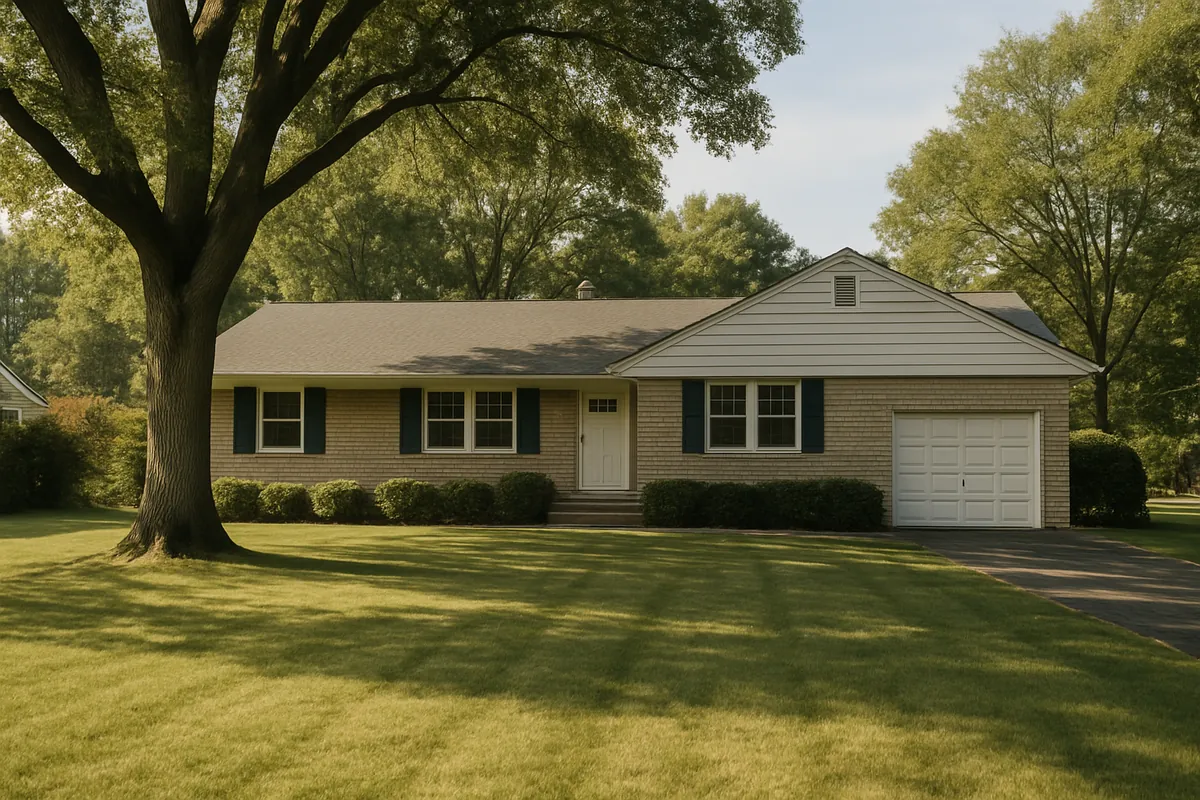
New City Trenchless covers trenchless sewer repair in Thiells with camera diagnosis before CIPP lining or pipe bursting is proposed. In this northern Rockland hamlet within Haverstraw, clay and cast-iron lateral questions should be settled from the pipe itself. A house’s appearance cannot establish the age, route, or condition of the sewer beneath it.
Start With the Route From the House
A Thiells sewer inspection begins by finding usable access and understanding where the house drain leaves the building. An indoor cleanout may reach the outdoor lateral, or a bend or old fitting may limit passage. Knowing that early prevents a repair proposal from depending on an access point that cannot accommodate the equipment.
The outdoor route needs equal attention. A lateral may pass beneath lawn, a driveway edge, or landscaping before reaching its connection. Surface distance is not a substitute for a located pipe route. The crew should mark the actual alignment and relevant depths before identifying pit locations or deciding how equipment will reach the work.
Why the Second Backup Matters
One blocked drain may involve an indoor branch. Several fixtures slowing together, especially with water appearing at a lower fixture, can indicate a shared downstream restriction. Those symptoms justify investigation but do not establish whether the cause is roots, scale, a foreign object, or a structural defect.
After repeated cleaning, ask what the earlier visit actually documented. Was the obstruction reached at the same distance? Was footage recorded after flow returned? Did anyone identify the material at that point? A history of visits becomes useful when it can be compared with a defect location, rather than treated as an automatic reason to replace everything.
| Observation | Inspection question | Possible next step |
|---|---|---|
| Repeat roots | Which joint admits them? | Seal the entry if geometry permits |
| Rough iron surface | Deposit or damaged wall? | Assess controlled preparation |
| Clear upstream pipe, slow discharge | What happens farther downstream? | Continue the inspection toward the connection |
| Camera stops at an offset | Can the defect be crossed safely? | Locate it before choosing repair access |
Choosing Between CIPP and Replacement
Cured-in-place pipe lining creates a new pipe wall inside the existing route. For a clay lateral with suitable alignment, it can bridge joints without opening a trench along the lawn. For cast iron, preparation and remaining condition are central to feasibility. The inspection should establish both before lining is presented as the answer.
Bursting replaces the old run through planned access points. That can be appropriate where retaining the host pipe makes little sense, provided the route, utilities, connections, and ground conditions allow it. Neither method removes the need to understand slope. A low section holding wastewater may require a targeted excavation to correct its grade.
Thiells Within the Haverstraw Area
Nearby Garnerville shares the clay-and-cast-iron inspection questions addressed here. The Haverstraw page describes the village’s older lateral context, while Stony Point adds another northern Rockland service area and West Haverstraw covers the separate riverfront village with its own mix of clay and Orangeburg laterals. These connections help homeowners compare repair approaches without assuming that a neighboring property’s pipe is identical to their own.
Prepare for a Visit Without Guessing at the Cause
Before a Thiells inspection, note whether the problem follows laundry, showers, or several fixtures operating together. Record whether it occurs during dry weather as well as rain. Those details help the technician decide what to observe, but none replaces a look inside the pipe. Avoid using repeated chemical treatments to test a theory about roots or damaged iron.
Clear a safe route to known cleanouts and identify any covers that have been landscaped over. Do not open a backed-up cleanout yourself. If wastewater is entering the building, stop unnecessary fixture use and describe the active backup when arranging service. Once flow is restored, request an explanation of what remains unresolved. A line that drains again may still have an open joint or damaged wall, and that distinction should be reflected in the follow-up recommendation rather than lost at the end of a cleaning visit.
What a Useful Camera Inspection Should Deliver
A sewer camera inspection should produce more than a verbal description of a blockage. Ask for footage, the inspected length, the material seen, and the distance to each significant defect. If a section cannot be passed, the report should state that limitation. An unseen downstream segment should not be described as sound simply because the upstream section is clear.
Cleaning may be needed to expose the wall, but the method must suit the material and condition. Fragile or deformed pipe calls for caution. After preparation, a second camera pass can distinguish remaining structural damage from the buildup that initially hid it. Recordings from before and after cleaning make the recommendation easier to assess.
Match the Scope to the Defect
The sewer line repair and replacement decision starts with whether damage is isolated or repeated. One localized defect may justify a spot repair. Several leaking joints along an otherwise suitable host may support trenchless pipe lining. A crushed section, unsuitable geometry, or a badly deteriorated run may lead to replacement instead.
Pipe bursting can install a replacement through the existing route when the site allows it. It requires planning for nearby utilities and service connections. Lining does not restore missing slope, and bursting should not be promised as a universal cure for a belly. Where grade must change, the proposal needs to explain the excavation necessary to achieve it.
If inspection identifies fiber pipe, review the Orangeburg replacement options before authorizing aggressive cleaning or a liner. The condition of that material matters more than the convenience of a particular installation method.
Compare Written Proposals on the Same Basis
Ask each proposal to identify the length being repaired, the access locations, preparation, connections, and restoration included. Confirm how household sewer use will be handled during the work and what happens if preparation reveals additional damage. These questions are more useful than comparing two totals that cover different sections of pipe.
Closing footage should show the completed repair and the accessible connections. Keep that recording with the original inspection and written scope. It gives a future technician a starting point and documents where the new work meets the remaining lateral. To arrange an assessment, call 845-507-6985 and describe the symptoms, prior cleaning, and any known access points.
For clean water escaping from a broken supply line, burst pipe repair in Thiells explains isolation, locating and repair choices before the water is restored.
Frequently Asked Questions
Can a sewer lateral in Thiells be repaired without a full trench?
Often, if the inspected pipe and access suit lining or bursting. A collapsed section, grade problem, or connection repair may still require localized excavation.
Does a camera inspection identify clay or Orangeburg?
It can help identify material, transitions, and deformation where visibility and access allow. Dirty water or an impassable blockage may require further assessment before the material is confirmed.
Will lining fix a low section of sewer pipe?
Lining follows the existing route and does not restore slope. A low section holding wastewater needs an assessment of grade and may require excavation.
Should I keep cleaning a line that backs up repeatedly?
Repeated backups deserve a documented inspection. Cleaning can restore flow, but an open joint, damaged wall, or low section may need a repair to address the cause.
What should I have ready for the first visit?
Describe which fixtures are affected, when symptoms occur, previous cleaning or repairs, and known cleanout locations. Keep any earlier footage or sewer records available.