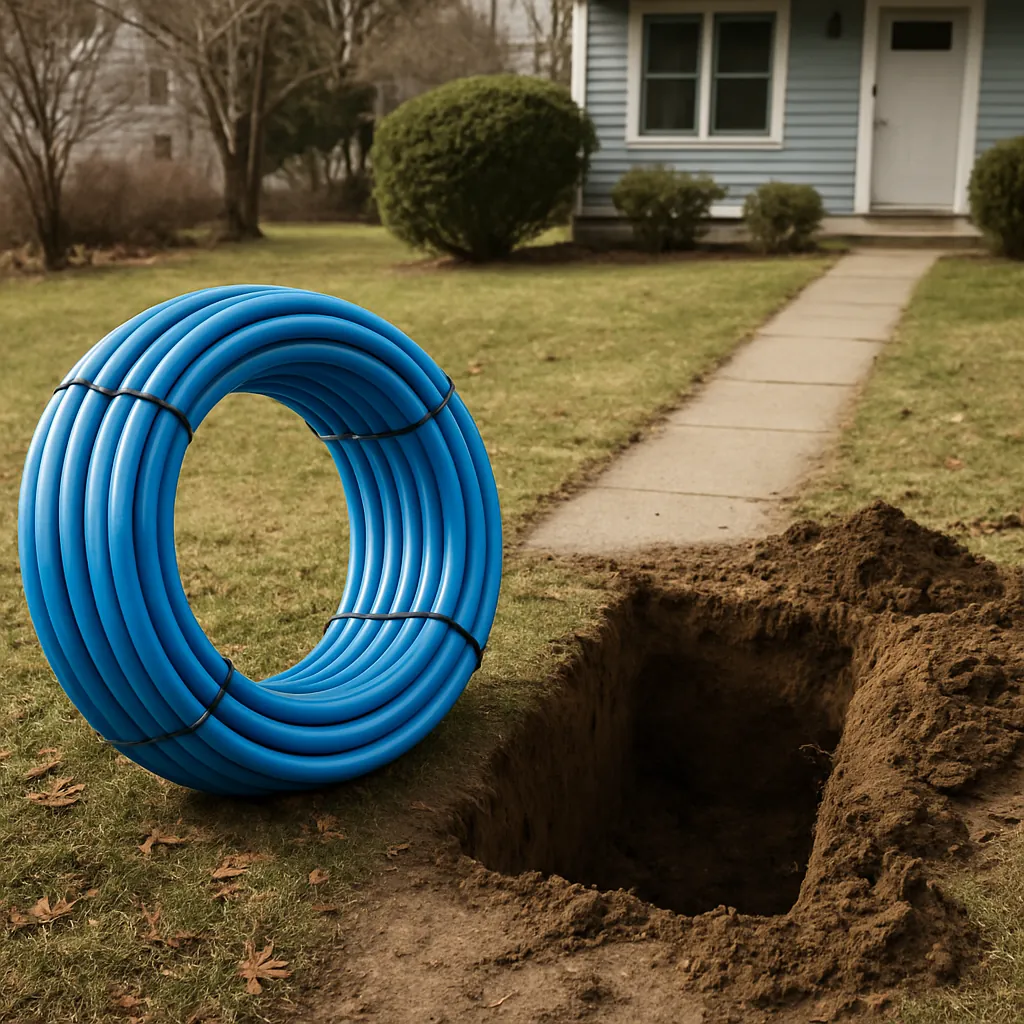
Burst pipe repair Congers NY begins with controlling the water that is escaping, then tracing the broken line rather than opening the surface with the largest stain. If the main shutoff is safely accessible, close it and leave the damaged supply isolated. Call 845-507-6985 to describe where water is appearing and whether closing the valve has stopped it.
Congers is a hamlet in the Town of Clarkstown, Rockland County NY. The Congers service area page covers local sewer repair topics. Here the focus is a broken pressurized supply pipe, whether inside the building or along the buried water service. The property assessment determines which part has failed; the hamlet name alone does not establish pipe material or repair method.
How Burst Pipe Repair Congers NY Gets From Isolation to Testing
The initial assessment starts with the shutoff status and a safe approach to the affected space. Stay clear of sagging ceilings and standing water near electrical equipment. If the indoor valve cannot isolate the leak, contact the water provider about stopping the service rather than attempting to operate utility equipment.
With the source controlled, accessible supply connections and the route toward the wet area can be checked. Water may follow a pipe or framing before it drips into view. Locating a concealed failure helps place an access opening where the pipe can actually be repaired. For a buried line, establishing its route and arranging utility locating come before planning excavation.
The repair plan should identify the failed section and the sound pipe available for connections. After the damaged section is repaired or replaced, a controlled return of water allows the connections to be checked under pressure and flow to be checked at affected fixtures. Access should remain available until those checks are complete.
Clues That the Water Is Coming From a Broken Supply
Listen for running water when fixtures are closed, and look for dampness that continues spreading without anyone using a tap. A sudden pressure change accompanied by unexplained moisture warrants a supply check. Water collecting beneath exposed piping can make the problem easier to see, but a visible drip may still have traveled from elsewhere.
A drain fault can create similar wet surfaces. Note whether water appears continuously or only when a fixture discharges. Wastewater returning through a drain calls for the response described on our emergency sewer repair page. Avoid testing the distinction by repeatedly running water into an already affected space; describe the observations you already have when calling.
Repairing a Section or Renewing the Supply Run
An accessible broken fitting or split section may allow a contained repair. The replacement must connect to suitable pipe, so the boundary of the job depends on what the surrounding material shows. Where damage extends along the run, renewing that run may make more sense than leaving weakened pipe beside a fresh connection.
A concealed supply needs a practical access plan through the surrounding finish. A buried service needs a different comparison: excavation along the route or a trenchless replacement where the layout permits it. The trenchless water line replacement guide explains why connection access and working space still matter even when a continuous trench can be avoided. Confirm suitability from the actual route rather than assuming every buried break can use the same approach.
Details That Shape a Congers Broken Pipe Job
- Isolation: A shutoff that does not hold requires coordination before the damaged supply can be worked on.
- Position of the break: Exposed piping, a concealed branch and a buried service require different access.
- Condition beyond the split: Surrounding deterioration can change where the repair should begin and end.
- Connection requirements: Pipe material and available sound connection points guide the replacement section.
- Surfaces and clearance: Cabinets, finished walls, paving and equipment access affect opening and restoration work.
Ask for a scope that identifies the pipe work, access openings, checks before closure and restoration responsibilities. If the route or extent of damage is still uncertain, ask how that uncertainty will be resolved before the permanent repair is selected.
Preparing for the Congers Assessment Without Recreating the Leak
Keep a note of where water first appeared, which fixtures were in use and what changed when the shutoff was closed. Existing photographs or pipe records can help explain the sequence without turning the water back on. Clear only areas that can be reached safely, and leave wet finishes undisturbed for assessment.
The nearby burst pipe repair in Thiells guide discusses another supply leak assessment, while each Congers repair still needs its own findings. Call 845-507-6985 with the leak location and shutoff status to discuss the next step.
Frequently Asked Questions
What if the shutoff handle turns but water keeps escaping in Congers?
The valve may not be isolating the damaged supply. Do not force it or dismantle it while water is escaping. Contact the water provider about service isolation and explain that the indoor shutoff has not stopped the flow. Keep away from water near electrical equipment.
Can water beside a foundation come from a broken indoor pipe?
Water can travel through openings before becoming visible outside. Its appearance beside a foundation does not establish whether the failure is indoors or on the buried service. Tracing the supply and checking accessible sections helps establish where access is needed.
Should furniture be moved before a concealed pipe is investigated?
Clear a dry, safe approach to the shutoff and affected area if possible. Leave heavy items, wet electrical equipment and unstable finishes alone. Ask which surfaces need to be accessible before moving belongings into another part of the room.
Does a repaired split explain why the pipe broke?
Closing the split addresses the escape point, but the assessment should also consider damaged supports, stressed connections or deterioration nearby. Ask what was observed and whether surrounding pipe needs attention before the opening is closed.
What should I ask about restoring a room after pipe access?
Ask which finishes must be opened and who handles drying, patching and decoration afterward. Pipe repair and restoration can be separate parts of the work. Have those boundaries recorded so the repair scope explains what remains after the plumbing is checked.