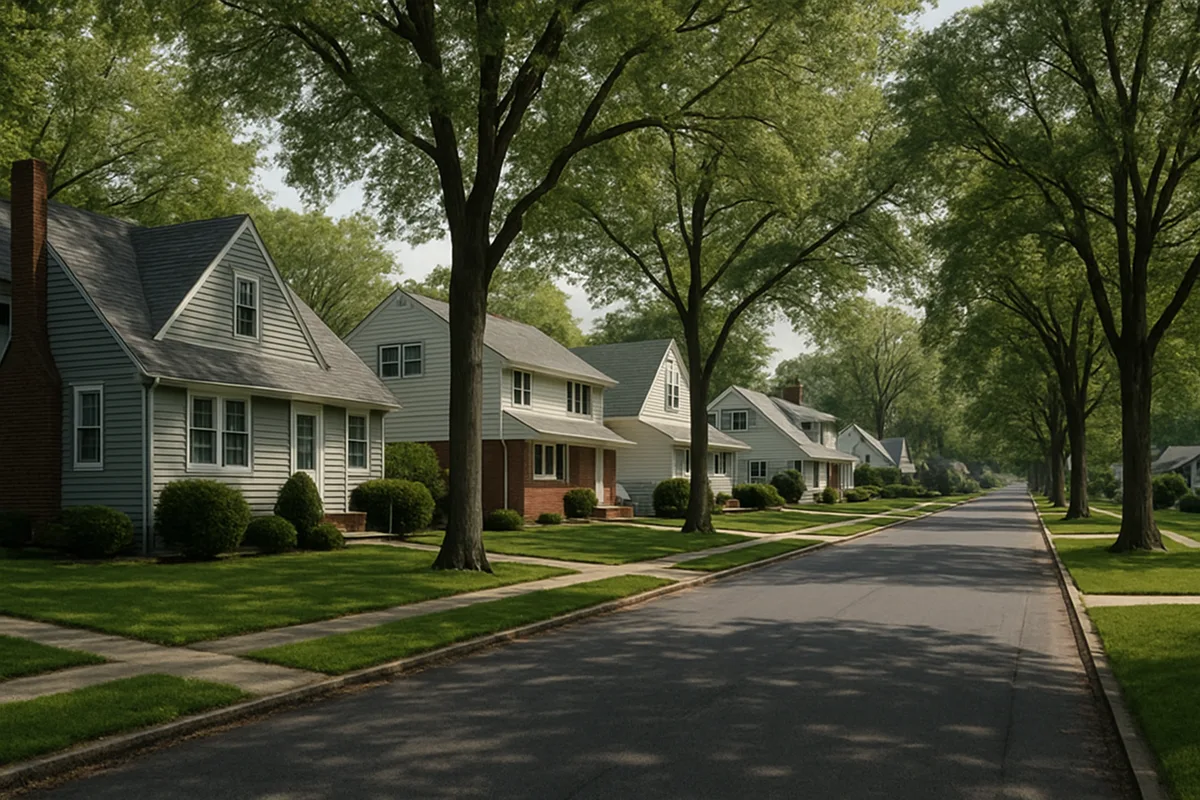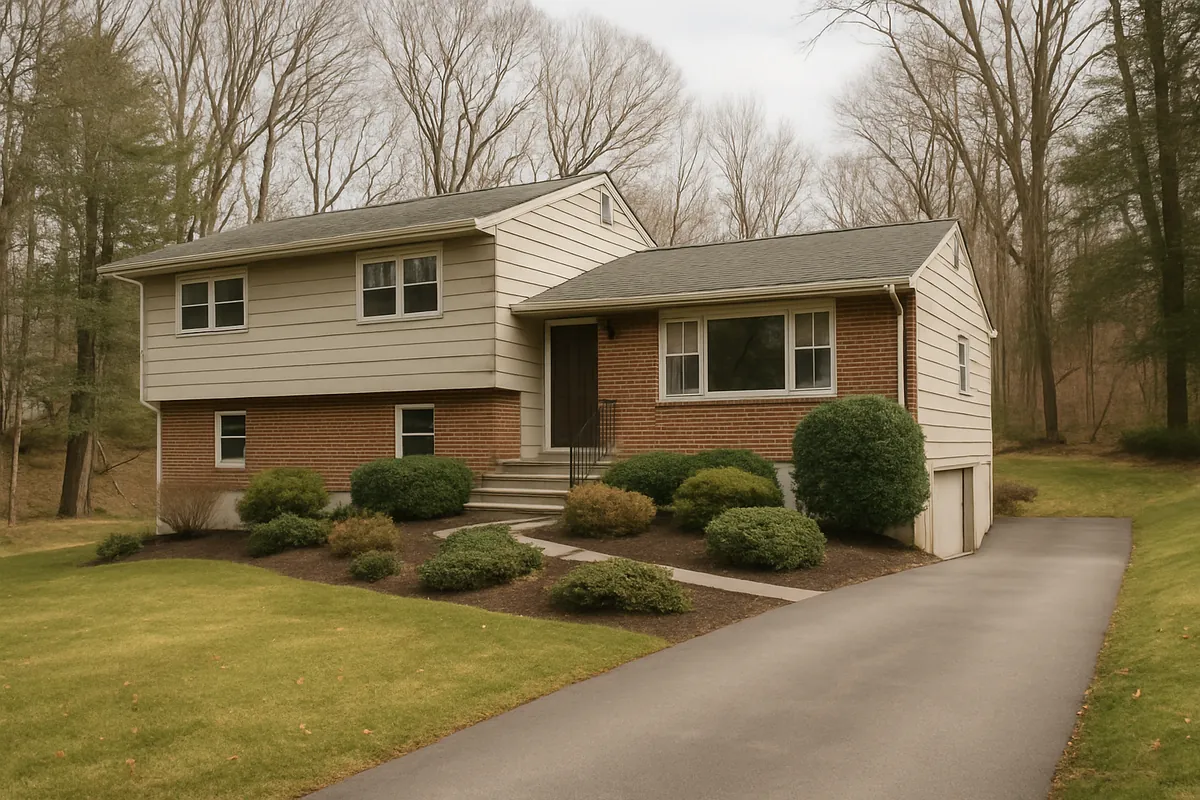
New City Trenchless covers trenchless sewer lateral repair in Tallman, an unincorporated hamlet in the Town of Ramapo set in central Rockland between the Airmont corridor and the edge of Spring Valley and Chestnut Ridge. The housing here is mostly mid-century and later tract construction on smaller suburban lots, and the laterals underneath tend to be short, direct runs from the house to the street. That setting shapes the work: a Tallman repair plan should start by locating the run and reading its condition on camera, then follow with a supported choice between lining, pipe bursting and a focused excavation.
A Hamlet Without a Village Hall of Its Own
Tallman does not have its own incorporated government. It is a hamlet inside the Town of Ramapo, which means the permit desk, the utility-marking process and the inspection requirements all run through the town rather than a village hall. That is a practical difference, not a trivia point. A homeowner who assumes the process matches a neighboring incorporated village can end up working from the wrong rulebook, and the fix is simple: confirm what a lateral repair or replacement needs with the Town of Ramapo before the ground is opened.
The housing pattern is the product of that same postwar build-out. Streets filled in through the middle of the last century and after, with ranches, splits and later infill on lots that are modest by the standards of the larger parcels a few minutes west. What sits under those homes is a generation of residential laterals that were sized and bedded to the standard of the decade they went in, and that is the starting point for almost every repair question here.
Ramapo Clay and What It Does to a Buried Lateral
The soil is the local wrinkle worth taking seriously. Ground across this part of Ramapo runs heavy with clay, and clay behaves differently around a buried pipe than the sandier, better-drained soil does. It holds water rather than shedding it, so a lateral can sit in damp ground through a wet season. It also swells as it takes on water and shrinks as it dries, and that seasonal movement presses on the pipe and works at its joints year after year.
On an older clay-tile or cast-iron run, that movement shows up as offset joints, slow sags and the kind of hairline separation a root can find. None of it is visible from the surface, and a wet patch of lawn or a slow drain does not tell you whether the cause is a genuinely open joint or simply saturated ground around a sound pipe. A sewer camera inspection with a locating sonde settles that question, recording the material, the depth and the actual condition of each joint, and marking the route on the surface so any repair works from fact rather than guesswork.
Short Runs on Smaller Suburban Lots
Tallman’s compact lots change the arithmetic in a useful direction. Where Airmont’s larger parcels push laterals out over long setbacks, a Tallman house usually drains through a shorter, more direct run to the street. The camera, not the lot size, confirms it, but the pattern tends to hold.
| Where the house sits | What the lateral tends to be | What tends to go wrong |
|---|---|---|
| Mid-century tract lot, short setback | A direct house-to-street run, few joints | Offset joints and root entry at a handful of couplings |
| Expanded home with a later addition | Original run with a spliced material section | Failure at the splice, mismatched capacity |
| Low spot that holds clay-bound water | A run bedded in slow-draining ground | Seasonal infiltration, a sag that collects solids |
A shorter run carries fewer joints and gives a defect fewer places to hide, and the two access pits a trenchless method needs sit closer together on a compact lot. That generally keeps the access and staging side of a Tallman job on the smaller end, even though the diagnosis still has to be earned one camera pass at a time.
Mid-Century and Later Pipe Under One Hamlet
The parts list under these homes reflects when they were built. A single Tallman lateral can pass through vitrified clay tile toward the street, a cast iron section where an indoor stack was carried outside the foundation, and in some cases a short bituminized fiber splice on a run plumbed before the early 1970s, the pipe that was being made a few miles away in Orangeburg. Where a home has grown, a later addition can tie yet another material into the same run.
Each change of material is a coupling, and couplings are where many of these lines fail first. A sewer camera inspection records each material change and locates every transition from the surface, with defects coded to standard grades so the report stays useful to the owner, a contractor or a future home inspector. On a mixed line the survey is the whole foundation of the decision, because no two older Tallman laterals share a parts list.
Signs a Tallman Lateral Is Worth a Camera
A handful of symptoms repeat on these clay-bound tract lots more than they do on better-drained ground, and any one of them on an older lateral is worth a look before more cabling:
- Backups that return within weeks of snaking, especially at the lowest fixture in the house
- A slow drain that clears for a while and then sags back, a common sign of a belly in settled clay
- A soft, sinking or unusually green patch of lawn tracing the line toward the street
- A gurgle at a basement floor drain during or just after heavy rain, when saturated clay loads the line
- A sewage smell at the curb or in the yard with no indoor backup, often a joint leaking outward
A leaking joint and a collapsed one can produce the same symptom, which is the reason the camera comes before the method rather than after it. The footage is what separates a run that lines cleanly from one that has to be replaced.
Roots, Clay and the Joints They Find
Mature street trees and decades-old yard plantings are part of the Tallman streetscape, and their roots treat an open joint as a water source. Clay joints are the usual entry point, and once a root mat is established in a line it comes back after a season if only the mass is cut. Tree root removal buys that season; sealing the joints the roots are using is what ends the recurrence.
That is where method follows material. Trenchless pipe lining suits a clay or cast-iron run that still holds its round shape and has leaking or root-infiltrated joints, because the cured liner forms a continuous jointless interior along the existing route and seals every joint in the run at once. It works from a cleanout or a compact pit rather than a trench across a yard, which matters on a smaller lot where the driveway and plantings sit close to the pipe’s natural path.
Choosing Lining or Bursting on a Clay Lot
What a liner does not do is raise a settled belly or correct an alignment, so where clay-bound ground has let a section sag, sewer line repair and replacement may call for a targeted opening at that one spot even when the rest of the run can be renewed without a continuous trench. The camera footage is what tells those cases apart, and a sag seen on screen is a reason to measure and locate further, not an automatic verdict.
Pipe bursting replaces a lateral that is past lining by splitting the old host pipe outward while pulling fused HDPE through its path, leaving a continuous jointless run with nothing for roots or shifting clay to find. It needs room at both access pits plus a staging area for the replacement pipe, so even on a compact lot the plan confirms where that setup will fit. Fiber pipe that has deformed out of round lands on the bursting side more often than clay, because a liner needs a sound host to cure against, and a collapsed section gets a specific evaluation rather than an automatic promise that a pull will pass through it.
Confirm the Ownership Line and Requirements First
Before any excavation, a Tallman owner should confirm two things with the Town of Ramapo: the permit, utility-marking and inspection requirements for the work, and the ownership line between the private lateral and the public main. On a private residential run the lateral is generally the owner’s responsibility from the house to the tap, including any part under a sidewalk or apron, but the cleanest way to be sure on a specific lot is to confirm it with the town rather than assume it. Those answers belong with the written scope of work, alongside a plan for restoration on clay ground, where backfill and compaction deserve the same attention as the pipe itself.
Tallman’s neighbors each face a different version of the same work. Airmont sits just west along its Route 59 edge and larger wooded parcels, where septic and district streets mix and run lengths stretch out. Spring Valley is the denser village core to the east, with pre-1960 pipe packed onto tight lots. Chestnut Ridge is the incorporated village nearby, with clay and cast-iron laterals under more wooded, larger lots. Tallman is the central-Ramapo tract case between them, where the first question is always what the clay has been doing to the joints of a short, direct run.
Frequently Asked Questions
My Tallman yard holds water for days after rain. Does clay soil affect my sewer line?
It can, which is why it is worth checking rather than assuming. Clay-heavy ground drains slowly and swells when it is wet, then shrinks as it dries, and that back-and-forth movement works on the joints of an older lateral over the years. A camera run tells you whether a given joint has actually opened or is simply sitting in damp ground, and that distinction is the thing to settle before anyone picks a repair method.
Who do I confirm permit and inspection requirements with for a hamlet like Tallman?
Tallman is an unincorporated hamlet, so there is no village hall of its own. Permit, utility-marking and inspection requirements come from the Town of Ramapo, and that is where to confirm what a lateral repair or replacement needs before any ground is opened. Do not borrow an assumption from a neighboring incorporated village, because the process is not always the same, and keep the confirmed requirements with the written scope of work.
My lot is smaller than the ones over in Airmont. Does a shorter run make the job simpler?
Often, yes, though the camera still has the final word. A shorter house-to-street lateral carries fewer joints and gives a defect fewer places to hide, and the two access pits a trenchless method needs sit closer together on a compact lot. None of that changes the need to locate the run and read its condition first, but it usually keeps a Tallman job on the smaller end of the access and staging problem.
What kind of sewer pipe is likely under a mid-century Tallman house?
Homes from that era around here commonly drain through vitrified clay tile toward the street, with cast iron where an indoor stack was carried outside the foundation, and in some cases a short section of bituminized fiber pipe on a run plumbed before the early 1970s. A later addition can splice yet another material into the same line. The camera confirms which materials are present and marks where one meets another, because those transitions are where many of these laterals give out first.
Is the sewer lateral under my property mine to repair?
On a private residential lateral the run from the house to the tap connection is generally the owner's responsibility for its whole length, including any part under a sidewalk or apron, while the main in the street is public. The cleanest way to be sure on a specific Tallman lot is to confirm the ownership line and the serving utility with the Town of Ramapo, since that settles where your responsibility ends before a crew plans where to dig.