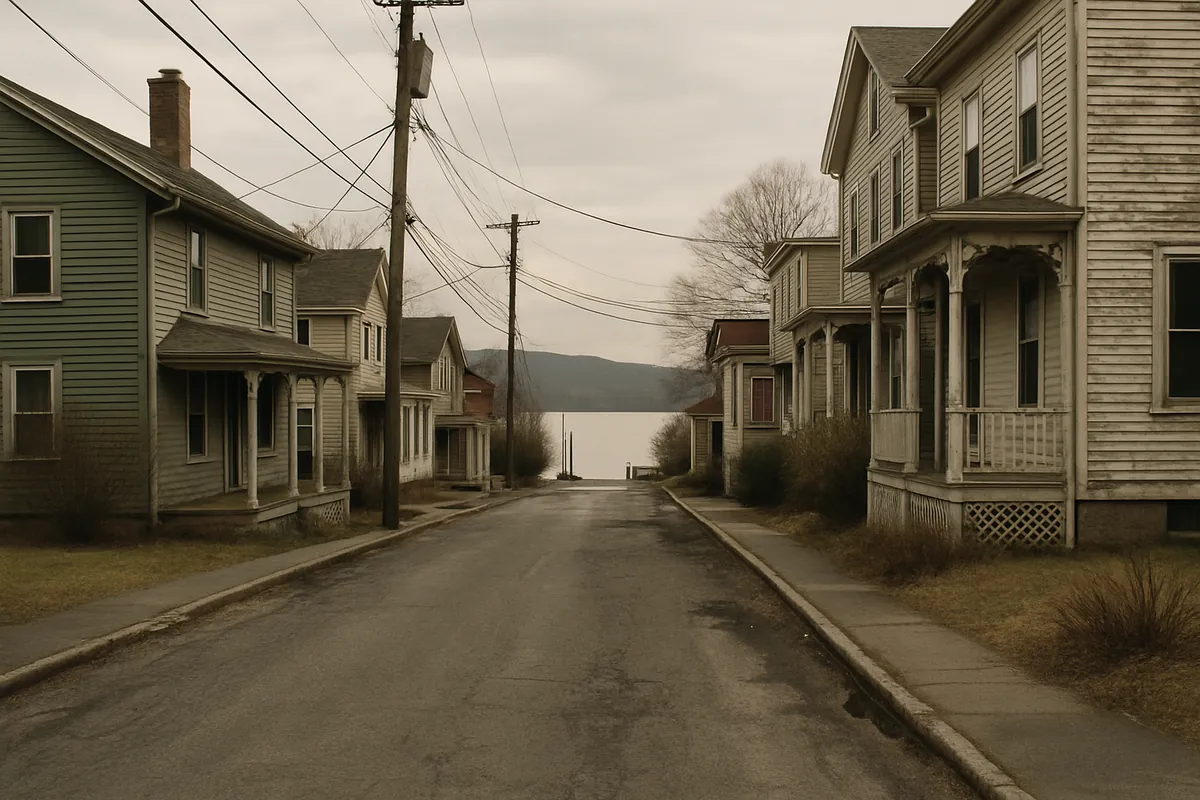
New City Trenchless covers trenchless sewer lateral repair in South Nyack, the small Hudson riverfront village south of Nyack in the Town of Orangetown. Older homes stand on hillside lots dropping toward the river, with the Mario Cuomo Bridge and Thruway corridor nearby. Here, the route to a damaged pipe can matter as much as the damage itself. A camera inspection comes before a recommendation for pipe lining, pipe bursting, or a targeted excavation.
Older Homes Between the Hillside and the Bridge Corridor
South Nyack’s repair questions start at the individual lot. An older house may have clay pipe outside, cast iron closer to the foundation, and replacement sections installed during earlier work. The house’s appearance does not tell you where those materials meet or whether the lateral still follows its original route. Repair records help, but inspection footage is what establishes the condition of the accessible run today.
The bridge and Thruway corridor provide a useful location reference, not a diagnosis. A backup near that corridor is not proof of road-related damage, and a nearby public project does not establish who owns a particular section of pipe. The practical questions are where the lateral runs, where it connects, and which portions of a proposed repair fall within the owner’s responsibility. Confirm those boundaries before authorizing work outside the lot.
A Sloping Yard Can Still Hide a Low Section
A hillside address does not guarantee uninterrupted fall inside the sewer. A lateral can descend from the house, flatten beneath a terrace, and turn again before reaching the connection. An offset at one joint can catch solids even when the rest of the line drains quickly. Standing water on camera needs to be investigated rather than dismissed because the lawn above it looks steep.
A sewer camera inspection should document the visible material, joints, transitions, obstructions, and any sections the camera cannot reach. Locating equipment helps establish the route and depth at important points. Camera observations can flag a possible grade problem, but confirming the correction may require additional measurements once the line is clear.
That distinction changes the repair recommendation. Lining seals defects along the existing route; it does not lift a sagging section. Bursting also generally follows the existing alignment. If a low spot is the reason solids collect, the proposal should explain how that grade will be corrected instead of treating a new pipe surface as the whole solution.
Planning Access Around Steps, Walls and Narrow Side Yards
On a steep South Nyack lot, a straight line on a sketch may pass beneath a retaining wall, a stair landing, or a driveway that provides the only practical equipment access. Before choosing a method, identify where workers and equipment can safely reach the lateral. A usable cleanout can simplify lining, while replacement by bursting needs suitable access pits and room to handle the new pipe.
| Property feature | What to establish first | Why it affects the repair |
|---|---|---|
| Steps between the street and house | Equipment route and usable entry points | Access may limit the available methods |
| Retaining wall above the lateral | Pipe depth and relationship to the wall | Excavation needs to protect structural support |
| Narrow driveway or side passage | Working space at each proposed opening | Small pits still need safe operating room |
| Older additions or patched piping | Transitions and branch connections | Lining design must account for the actual layout |
Trenchless work can reduce disturbance between access points, which is particularly useful where rebuilding terraces would complicate a conventional trench. It still involves preparation and sometimes digging. Ask for access locations on the proposal, along with the expected restoration of paving, soil, and landscaping around each opening.
When Cleaning Leads to Lining
A blocked lateral must be assessed for safe cleaning before repair footage can be useful. Roots at open clay joints may call for tree root removal, with the cleaning approach chosen for the material and its remaining condition. Repeatedly reopening the same joint restores flow temporarily but leaves the entry point in place.
Trenchless pipe lining can address leaking joints and suitable wall defects by forming a continuous interior pipe within the existing run. The host pipe must be prepared, measured, and evaluated for the proposed liner. Branches and size changes need attention, especially where an older house has accumulated repairs or additions. A recommendation should explain why the full run or a shorter section needs treatment.
Neither the age of the house nor the presence of roots automatically makes lining appropriate. A badly deformed section, an unresolved obstruction, or a grade defect may need another approach. The useful outcome of the inspection is a supported choice, including a clear account of any portion that remains unseen.
When Replacement Needs Its Own Access Plan
Pipe bursting replaces the existing pipe by pulling replacement pipe through its route as the host pipe is displaced. It can be an option where the old lateral is unsuitable for lining, provided the route, surrounding utilities, and working space allow it. A collapsed or inaccessible section needs particular evaluation; replacement should not be promised solely from a description of the backup.
For South Nyack hillside properties, a replacement proposal should connect the diagnosis to the practical setup. Where will each pit go? Can the replacement pipe be staged without blocking the only entrance? Does a nearby wall limit excavation? Those details belong with the method recommendation, not as decisions left until equipment arrives.
Where a single section needs correction, sewer line repair and replacement may involve a focused excavation rather than treatment of the entire lateral. The goal is to address the documented failure while keeping the disturbance proportionate to the work required.
Confirm Local Requirements Before Excavation
Before excavation, confirm the applicable requirements with Orangetown and the village contact for the property. Ask about permits, utility marking, inspections, and any permissions affecting a sidewalk, road, or public connection. Do not infer a sewer district or approval process from a neighboring address. Keep the confirmed requirements with the written scope so the owner and contractor understand what must happen before digging begins.
South Nyack shares older river-slope housing with Nyack, whose village center has its own street and access conditions. Upper Nyack continues the hillside setting northward. Piermont, farther south, adds a pier and marsh setting that should not be used as a shortcut for diagnosing a South Nyack property. Each lateral needs its own inspection.
To arrange a visit, contact New City Trenchless with the affected fixtures, whether backups follow normal use or rain, and any known cleanout locations. Mention hillside steps, walls, and narrow access when scheduling. Those details help turn the inspection into a repair plan that fits both the pipe and the lot above it.
Farther along the shore toward Piermont, Grand View-on-Hudson has cliff-edge and river-road lots where narrow side yards shape lateral access.
Frequently Asked Questions
Does living beside the bridge mean my sewer problem comes from highway work?
Proximity alone does not establish a cause. Inspection footage, a located pipe route, and any earlier repair records are needed to distinguish a damaged lateral from an ordinary blockage or an older failed joint.
Can repair equipment reach a lateral behind hillside steps?
That depends on the access route and the method. An inspection can start at an accessible cleanout, but a bursting plan also needs working space for pits and replacement pipe. Mention steps, narrow gates, and changes in elevation before the visit.
Should I arrange permits through Nyack because it is next door?
Do not assume the neighboring village handles your address. Confirm the applicable requirements with Orangetown and the village contact for your property before excavation, including any work near a sidewalk or road.
Can a liner connect sections of different pipe sizes in an older house lateral?
A size transition needs to be measured and evaluated as part of the lining design. The camera should document each change and branch connection; some transitions can be accommodated, while others need a separate repair or access point.
What should a repair proposal say about restoring my hillside yard?
Ask it to identify access locations, affected paving or plantings, and how each opening will be backfilled and restored. Work near a retaining wall also needs a clear plan for protecting the structure rather than a general promise of minimal digging.