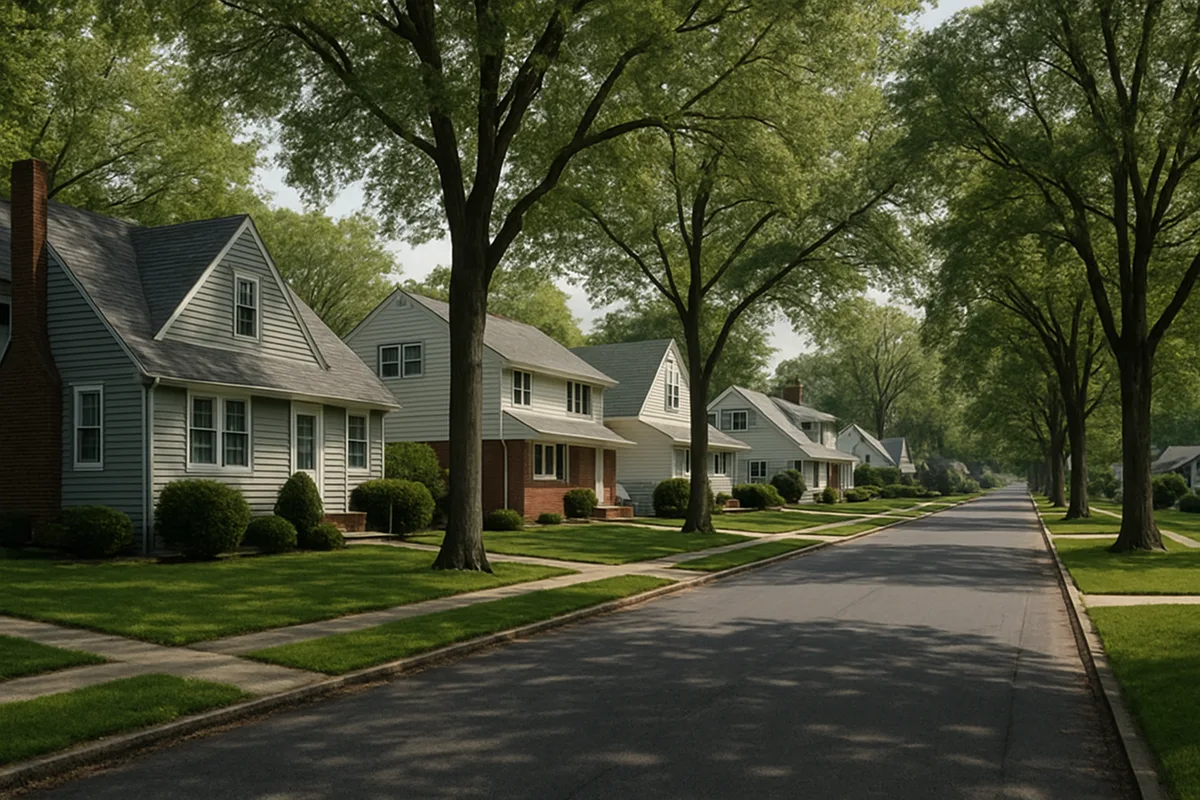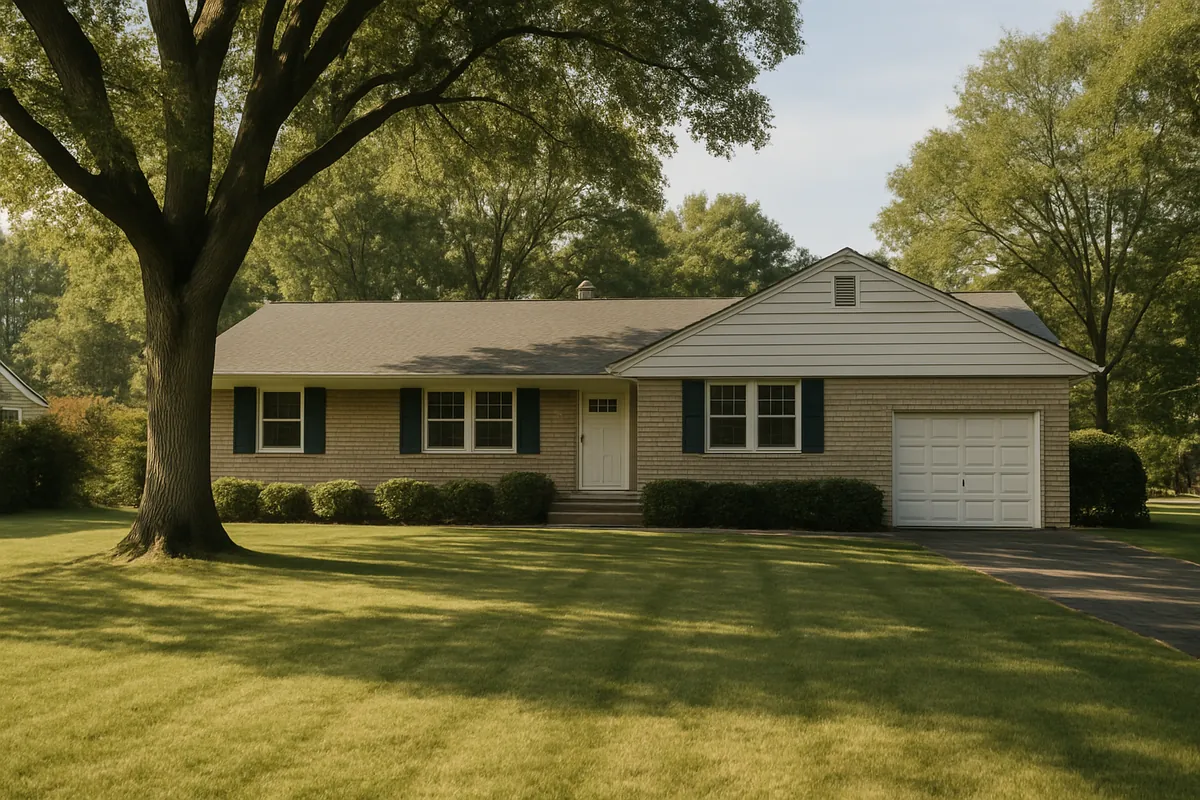
New City Trenchless covers lining options for cast iron and clay laterals under Pearl River’s Lederle-era housing. Pearl River grew as a company town after Lederle Laboratories opened its campus in the early 1900s, and the colonials, foursquares and capes built through the 1920s to 1950s give the hamlet some of Rockland County’s deepest prewar housing stock.
What a Company Town Left in the Ground
The hamlet was not a farm crossroads that suburbanised. It was made on purpose. In the 1870s Julius Braunsdorf dammed the Muddy Brook running through the site, put his sewing machine works beside the water, and named the place Pearl River. The rail line came, then the laboratories, then decades of steady employer-driven housing that kept building through eras other parts of the county skipped entirely.
That matters underground because Pearl River has continuous housing from the 1880s to the 1960s on the same street network. Two houses on the same block can be forty years apart in construction and completely different in plumbing. There is no single Pearl River pipe era, which is exactly why nobody should quote this hamlet from a build date alone.
Three Materials in Forty Feet
A Pearl River house from the Lederle decades almost always drains the same way: cast iron under the basement floor and out through the foundation, vitrified clay from the wall to the street, and a house trap at or just beyond the foundation. Each ages on its own schedule, which is why the camera regularly finds an eighty year old lateral carrying three unrelated problems in forty feet.
| Section of the run | Typical material | How it fails here | Trenchless answer |
|---|---|---|---|
| Under the basement slab | Cast iron | Scale, then invert channeling | Descale and line, or burst if the invert is gone |
| At the foundation wall | House trap, often lead-joint | Blocks camera and liner, collects debris | Remove and set a two-way cleanout |
| Wall to property line | Vitrified clay | Open joints, roots, offsets | Clean and line, or spot repair a single joint |
| Transition between materials | Iron to clay joint | Separation and offset at the change | Spot repair, or line through the transition |
How Prewar Cast Iron Actually Wears Out
Cast iron does not crack so much as it wears from the inside. Scale roughens and narrows the bore until paper snags on every pass, and channeling erodes the invert where wastewater has traced the same path since the Depression. It is a slow, symmetrical failure, and it is easy to miss until the pipe is thin.
When the walls are still structurally sound, cast iron pipe lining is the right call. The pipe is descaled by hydro jetting and mechanical cutting, then an epoxy resin liner is cured against the cleaned wall, sealing the metal away from wastewater for good. When the invert has already channeled through, no liner is going to bridge missing metal and pipe bursting with fused HDPE is the honest answer.
The call between the two is made on video, with defects graded to the PACP standard published by NASSCO, not from the basement floor.
House Traps, Wyes and Getting a Liner Past Them
The house trap is the prewar detail that shapes trenchless work in Pearl River more than anything else. Its double bend blocks both the camera and an inverted liner, so a prewar lateral here usually calls for one of two approaches: a small pit to remove the trap and set a two-way cleanout in its place, or pull-in-place lining beyond it.
Where a branch joins the lateral at a wye fitting, a robotic reinstatement cutter reopens the connection through the cured liner from inside the pipe, with no digging over the fitting. That is the difference between a day of work and a week of it in a house with a finished basement and a settled garden above the run.
Access is also the first thing a sewer camera inspection has to establish, because a lateral with no usable cleanout and a live house trap has to be opened somewhere before anything else happens.
Wet Ground, Bury Depth and the New Jersey Line
Pearl River sits low and flat on ground threaded by brooks running down to the Hackensack, and it runs right up against the New Jersey state line. Parts of the hamlet hold water. A seasonally high table around a lateral means groundwater pushing into every open clay joint, fines washing in behind it, and voids forming that let the pipe settle out of grade.
Wet ground is also the worst place to open a trench. The sides slough, dewatering becomes part of the job, and where a run passes near a regulated wetland or stream corridor an excavation brings permitting exposure under New York State’s freshwater wetlands rules that a no-dig repair simply does not. Working from two small pits sidesteps most of that.
Costs, Timelines and Why the Landscaping Argument Wins Here
Trenchless sewer repair in Pearl River often means lining. The planning ranges shown here are $4,000 to $12,000 for a full lateral, $250 to $500 for camera inspection, $1,500 to $4,000 for a sectional point repair, and $6,000 to $15,000 for bursting a collapsed run. Actual pricing and timing require a site-specific inspection and quote.
Open-cut replacement on the same run can cost substantially more than trenchless work once excavation, backfill, driveway, and planting repair are counted. Permit and district questions should be confirmed with the Town of Orangetown and included in the contractor’s scope.
The same Orangetown system and prewar materials also appear next door in Orangeburg and Blauvelt.
Frequently Asked Questions
Should 1930s cast iron be lined or replaced?
Lined, if descaling shows sound walls, at $4,000 to $12,000 for a full lateral. If the invert has channeled through or a section has collapsed, pipe bursting at $6,000 to $15,000 replaces it with fused HDPE.
What is a house trap and should mine be removed?
A U-shaped fitting at the foundation that older plumbing codes required. It blocks camera and liner access and collects debris, so a repair plan may replace it with a two-way cleanout, opening the line to inspection in both directions.
Is my Pearl River lateral clay or cast iron?
In a Lederle era house, usually both: iron through and under the foundation, clay from there to the street. The transition joint is itself a common failure point, and a $250 to $500 camera inspection maps exactly what material sits where.
Does Orangetown or the county maintain the sewer on my street?
Pearl River sits on the Town of Orangetown's municipal system rather than the county district that serves the Clarkstown hamlets. Orangetown maintains the main under the road. The lateral from your foundation wall to the tap on that main is private pipe and your responsibility.
We are under contract on a Pearl River colonial. Is a sewer scope worth it?
In housing this age, yes. A pre-purchase camera inspection costs $250 to $500 and tells you whether you are inheriting sound iron, a channeled invert, a blind house trap or a clay run full of roots. A failed lateral is a $4,000 to $15,000 item, and it is a very different conversation before closing than after.