New City Trenchless explains the central question on a failed lateral: line it or burst it. The honest answer is that pipe condition decides, not a preferred sales method. Two methods exist because they fit different failure modes, and choosing the wrong one can waste money or shorten the repair’s life.
The One Question That Decides It
Cured-in-place pipe lining installs a new pipe inside the old one. Pipe bursting destroys the old one and pulls a new pipe into the space it leaves.
That single difference drives everything else. Lining needs a host pipe that still holds its shape, because the liner has nothing else to press against while it cures. Bursting does not care what shape the old pipe is in, because the old pipe is not going to be there afterward.
So the decision question is not “which is better.” It is: does enough of your existing pipe survive to serve as a mold?
What CIPP Lining Actually Needs From Your Pipe
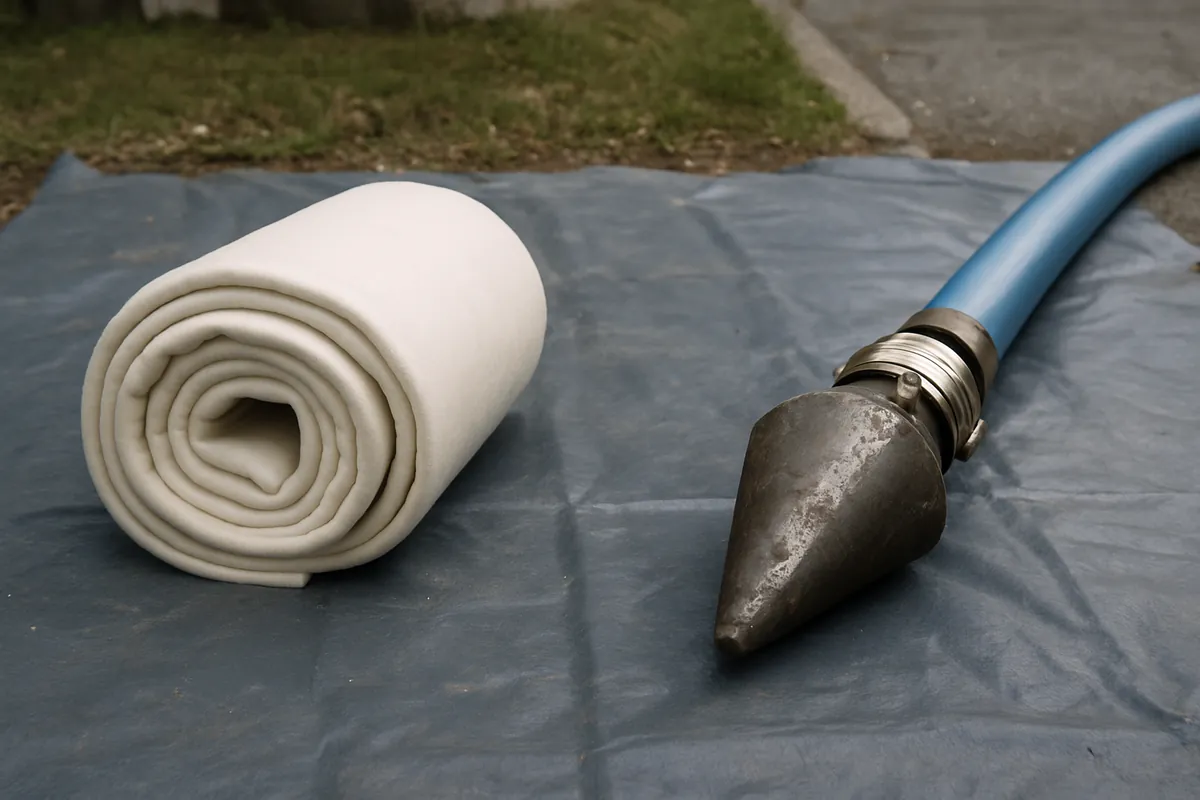
A resin-saturated felt or fiberglass tube is pulled or inverted into the lateral, inflated tight against the walls, and cured hard. When it sets you have a continuous, jointless pipe with no gaskets and no bells for roots to work open. Installation and material standards for this work sit with bodies like ASTM International and the pipeline assessment and rehabilitation standards published by NASSCO.
The host pipe has to meet three conditions.
It has to be continuous. A camera has to be able to travel the full run. If the head stops at a void where the pipe simply is not there anymore, there is nothing to line across.
It has to be roughly round. Ovaling past a modest percentage means the liner cures into an oval, which reintroduces the same weak geometry you were paying to remove.
It has to be clean. Roots, scale and grease all get cut and jetted out first, otherwise the liner cures over debris and locks in a permanent restriction. Cleaning is a prep step here, not an upsell.
Cure methods
Ambient cure lets the resin set on its own time, which is slow and temperature dependent. Hot water and steam cure speed that up considerably. UV cure pulls a light train through a fiberglass liner and is the fastest and most controlled of the three, though the equipment is heavier and better suited to larger diameters than a typical 4 inch house lateral. On residential work in Rockland, steam or hot water cure covers most jobs. Cold ground in February lengthens cure time on any of them, which is worth knowing before scheduling winter work.
Diameter and flow
Every liner takes some bore. On a 4 inch clay lateral the finished wall is thin enough that the smoother interior usually nets out better flow than the pitted original. The exception is a lateral that was undersized from the start, and there lining is the wrong tool because it can only ever hand back something slightly smaller than what you had.
What Pipe Bursting Does Differently
A hardened conical head, larger than the old pipe’s bore, is drawn back through the lateral under hydraulic pull from a rod string. Clay and cast iron fracture outward into the surrounding soil. Behind the head, a fused HDPE pipe follows into the same alignment. Pipe bursting needs only enough of a path to thread the rod, not an intact pipe.
Upsizing
Bursting is the only trenchless method that can hand back a bigger pipe. A 4 inch lateral can commonly come back as 6 inch. That matters on Rockland houses that have grown since they were built: a 1958 ranch in Nanuet with a finished basement bath and a second-floor addition is running far more fixture load through a lateral sized for the original three-fixture house.
Access pits
Two pits, one at each end of the run. The launch pit sits at the house side, the receiving pit near the sewer main tap. Depth drives the excavation. Bursting cannot avoid these, which is the honest cost against lining’s cleaner footprint.
Branch Reinstatement and the Trade-Offs Nobody Mentions
A liner seals over anything that ties into the lateral. Each branch has to be reopened afterward with a robotic cutter working off the camera. Most single-family laterals here have no branches, so this rarely applies to a house. On a commercial building or a two-family with separate stacks it does, and it adds time.
Bursting has its own constraint: the fracture zone. The head displaces soil outward, so a gas line, water service or fiber run sitting tight against the sewer gets exposed by hand before the pull. Utility mark-outs plus a sonde trace of the sewer’s exact path and depth should come before every pull.
Cost, Side by Side
| Method | Typical Rockland cost | Excavation | Diameter after | Best fit |
|---|---|---|---|---|
| Sewer camera inspection | $250 to $500, sometimes credited against the work | None | n/a | Inspection starts the decision |
| Sectional spot repair | $1,500 to $4,000 | None | Slight loss at the patch only | One failed joint or a short crack |
| Full lateral CIPP lining | $4,000 to $12,000 | None to one small access point | Small loss, offset by a smooth wall | Round, continuous host pipe |
| Pipe bursting | $6,000 to $15,000 | Two small pits | Same size or larger | Collapsed, deformed, back-pitched or undersized |
| Open-cut replacement | Often 1.5x to 2x the trenchless price | Full-length trench | Whatever is specified | Grade resets and short shallow runs |
The open-cut multiplier is not the excavation alone. It is the excavation plus the lawn, the pavers, the mature plantings, the driveway apron and the pavement patch, all of which get counted at the end and not in the first quote.
Rockland Housing Stock and Which Method Usually Wins Where
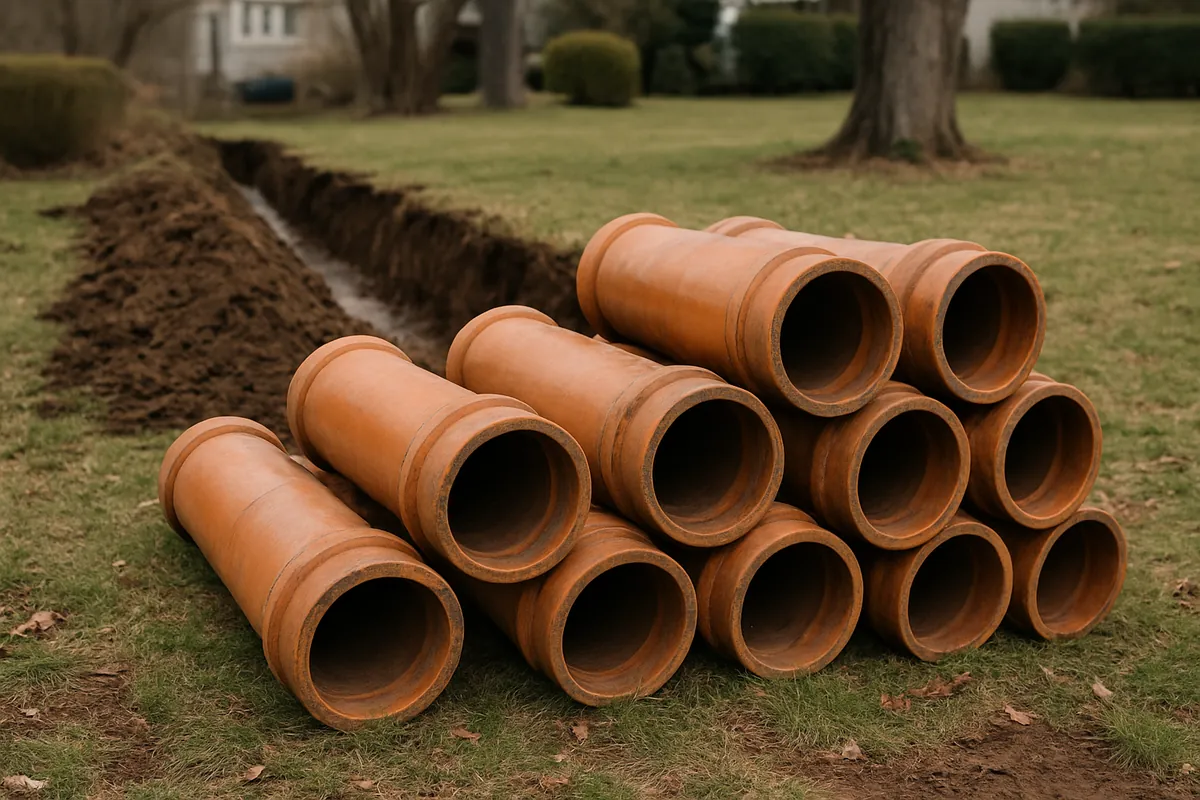
Rockland’s pipe problem has a date on it. The Tappan Zee Bridge opened in 1955 and the tract build-out that followed put clay tile and Orangeburg laterals under most of central Rockland between then and the early 1970s.
Clay tile generally lines well. It fails at the joints, roots get in, and the barrel usually stays round. That is the textbook lining candidate.
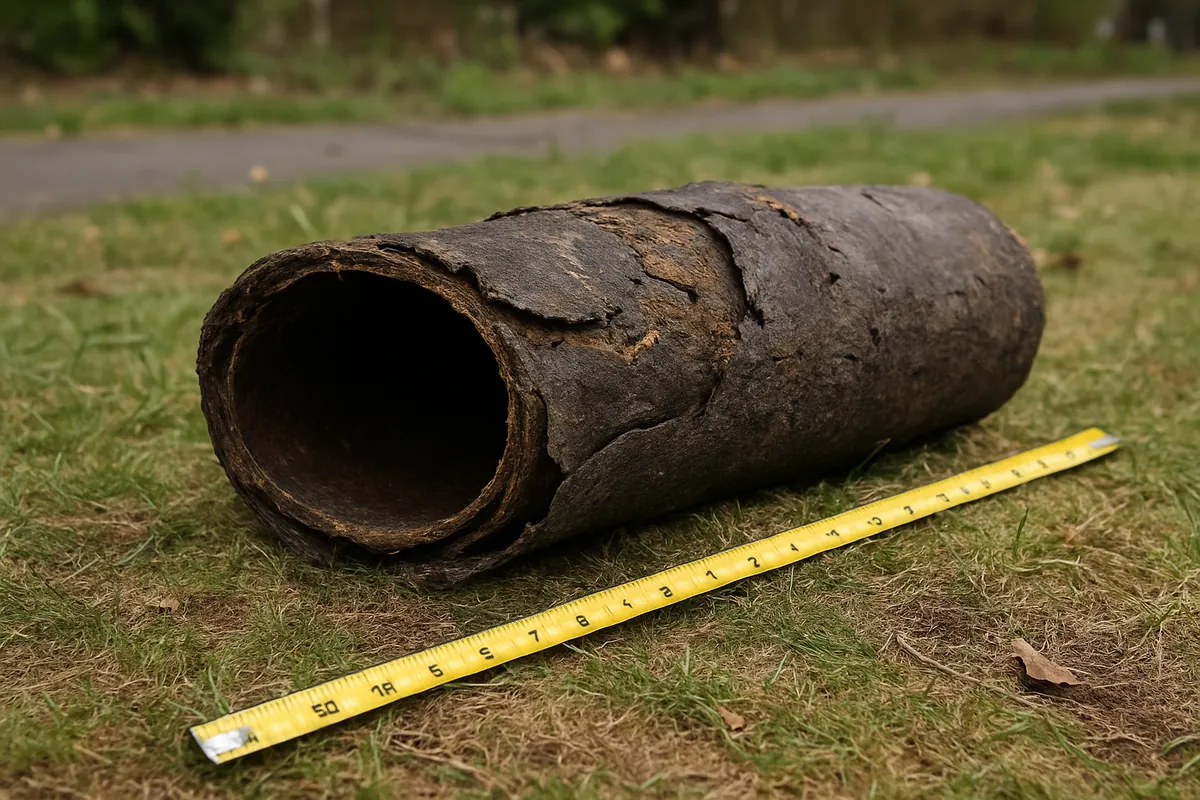
Orangeburg generally does not. The bituminized wood fiber pipe was pressed and tarred in Orangeburg NY, roughly ten miles from New City, and it fails by delaminating and ovaling inward rather than cracking. Once it has lost its shape there is nothing round left to line against, which is why Orangeburg pipe replacement around here is almost always a bursting job.
Cast iron inside the house and out to the foundation usually lines well once the scale is cut back, which is the basis of trenchless pipe lining on older stock.
Pre-1940 river village laterals in Nyack, Piermont, Haverstraw and Tappan are a mixed bag. Some are original clay in good enough shape to line. Others have been patched three times over a century, sit in a high water table, and come back as bursting candidates once the camera shows the joint count.
When Open Cut Still Wins
Trenchless is not always the answer and it is dishonest to pretend otherwise.
Grade problems. A severely back-pitched or bellied run has a slope problem, not a pipe problem. Bursting bridges minor sags because the HDPE goes in under tension, but it follows the existing path. If the line runs uphill, the bedding has to be dug out and reset at the correct fall.
Very short, very shallow runs. If the lateral is fifteen feet from foundation to tap and sits three feet down under a lawn, two access pits are most of the trench anyway.
Total collapse plus obstruction. If a rod string cannot be threaded through at all, that point gets opened regardless. The usual answer is to open the one spot, restore a path, and burst the rest of the run rather than trench all of it.
Compromised tap connection. If the failure is at the connection to the Sewer District No. 1 main rather than in the lateral, that connection has to be exposed. Rockland County maintains the mains, but the lateral from the house to the tap is the homeowner’s responsibility, and the tap itself is the boundary where the work gets done in the open.
How the Decision Actually Gets Made on Your Line
None of the above can be decided from the driveway. It is decided from the inside of the pipe.
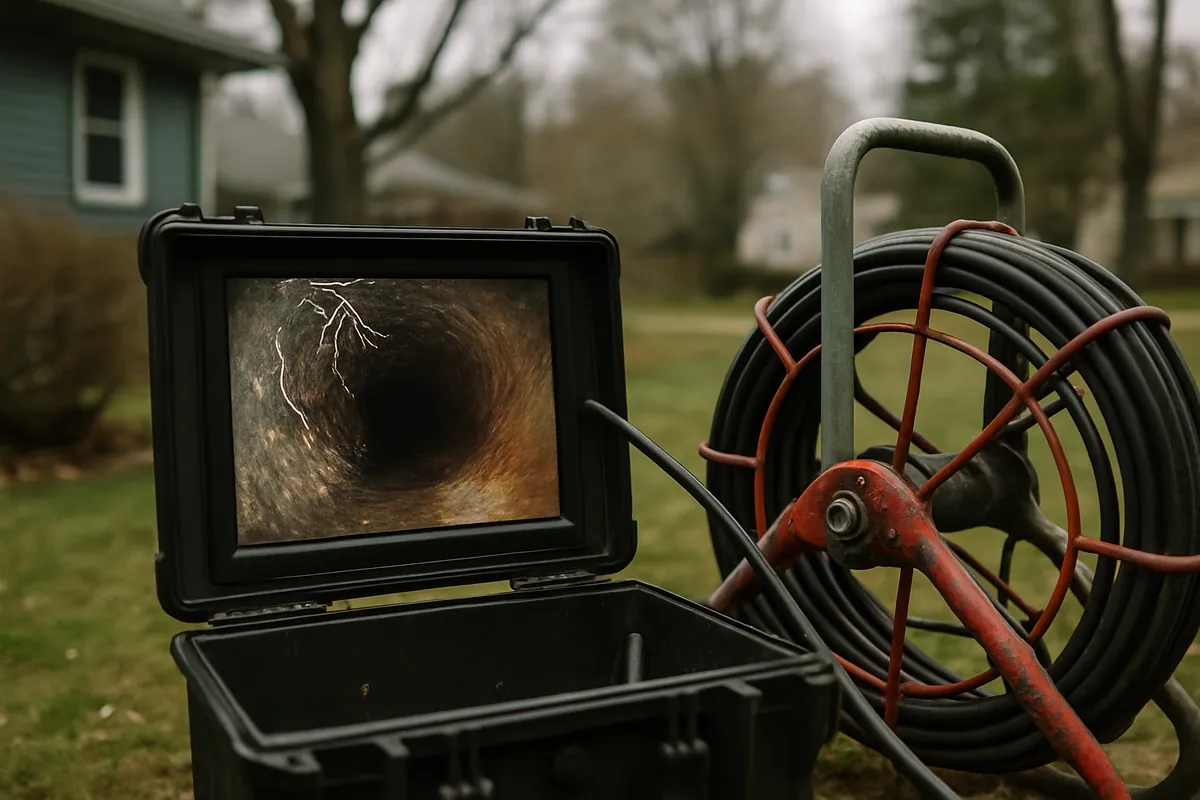
A sewer camera inspection at $250 to $500, usually credited against the work if you proceed, gives you the four facts the choice depends on: whether the camera can pass the full run, whether the pipe is still round, what material it is, and where the low spots and the tap sit. A locating sonde puts the path and depth on the ground above, which is what sizes access pits and prices the job to a fixed number instead of a range.
Get the footage, get it explained on the screen, and get the recommendation in writing with the reason attached. If a contractor recommends a method before putting a camera down the line, that recommendation is about their equipment, not your pipe.
Related Rockland County Sewer Guides
Compare the materials behind the decision in our guides to clay tile sewer pipe and Orangeburg pipe in Rockland County. For the evidence that should come first, see what a sewer camera inspection actually shows.
Common Questions
Can any sewer pipe be lined?
No. A cured-in-place liner is a flexible tube inflated against the inside of the existing pipe, so the existing pipe has to still be there and still be roughly round. Clay with cracks and open joints lines well. Cast iron with heavy scale lines well once it is cleaned back. Collapsed pipe and deformed Orangeburg cannot hold a liner and get burst instead.
How much diameter do I lose with CIPP lining?
The finished liner wall is typically a few millimeters thick, so a 4 inch lateral gives up a small amount of bore. Flow usually improves anyway, because the new wall is smooth and continuous where the old one was scaled, offset and rough. Diameter loss only becomes a real issue on a lateral that was already undersized for the fixture count.
Does pipe bursting tear up the yard?
Two pits, one at each end of the run, sized for the pulling rig and the pipe entry angle. Everything between them stays closed. Compare that to open-cut replacement, which opens the full length of the lateral, and usually the driveway apron, walkway or lawn it crosses on the way to the sewer main.
Which costs more in Rockland County, lining or bursting?
Bursting is generally the higher number. Full lateral CIPP lining runs $4,000 to $12,000 and pipe bursting runs $6,000 to $15,000, both driven by length, depth and access. Bursting costs more because it involves two excavations, a pulling rig and a full new pipe rather than a liner. Open cut on the same line is often 1.5x to 2x the trenchless price once excavation and landscape repair are counted.
What happens to branch connections after lining?
A lined lateral seals over any branch that ties into it, so each one has to be reopened. On a residential lateral this is done with a robotic cutter working off the camera, reinstating the branch to the full opening. Most single family laterals in Rockland have no branches at all, which makes lining simpler here than on a commercial building.