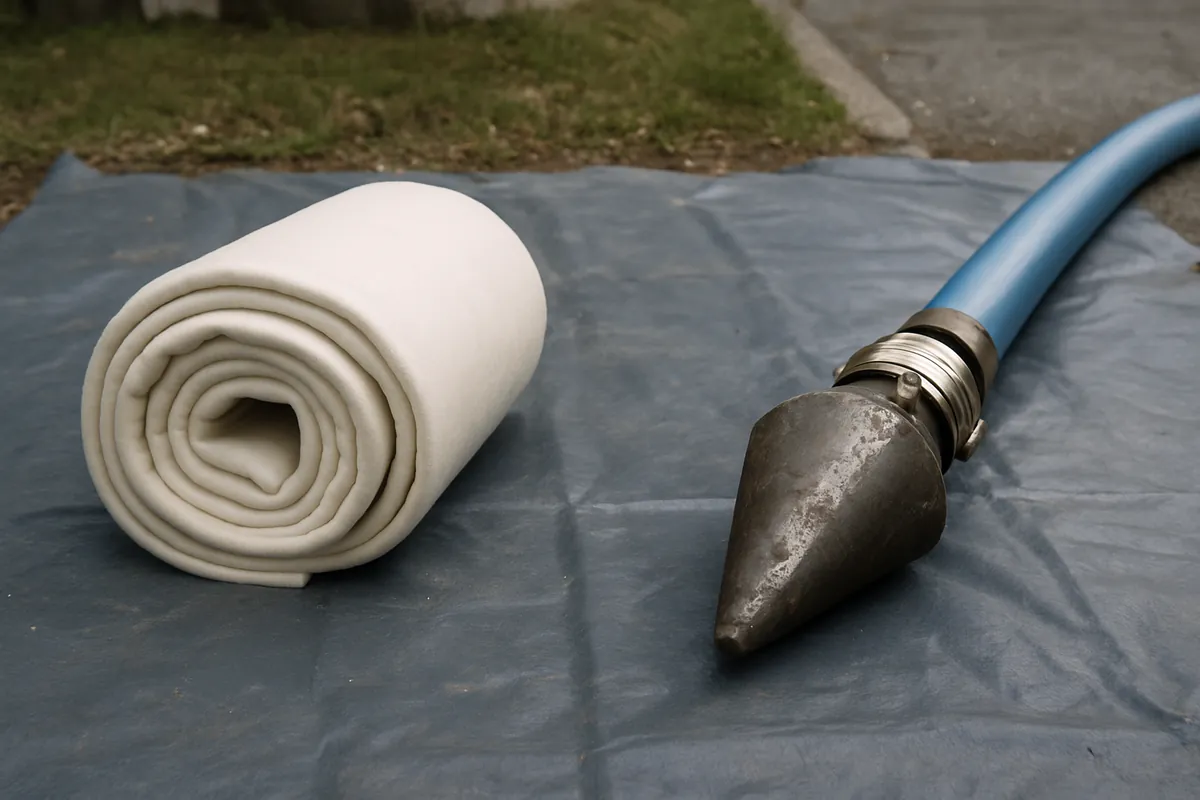
New City Trenchless explains why a sewer evaluation should start with a camera down the line. What comes back on that screen is not just a yes or no on whether the pipe is broken. A trained operator reads several distinct conditions, and each points to a different repair approach and price.
Here is what is actually being looked for, and why the footage is worth more than any verbal description of it.
What Goes Down the Line
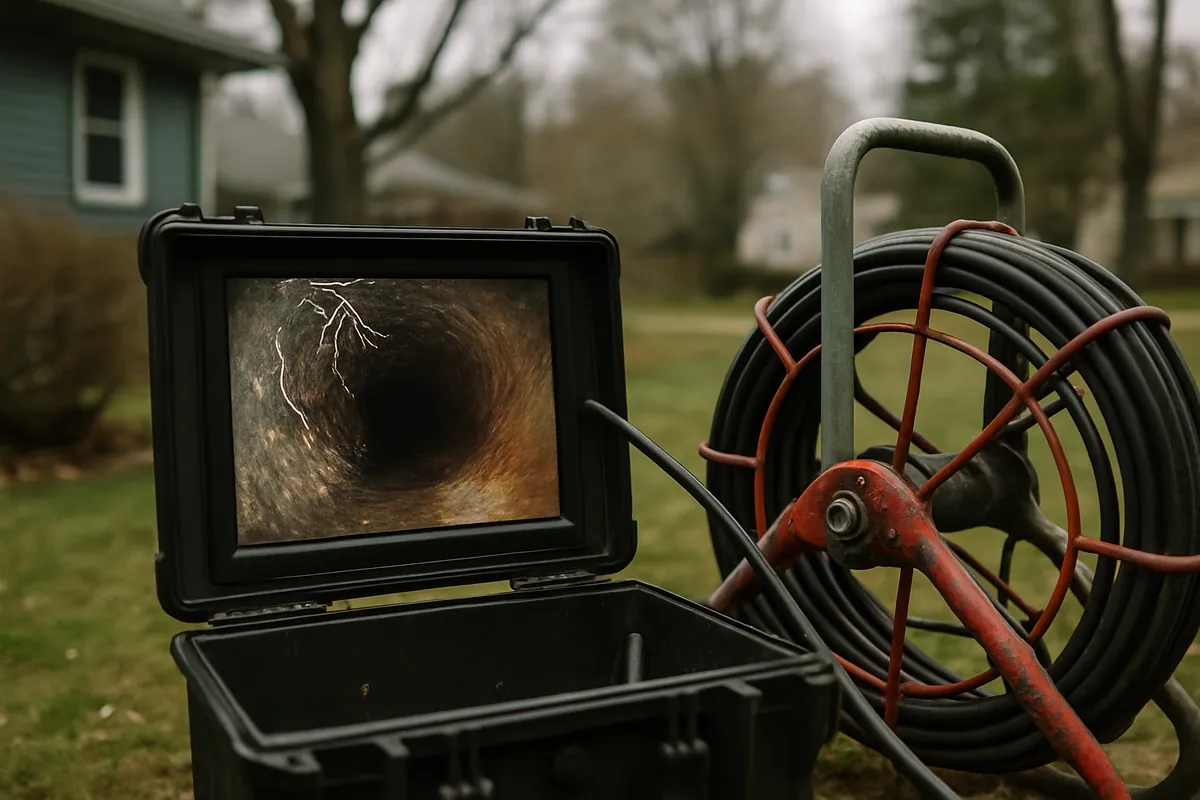
A push camera is a self-leveling head on a stiff coiled rod, fed in through a cleanout or a pulled toilet flange. The head carries LEDs and, in most cases, a sonde transmitter for locating. A footage counter on the reel records distance, so every defect can be reported as a number: root intrusion at 34 feet, offset at 51 feet.
That distance number is the whole point. It converts a vague problem into a location on your property, and a location is what decides whether you are looking at a $2,000 spot repair or a full replacement.
Root Intrusion at the Joints
Roots do not drill through sound pipe. They find an existing opening, almost always a joint, and then thicken inside it. Rockland’s mature street trees make this the most common finding in the county, especially on the older tree lined blocks in Nyack and the postwar streets whose plantings are now sixty years old.
On camera it presents as a white or tan mass hanging in from the top or the side of the pipe, usually at a regular interval that matches the joint spacing. Fine hair roots mean an early entry. A dense rope means years.
What matters for the repair is what is underneath. Cutting roots out with a mechanical cutter or hydro jetting clears the line and is the right first move, but it does not close the opening they came through, so the camera pass after cleaning is the important one. If the joint behind the roots is sound, cleaning plus lining seals it for good. If the joint has separated, that is a structural defect and cutting roots is just scheduling the next visit. Ongoing tree root removal is maintenance, not a fix.
Structural Defects: Offsets, Cracks and Separations
An offset is one pipe section sitting misaligned against the next, so a lip protrudes into the flow. On camera you see the far pipe’s opening sitting high, low or sideways relative to where you are. Offsets catch solids and are a frequent cause of repeat backups that clean out easily and return quickly.
Cracks read as dark lines running along or around the pipe. Longitudinal cracks in clay tile usually come from soil load. Circular fractures point to movement. A separation is a joint pulled fully apart with visible soil in the gap, and it is the point at which soil starts migrating into the pipe and a void starts forming above it. That void is what eventually shows up as a dip in the lawn or a settling patch of driveway.
Freeze thaw cycling through a Rockland winter works on all of this. Ground movement is not dramatic here, but it is annual, and old rigid pipe with an already loose joint does not get tighter over thirty winters.
Bellies and Back-Pitch
A belly is a sag in the line where the pipe has settled below grade, so water stands in it instead of running through. Back-pitch is worse: a stretch running the wrong way entirely.
You read both by watching the waterline. As the camera enters a belly, water climbs the lens. In a shallow belly the head stays visible and comes out the far side. In a deep one the view goes underwater completely, and the operator notes how far the submerged run continues.
Standing water is not automatically a crisis. A small belly that self scours may run for years. What it does is collect solids, which is why a house with a belly gets recurring soft blockages that snake out easily and come straight back. Bellies also matter because they cannot be lined away. A liner follows the host pipe, so it reproduces the sag. Correcting real back-pitch means re-laying that section at proper grade.
Low lying ground makes this more common. Lots near the Hackensack headwaters wetlands and in the river villages sit on softer, wetter soils with a higher water table, and soft bedding is what lets a line settle in the first place.
What the Wall Tells You About the Material
Half the value of an inspection is identifying what the pipe is made of, because the material dictates the menu of repairs.
Cast iron: scale and channeling
Cast iron corrodes from the inside. Tuberculation builds a rough, rust colored crust that narrows the bore and grabs everything passing through. In an advanced line you see channeling, where flow has cut a trough along the invert and the bottom of the pipe has thinned or disappeared entirely while the top looks intact. Scale can be cut back and the pipe lined, which is what cast iron pipe lining does, but a channeled invert with no bottom left is a replacement.
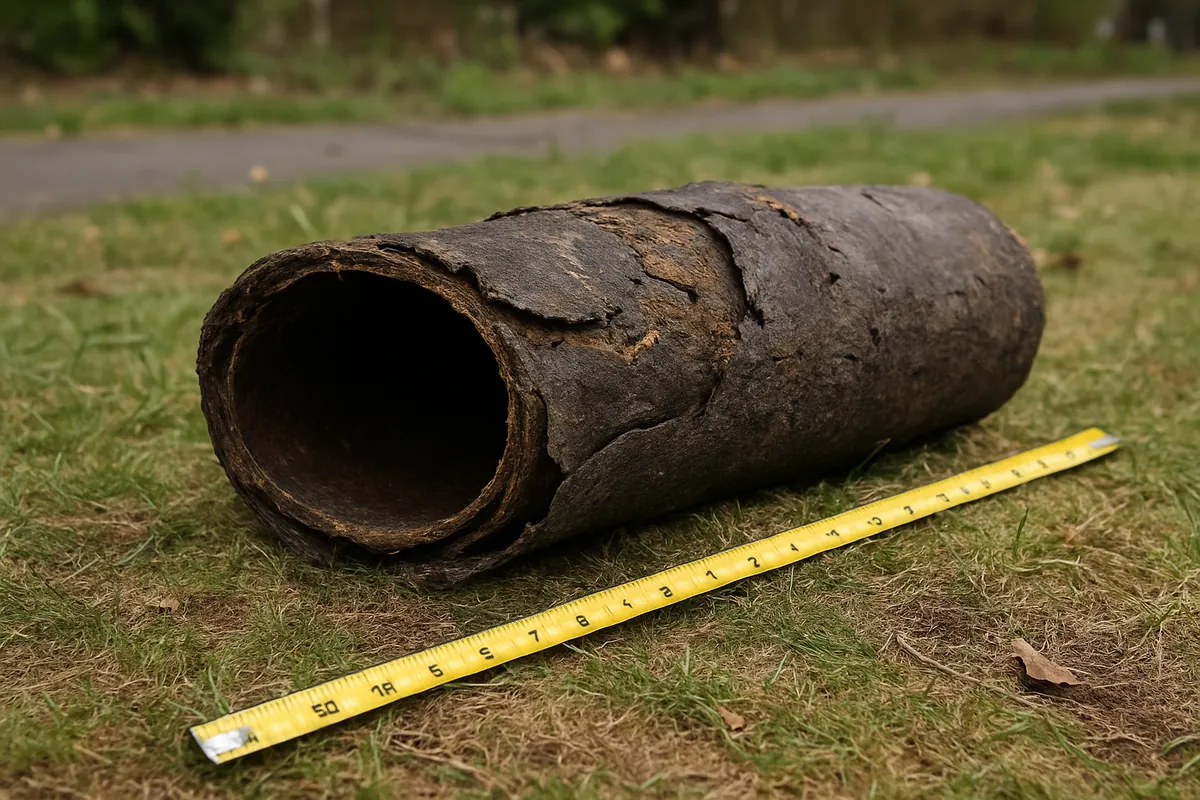
Orangeburg: deformation, not cracking
Bituminized fiber pipe reads as a matte black wall with long jointless runs. The failure signature is shape, not fracture: an egg shaped bore flattened top to bottom, with inner layers delaminating and blistering into the flow. This is the material made ten miles from New City and installed here from 1945 to 1972, and once it deforms it cannot be lined, because a liner cured inside an oval locks that oval in permanently.
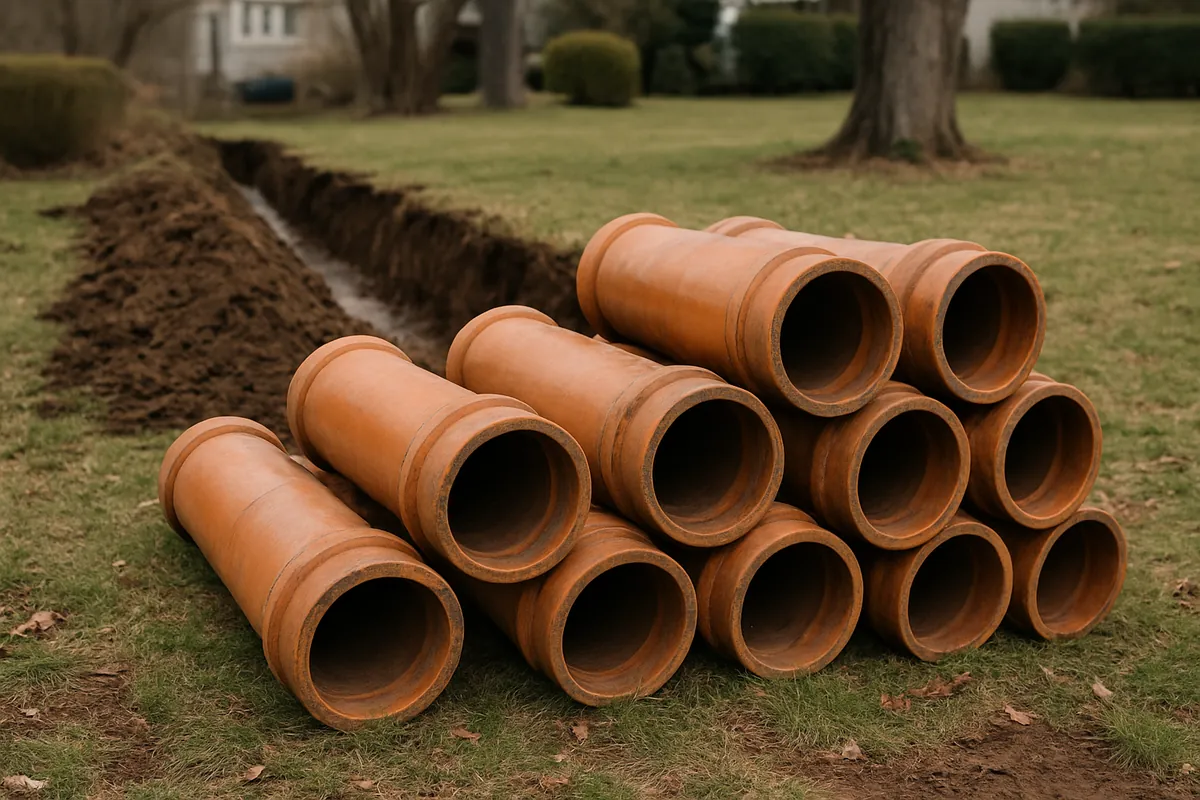
Clay tile: joints every couple of feet
Vitrified clay is hard, chemically inert and lasts a long time, but it comes in short sections with a joint at every one. On camera you count joints, and every joint is a potential root entry. Clay is a good lining candidate when the sections themselves are sound.
PACP: How Defects Get Coded
Professional inspections do not just narrate. Defects are coded to a standard system, the Pipeline Assessment Certification Program run by NASSCO, which gives every observation a standard code and severity grade rather than an adjective.
The benefit to a homeowner is comparability. A graded report says the same thing to you, to a second contractor and to a public body like Rockland County Sewer District No. 1, which is not true of a phone call describing a line as pretty bad. It also separates severity from urgency in a useful way: a low grade defect at a joint you can watch, a high grade structural defect you cannot.
Utilities grade their own collection systems the same way, because cracked and separated pipe is a direct route for groundwater into the system, which EPA wastewater programs treat as a system wide problem.
Locating and Depth: The Sonde Pass
The camera head transmits, a receiver above ground picks it up, and the operator walks the surface marking the line. The result is a painted path across the yard and a depth reading at each mark.
This is the part homeowners undervalue and contractors depend on. Depth and path determine:
| What the locate tells you | What it decides |
|---|---|
| Where the run crosses the yard | Whether it passes under a driveway, patio or tree |
| Depth at the house and at the tap | Where bursting or lining access pits go |
| Total run length | Which cost band the job falls into |
| Position of the defect along that run | Spot repair versus full length rehabilitation |
Without it, every quote is an estimate. With it, the job can be planned properly, whether that ends up being a sectional repair, a full trenchless sewer replacement, or nothing at all this year.
Reading the Footage Before You Compare Quotes
Two contractors can watch the same line and propose different work honestly, because a spot repair and a full rehabilitation are both defensible on a line with one bad joint and thirty acceptable ones. What you cannot do is judge that without seeing it.
So when you get the video, look for four things. Does the footage counter appear on screen, so defects have locations. Does the camera actually reach the tap at the main, or does it stop short and leave the last stretch unknown. Does the operator pause at each defect. And does the report name the material, because that single fact rules whole repair methods in or out.
A homeowner in Nanuet with clay tile, sound sections and roots at three joints has a completely different decision to make than a neighbor two streets over with a deformed fiber lateral, even though both called about the same slow drain.
Your Next Step
If drains are slowing, a cleaning did not hold, or you are about to buy a house built before the mid 1970s, book the camera before you book anything else. It runs $250 to $500, it is often credited against the repair, and it is the only thing that tells you what the pipe is made of, where the defect sits and how deep it runs.
Ask for the video file and the depths, not just a verbal summary. That footage is what makes every quote after it comparable.
Related Rockland County Sewer Guides
Use the footage to compare CIPP lining with pipe bursting, prepare for a sewer inspection before buying a home, or investigate the warning signs of a failing sewer line.
Common Questions
How long does a sewer camera inspection take?
Usually under an hour for a residential lateral, longer if the line has to be cleared before the camera can pass. Most of the time goes into the slow return trip, because that is when the operator stops at each defect, holds the head steady and records it properly. Rushing the pull is how defects get missed.
What does a sewer camera inspection cost in Rockland County?
$250 to $500 for a residential lateral, and it is often credited against the repair if you go ahead with the work. Ask up front whether the fee is credited, whether you get a copy of the video, and whether a locate with depths is included, because those three things vary between companies.
Do I get a copy of the video?
You should, and you should ask before booking. The footage is the evidence behind the quote. It lets you compare two proposals on the same defect instead of on two descriptions of it, and it belongs in your file if you ever need to show a municipality or an insurer what the line looked like on a given date.
Can the camera tell how deep the pipe is?
Yes, with a sonde in the camera head and a receiver above ground. The operator walks the surface, picks up the signal, and marks the line path and depth at each point. That number decides where access pits go for bursting, whether the run passes under a driveway, and how much restoration a dig would involve.
Does the line need cleaning before the camera goes in?
Sometimes. Standing water, heavy grease or a root mass can block the view or stop the head entirely. A jetting pass clears the way and often reveals the real defect underneath, though on softened fiber pipe jetting is not safe and the approach changes. The operator should tell you which situation you are in.