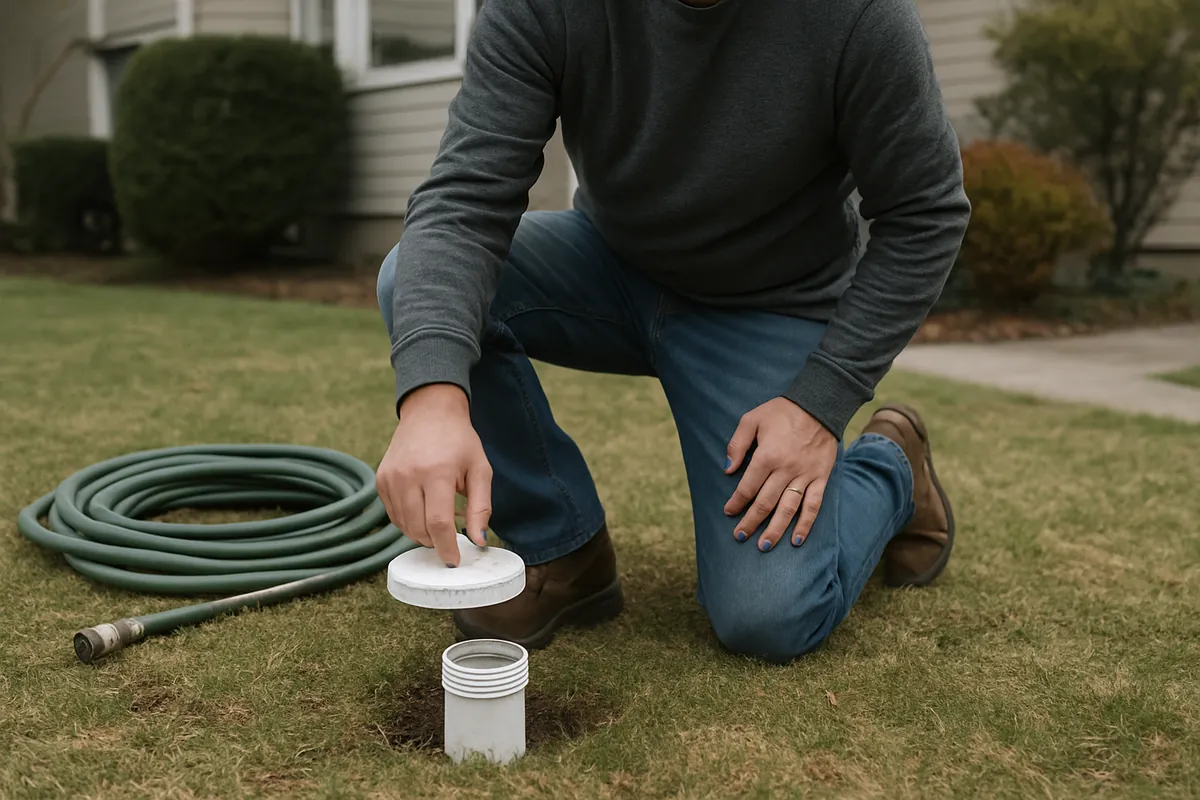
New City Trenchless explains a common warning pattern: a homeowner has the line snaked, it works, and several months later it blocks again. Snaking cleared the symptom, but an underlying pipe defect may remain.
The difference matters because it changes what you should spend money on. A clog is a cleaning job. A failing lateral is a repair or replacement job, and paying for repeat cleanings on a failing lateral is the most expensive way to handle it.
Clog Problem or Pipe Problem
A clog forms in an otherwise sound pipe. Grease congeals, wipes catch, paper stacks up behind them, and a cable or a jetter opens it. Once it is clear, a sound pipe stays clear for a long time.
A structural failure keeps producing clogs, because something inside the pipe is catching material every time water goes past it. Root mass, an offset joint, a crack with a lip, a sag holding standing water. Clear it and the catch point is still there.
The tell is not the blockage. It is the interval between blockages, and whether it is shrinking.
The Seven Signs
1. The backup returns, and returns faster
The single most reliable indicator. Snaked in March, blocked again in September, blocked again in December. Each clearing buys less time because each pass through opens a channel through the root mass or debris rather than removing the reason it collects there. Two clearings in a year on the same line justifies a camera. Three makes it negligent not to.
2. Multiple fixtures slow at the same time
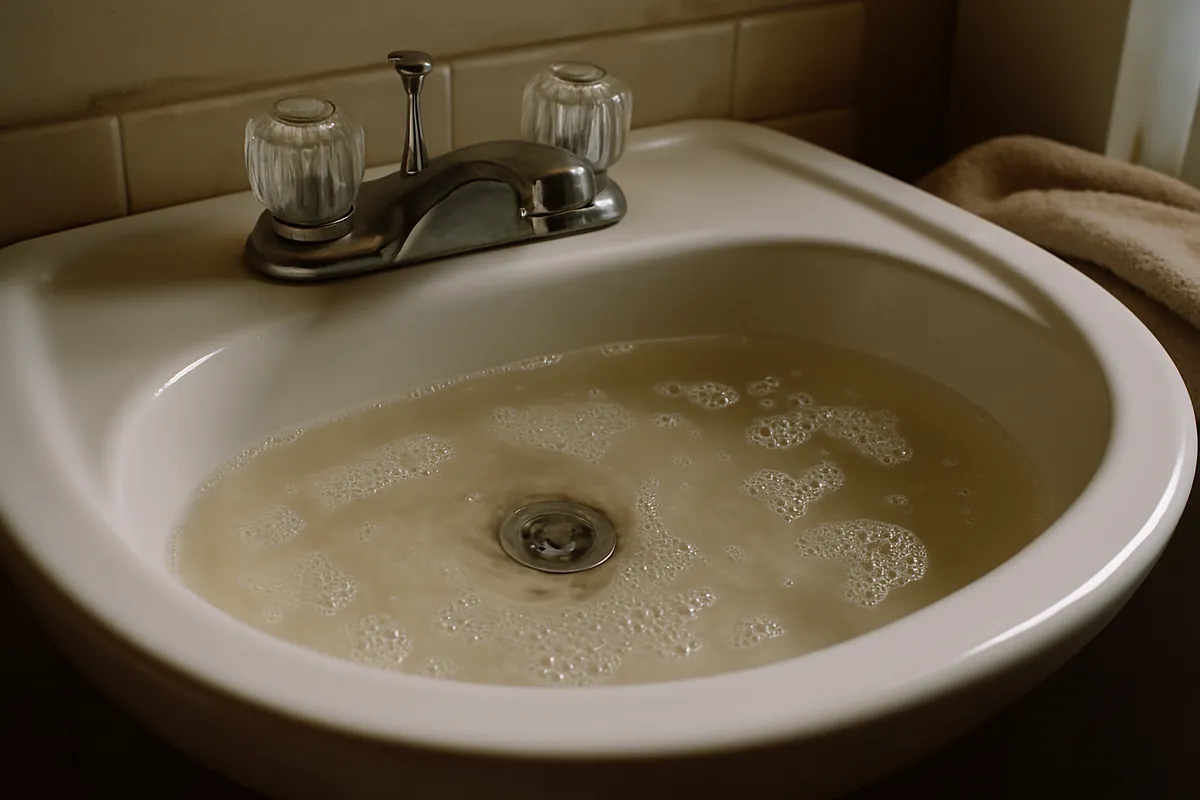
One slow sink is a fixture problem, usually in the trap or the branch arm. A tub, a toilet and a basement floor drain all running slow at once means the restriction sits below the point where those branches meet, which is the building drain or the lateral.
Test it deliberately. Fill the tub and pull the plug while watching the lowest fixture in the house. If the basement floor drain burps or rises, the problem is downstream of everything.
3. Gurgling toilets and air where it should not be
Gurgling is air being pulled through a water trap because the drain path is restricted downstream. When a toilet burbles as the washing machine discharges, or a floor drain glugs when an upstairs shower runs, the two fixtures are competing for a path that is no longer big enough.
A blocked plumbing vent produces the same noise, so this sign is strongest when it appears in more than one fixture.
4. Sewer odor indoors or in the yard
A properly working drain system is sealed. Water in the traps blocks gas, and vents carry the rest above the roof. Persistent sewer smell inside means that seal is broken somewhere, whether that is a dried-out trap in a rarely used basement bath or a crack in the drain line itself.
Smell in the yard is more specific. It means wastewater is reaching soil, and New York State’s health guidance treats contact with raw sewage as a genuine exposure risk, not a nuisance. Keep children and pets off saturated ground until the source is found.
5. A green stripe or soft ground over the line
Walk the path from the foundation to the street. If a band of grass is noticeably darker, faster growing, or stays soft when the rest of the lawn is dry, wastewater is exfiltrating into the soil under it and fertilizing the root zone.
This shows up strongly in Rockland during a dry August, when the surrounding lawn browns and the leak line stays green. In the low-lying river villages the reverse also happens: Piermont and the flats along the Hudson sit in a high water table, so groundwater infiltrates into a cracked lateral instead, which shows up as a line that surcharges after heavy rain even though nothing changed indoors. Uncontrolled infiltration is exactly what municipal collection systems are permitted against under the EPA’s clean water discharge program.
6. Damp slab, damp foundation, efflorescence
A leaking lateral under a slab saturates the fill beneath it. Symptoms are a section of floor that is always cool and damp, a musty smell in a finished basement that returns after remediation, white efflorescence blooming on a foundation wall, or flooring adhesive failing in one spot for no obvious reason.
Under-slab failures are also the ones people delay longest, because the pipe is invisible and the damage looks like a moisture problem. It is not. Sewer repair under slab exists as its own job for a reason, and the longer the fill stays saturated the more soil migrates into the pipe and the more the slab loses support.
7. Rodents indoors with no obvious entry point
Rats travel sewer lines. A break in a lateral gives them a route from the main into the soil under a house, and from there into a crawlspace or a wall cavity. When a house has rodent activity but no findable exterior entry, an open sewer line is a real candidate and one that pest control alone will not close.
Symptom to Cause, Side by Side
| What you see | Usually a clog | Usually a pipe failure |
|---|---|---|
| One fixture slow | Yes, trap or branch arm | Rarely |
| Several fixtures slow at once | Sometimes | Yes, restriction below the branches |
| Backup returns within months | No | Yes, and the interval shrinks |
| Gurgling in more than one fixture | Sometimes | Yes |
| Odor in the yard | No | Yes, wastewater is reaching soil |
| Green stripe or soft ground | No | Yes, exfiltration |
| Line surcharges after heavy rain | No | Yes, groundwater infiltration |
| Damp slab or efflorescence | No | Yes, leak under the slab |
| Rodents with no exterior entry | No | Yes, open break in the line |
Why Rockland Laterals Fail on This Schedule
The county’s housing timeline explains most of what shows up on camera. Worth knowing before you start: Rockland County maintains the mains through Sewer District No. 1, but the lateral from your foundation out to the tap belongs to you, so everything described here lands on the property owner.
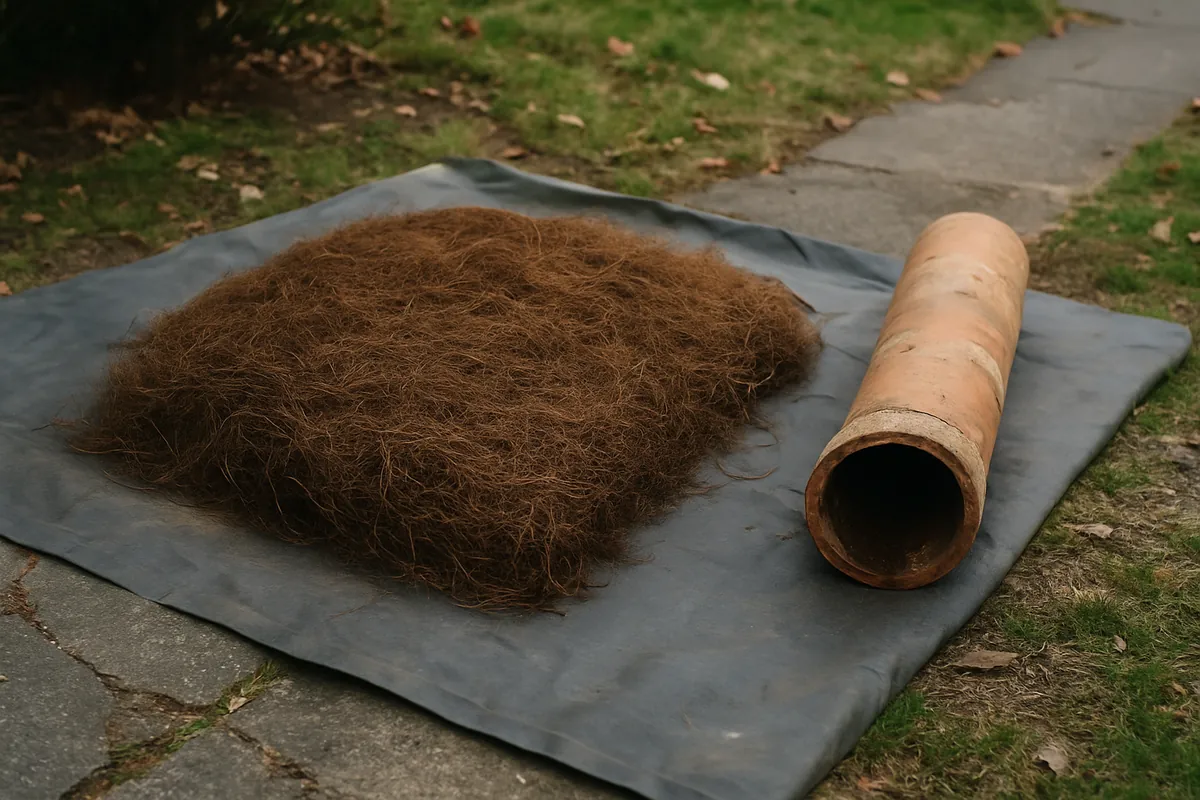
The Tappan Zee Bridge opened in 1955 and the tract build-out that followed put clay tile and Orangeburg laterals under most of central Rockland through the early 1970s. Clay fails at the joints, and mature street trees find those joints, which is why tree root removal is the most common first call in neighborhoods with sixty-year-old maples over the curb strip.
Orangeburg is the harder case. The bituminized wood fiber pipe was manufactured in Orangeburg NY, about ten miles from New City, and it does not crack so much as delaminate and squash out of round. A lateral that has gone oval is no longer a candidate for lining and has to be replaced.
Freeze-thaw cycling works on all of it. Ground that heaves and settles every winter moves shallow pipe, opens joints a little further each season, and eventually turns a tolerable offset into a catch point.
Older river villages are a separate category. Haverstraw, Nyack, Piermont and Tappan carry pre-1940 and nineteenth century housing on laterals that have been patched by multiple owners across a century, often with mismatched materials at each repair.
What Snaking Does and Does Not Tell You
A cable clears a path. It does not tell you what it went through.
What it can tell you, indirectly, is worth noting. If the operator pulls back a head packed with fine white root hair, that is a joint intrusion. If the cable stops hard at the same footage every visit, that is a fixed obstruction, an offset or a collapse, not moving debris. If the line clears easily but refills in weeks, there is standing water in a sag.
Those are hints. They are not a diagnosis, and no responsible quote for repair or replacement should be written off them.
Which Symptoms Mean Call Today
Same day, without waiting:
- Sewage backing up into a tub, shower or floor drain
- Standing wastewater or wet, smelling ground in the yard
- Sewer odor inside the living space
- Any backup affecting the only bathroom in the house
That is emergency sewer repair territory, because all four involve either contact exposure or gas entering occupied space.
Urgent but schedulable within a week or two: repeat backups, multiple slow fixtures, gurgling, a green stripe, a damp slab. These are all telling you the pipe is degrading, and degradation does not reverse.
The Next Step Is a Camera in the Line
Every one of the seven signs above is a symptom. None of them names the defect, the material, the depth or the footage, and those four facts are what determine whether the fix is a spot repair at $1,500 to $4,000, a full lateral lining at $4,000 to $12,000, or a replacement at $6,000 to $15,000.
A sewer camera inspection runs $250 to $500 and is often credited against the work if you go ahead. It puts a self-leveling camera down the full run and a locating sonde over the top of it, so you finish with footage of the actual defect, a marked path across the yard, and a depth.
Ask to watch the screen. Ask for the footage counter reading at the defect. A recommendation made without that number is a guess, and guesses on sewer work get expensive in exactly one direction.
Related Rockland County Sewer Guides
Learn what a sewer camera inspection reveals, why tree roots enter older sewer lines, and which steps belong in a long-term sewer maintenance plan.
Common Questions
How do I know if it is a clog or a broken pipe?
Watch the interval. A grease or paper clog clears with a cable and stays clear for a long time. A structural problem returns, and the gap between visits gets shorter each time. Two clearings in one year on the same line is a pipe question, not a drain question, and only a camera answers it.
Is a gurgling toilet always a sewer line problem?
No. Gurgling means air is being pulled through the trap because the drain path is restricted somewhere downstream, and a blocked plumbing vent can do the same thing. What points at the lateral is gurgling in more than one fixture, or a toilet that burbles when the washing machine drains.
Why is the grass greener over my sewer line?
A crack or open joint leaks nutrient-rich wastewater into the soil around the pipe, and the grass directly above responds. A stripe of darker, faster-growing grass following the run from the house to the street, or a patch that stays soft in dry weather, is exfiltration until proven otherwise.
Who is responsible for the sewer lateral in Rockland County?
Rockland County Sewer District No. 1 maintains the mains in the street. The lateral running from the house out to the tap on that main is the homeowner's, including the tap connection itself. That means the cost of a failed lateral falls on the property owner, not the district.
Which of these symptoms means call today rather than next week?
Sewage backing up into a floor drain or tub, standing wastewater in the yard, and sewer odor inside the house are same-day items. The first two are a contact hazard, and odor indoors means gas is entering living space. Slow drains and a green stripe are urgent but they are not emergencies.