New City Trenchless treats Orangeburg pipe as a core Rockland County topic because of the local manufacturing history. The material was made in Orangeburg during the same decades the county was filling in with new houses. If a home was built between 1945 and 1972, a camera inspection can determine whether its lateral is fiber pipe rather than clay, cast iron or plastic.
That matters because the material has a service life, it is now past it, and it is the one common sewer pipe that cannot be rehabilitated in place once it deforms. Knowing whether it is under your lawn changes what you should do about a slow drain.
The Factory Was Ten Miles Down the Road
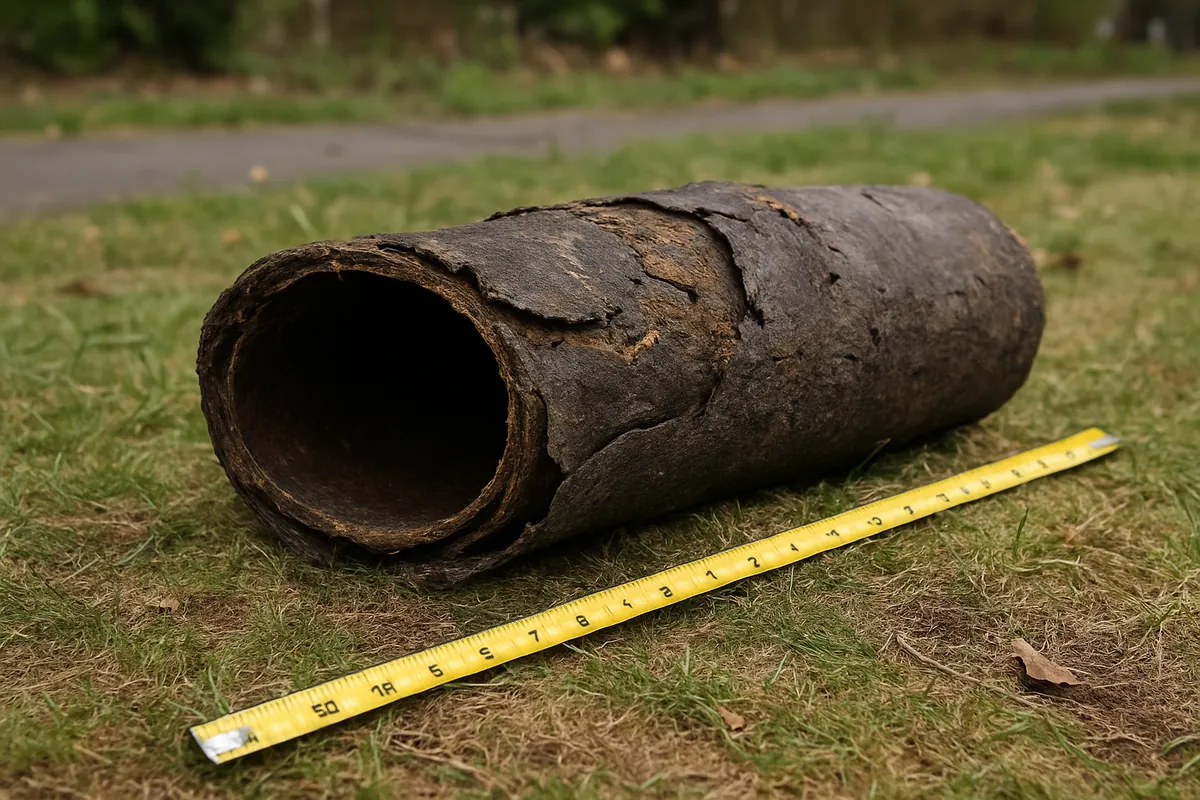
Orangeburg pipe is bituminized fiber conduit: wood pulp layers wound into a tube and saturated with coal tar pitch. It was made by the Fibre Conduit Company in Orangeburg, NY, which renamed itself Orangeburg Manufacturing in 1948 after the product that had taken over its business.
Its appeal was practical. Iron and steel were rationed during the war and stayed expensive after it, and fiber conduit was light enough that two people could carry a length across a muddy lot and cut it with a handsaw. It also came in long sections, so a lateral had far fewer joints than the two foot clay tile it replaced. For a builder putting up forty houses on a former orchard, that was the whole argument.
Production ended in the early 1970s when SDR-35 PVC arrived cheaper and stiffer. The material is now obsolete enough that current pipe standards from bodies like ASTM no longer carry it, but obsolete does not mean gone. It is gone from catalogs, not from the ground.
Why Rockland Got More Than Its Share
The Tappan Zee Bridge opened in 1955 and turned Rockland from farmland into commuter country almost overnight. Capes, ranches and split levels went up in volume across Bardonia, Nanuet, West Nyack, Congers and Valley Cottage through the late 1950s and 1960s, which is the precise middle of the Orangeburg window.
Builders bought local because hauling was expensive, and the plant was minutes from the job sites. So Rockland did not just get some Orangeburg the way every American suburb did. It got the hometown product at peak output during the exact years its housing stock was built. Working in Orangeburg itself means running cameras through the factory’s own pipe under the factory’s own hamlet.
The river villages are a different case
Nyack, Piermont, Haverstraw and Tappan carry pre-1940 and nineteenth century housing, which sits on older material entirely: vitrified clay tile in short sections, sometimes with brick or iron near the house. Those houses missed the Orangeburg window on the front end. Many of them caught it anyway, because a lateral that failed in 1961 got replaced with whatever was cheapest on the truck that week. Age alone does not rule fiber pipe out.
How Orangeburg Actually Fails
The material does not crack the way clay does or corrode the way iron does. It loses its shape and then loses its wall.
Ovalizing
Soil load presses down on a pipe every day of its life. Clay and iron have the ring stiffness to ignore it. Fiber conduit does not, so the round bore slowly squeezes into an oval, flattened top to bottom. That deformation steals flow capacity long before anything visibly breaks, and it is why an Orangeburg lateral can back up without a single crack in it.
Delamination and blistering
Moisture wicks between the wound pulp layers and separates them. The inner layers lift away from the wall and blister inward, hanging into the flow as loose flaps that catch paper, grease and anything fibrous. Each blister becomes a snag point, and snag points become blockages.
Tearing under the auger
This is the part that costs homeowners the most money. A drain auger run through a softened fiber pipe does not clear it, it shreds it. The head tears the blistered wall open and widens the defect it was called to clear. That is why the first snaking buys a year, the next buys six months, and the last one buys a month.
What You Notice Above Ground
| What you see | What it usually means |
|---|---|
| Backups that return faster after each cleaning | Wall damage from the auger, characteristic of fiber pipe |
| Black fibrous material on the auger head | The pipe itself, not a clog |
| A soft or sunken stripe across the lawn | Soil migrating into a deformed or split line |
| A green, faster growing band of grass on that same line | Leaking effluent feeding the root zone |
| Gurgling from a basement floor drain when an upstairs fixture runs | Reduced cross section, common once the bore ovalizes |
| Roots pulled out of a line in a house with no joints every two feet | Entry through delaminated seams and fiber couplings |
None of these prove Orangeburg on their own. Two or three together in a house inside the build window make it the leading candidate.
Why a Deformed Line Cannot Be Lined
Cured in place lining is the right answer for a huge share of Rockland laterals. Clay tile and cast iron both keep their shape while they fail, so the old pipe works as a mold and the new liner cures into a continuous jointless tube inside it. That is the whole basis of trenchless pipe lining, and on the right host pipe it is excellent.
Orangeburg fails that test twice.
First, a liner cured inside an ovalized bore locks the reduced cross section in permanently. You would pay for a rehabilitation that preserves the exact defect causing the backups.
Second, resin needs a sound surface to bond to. A blistered fiber wall cannot be cleaned back to one. Jetting pressures that routinely strip scale out of cast iron will cut through softened fiber and blow out the wall. A sectional spot repair hits the same problem at smaller scale.
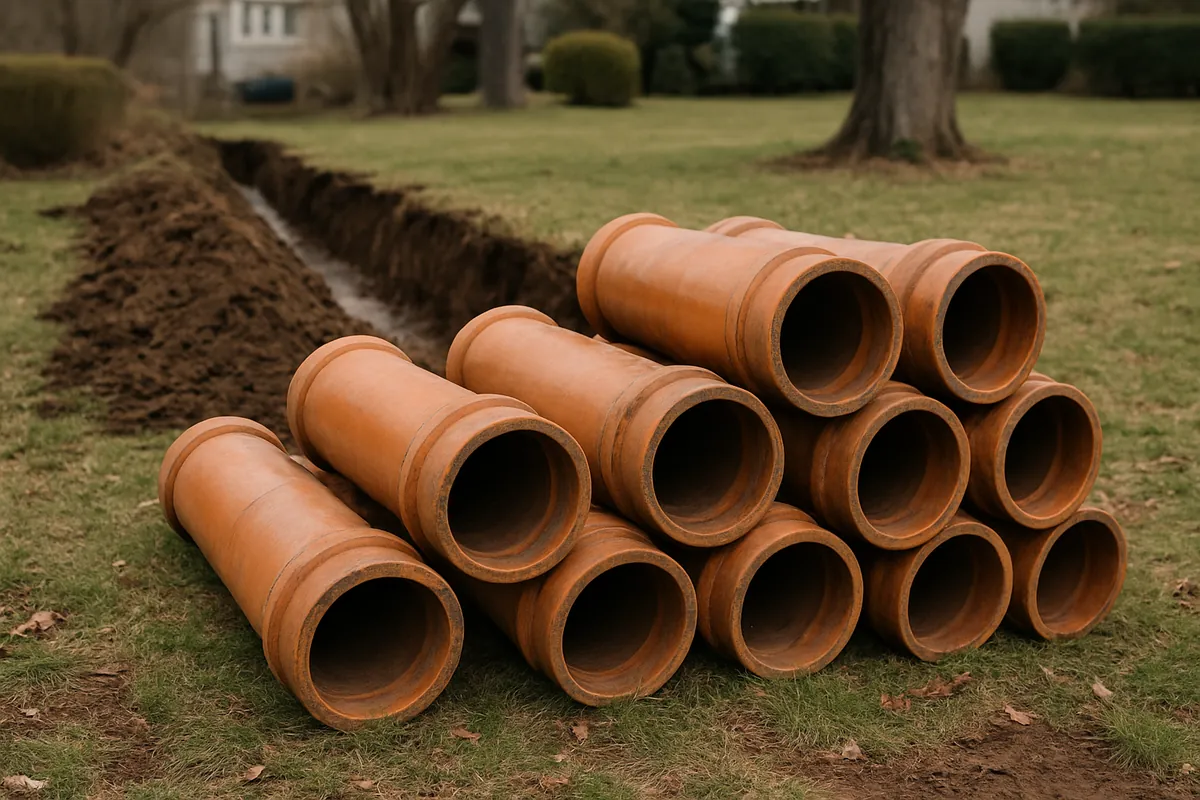
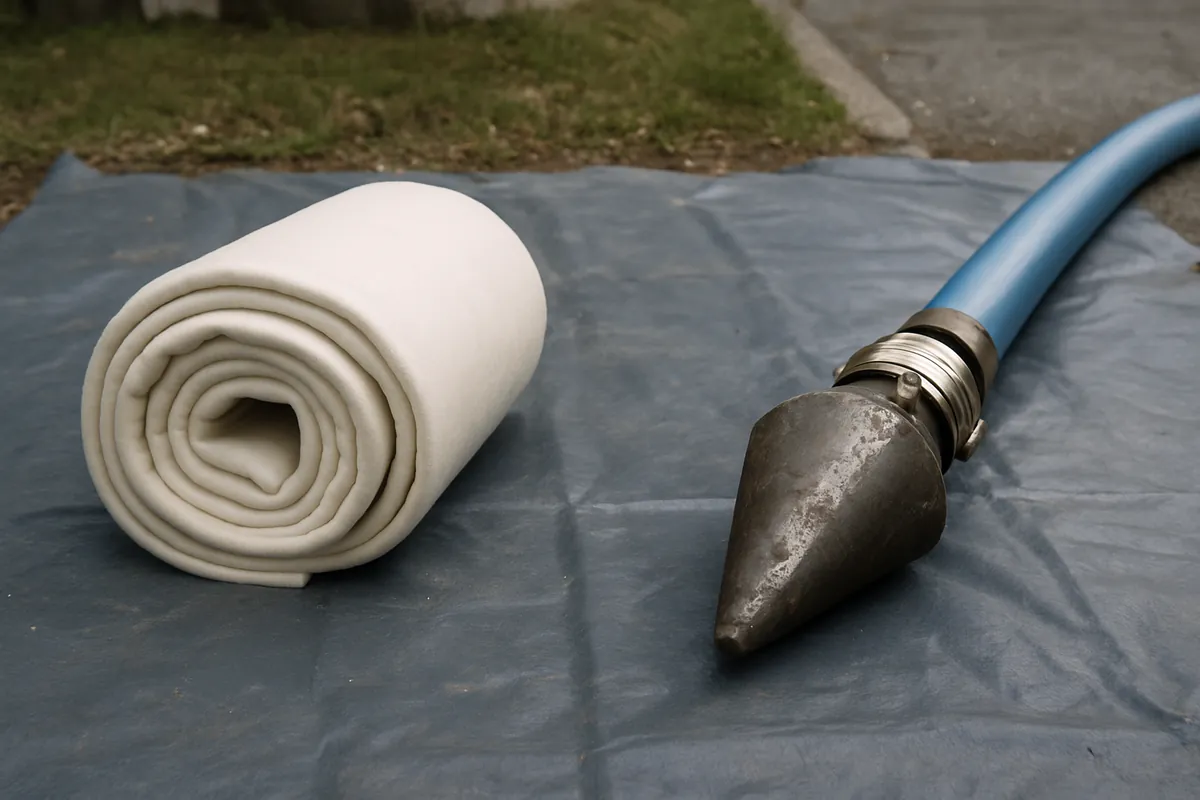
So when the camera shows real deformation, rehabilitation is off the table and replacement is the only honest option. In practice that means pipe bursting, which splits the old fiber outward into the soil while towing fused HDPE in behind the head, from two small pits instead of a trench across the yard.
Build Date Plus a Camera Pass Settles It
Deeds and building records almost never name the sewer material, so the sequence is simple.
Start with the build year. County and municipal property records give it, and if you want the wider picture on housing age in your area the American Community Survey publishes year structure built by tract. Inside 1945 to 1972, treat fiber pipe as a live possibility. After 1972, it is very unlikely.
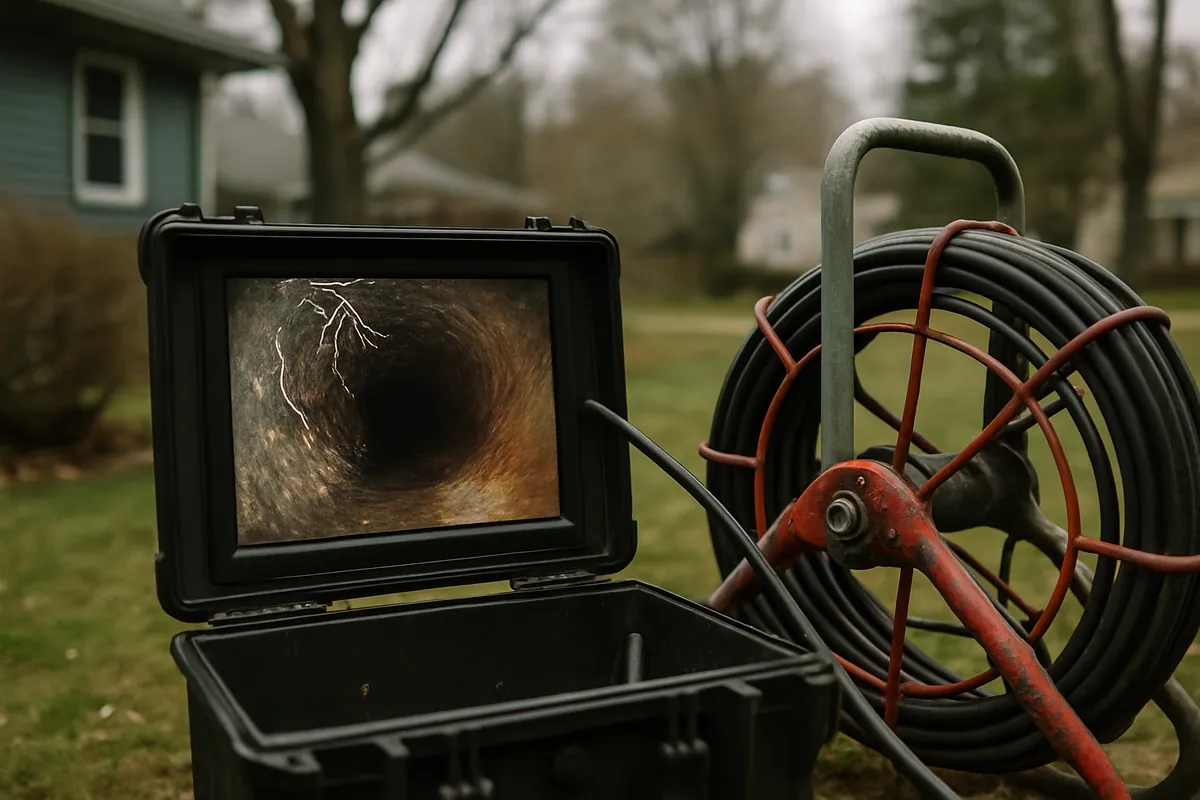
Then run the camera. A sewer camera inspection is the only thing that converts a probability into a fact, and it costs $250 to $500, often credited against the work. The same pass locates the line and its depth with a sonde, which is what determines where the bursting pits go and whether the run passes under a driveway, a patio or a mature oak.
If you are buying a house in the window, do this before closing rather than after. A pre-purchase sewer inspection is the cheapest hour in the whole transaction.
What Replacement Costs
| Work | Range |
|---|---|
| Camera inspection and locate | $250 to $500, often credited |
| Sectional spot repair | $1,500 to $4,000 |
| Full lateral lining, where the host pipe allows it | $4,000 to $12,000 |
| Pipe bursting replacement | $6,000 to $15,000 |
| Open cut replacement of the same run | Often 1.5x to 2x the trenchless price |
The open cut multiplier is not a sales line, it is excavation, spoil hauling, backfill compaction and then rebuilding whatever was on top: lawn, asphalt, pavers, plantings. On a Rockland lot with a mature street tree over the line and a paved drive above it, that restoration bill is frequently larger than the pipe work.
Depth is the other driver. Laterals here sit below the frost line, and freeze thaw cycling keeps working all winter on a pipe already out of round. In the low lying river villages the water table is higher, so a failing lateral takes on groundwater, which EPA wastewater programs treat as a system wide problem.
Who Owns the Pipe
The lateral from your house to the tap at the main is yours, usually including the section under the street. Rockland County Sewer District No. 1 maintains the mains, not your service line. A defect on your side is your bill, which is why locating it comes before quoting it.
Your Next Step
If your house was built between 1945 and 1972 anywhere in Rockland, and drains are slowing or a cleaning did not hold, get a camera down the line before you spend anything else. It costs $250 to $500, it is usually credited against the work, and it answers three questions in one visit: what the pipe is made of, where the defect is, and how deep the run sits.
That footage is what turns a guess into a plan. Ask for a copy of it, whatever you decide to do next.
Related Rockland County Sewer Guides
Compare Orangeburg with postwar clay tile sewer pipe, review the signs that a sewer line is failing, and understand how Hudson Valley winters affect older laterals.
Common Questions
What years was Orangeburg pipe installed in Rockland County?
Roughly 1945 to 1972. Wartime iron shortages pushed builders toward bituminized fiber conduit, and it stayed the cheap default through the postwar subdivision boom. Production wound down in the early 1970s once SDR-35 PVC took the market. A Rockland house built after 1972 is almost certainly not draining through Orangeburg.
Can you tell it is Orangeburg without digging?
Yes. A camera pass identifies it on sight. Orangeburg reads as a matte black wall with long jointless runs between tapered fiber couplings, usually with some egg-shaped flattening at the top. The inspection runs $250 to $500 and is often credited against the repair, and it gives you footage rather than an opinion.
Why can Orangeburg not be lined like clay or cast iron?
Lining needs a host pipe that still holds a roughly round shape to act as a mold. A liner cured inside an ovalized bore permanently locks in the reduced cross section. Blistered fiber also cannot be cleaned back to a sound surface for resin to bond, because jetting pressures that descale iron will cut straight through softened fiber.
How much does it cost to replace an Orangeburg lateral?
Pipe bursting replacement runs $6,000 to $15,000 depending on run length, depth and pit access. Open cut replacement of the same line often lands at 1.5x to 2x that once excavation, hauling and landscape repair are counted, which matters on Rockland lots with mature street trees and paved driveways over the pipe path.
Is snaking a safe way to clear an Orangeburg backup?
No. The auger head tears the softened fiber wall open and pulls loose material inward, which is why the same blockage returns faster each time. If a camera confirms fiber pipe, repeat cleanings are money spent on a line that is already failing. Put it toward replacement instead.