New City Trenchless explains why sewer problems often surface in two winter windows: the week after a hard freeze and the days around the holidays. In many cases the cold did not break a sound pipe. It exposed a defect that warmer conditions had masked.
That distinction matters. Treat a January backup as a weather event and you clear it and move on. Treat it as the moment a marginal lateral ran out of margin and you fix it once.
Cold Does Not Break Good Pipe
Wastewater leaves a house warm. A sound lateral running at proper fall carries that warm water out to the main and drains empty behind it, so there is nothing standing in the pipe for the cold to work on. That is why a healthy line in the Lower Hudson Valley gets through a January without noticing it.
Everything below is about lines that are not sound: sags holding water, joints already offset, roots already in, shallow runs already close to the frost zone. Winter is a stress test, and the pipes that fail it were going to fail anyway.
Freeze-Thaw and Ground Movement on Shallow Laterals
The Lower Hudson Valley cycles above and below freezing repeatedly through the season rather than freezing once and staying frozen. The National Weather Service office covering the region tracks that pattern, and it is the mechanism that does the real damage.
Water in soil expands when it freezes and lifts the ground with it. When it thaws, the ground settles back, but not always to exactly where it was. Repeat that fifteen or twenty times a season across sixty seasons and shallow buried pipe gets worked.
On a rigid, jointed material this shows up as movement at the joints. A clay tile lateral in a 1950s tract neighborhood has a joint every two to three feet, and each one is a hinge. Heave lifts one section slightly, settlement drops the next, and the offset that used to be a millimeter becomes a lip that catches paper.
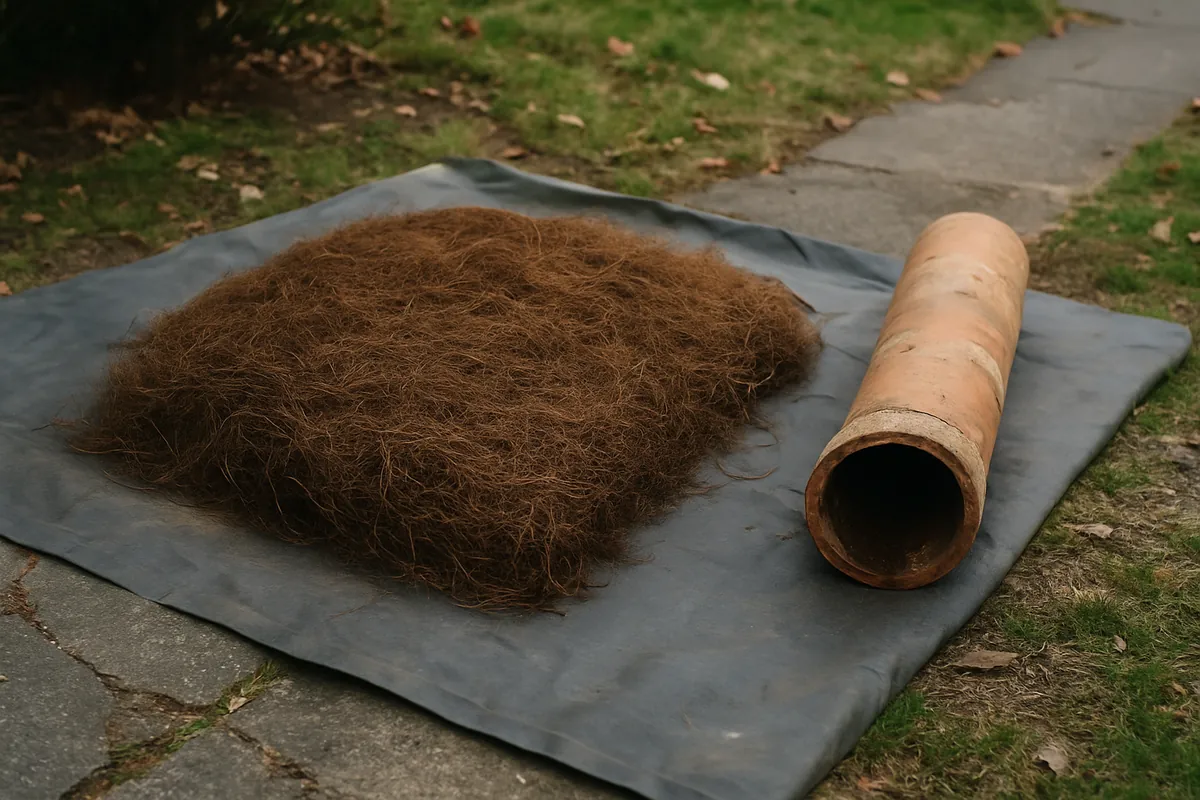
Orangeburg behaves differently and worse. The bituminized wood fiber pipe made in Orangeburg NY, roughly ten miles from New City, and laid across Rockland from 1945 into the early 1970s, deforms rather than cracks. Ground pressure cycling squeezes it further out of round each year, and once it has ovaled past a certain point it cannot be lined at all, which is why Orangeburg pipe replacement is a replacement job and not a repair job.
The runs most affected are the shallow ones: pipe laid high to clear a boulder, and laterals crossing a slope where cover was always thin at the top of the run.
Frost Depth Governs What Excavation Costs
Frost depth is how far down the ground is frozen solid, and it governs everything about winter excavation. Frozen ground does not dig like soil, it breaks like rock. An open-cut trench in February means breaking a frozen crust across the full length of the run before reaching workable soil underneath.
Three things follow from that.
Time goes up. More equipment, more passes, more hours on site.
Backfill quality goes down. Frozen chunks of excavated soil do not compact. They go back into the trench with voids between them, and when spring thaw arrives the trench settles unevenly. That settlement is exactly what puts a sag in new pipe and undermines the driveway or walkway above it.
Restoration is deferred. Nobody lays sod or repours a walkway apron in frozen ground, so the visible damage sits open across your property until spring.
None of this applies to a lined pipe, and it applies to only two small pits on a burst. That is the single strongest argument for trenchless in winter, and it is a practical one rather than a marketing one.
Worth knowing where the responsibility sits. Rockland County maintains the mains through Sewer District No. 1, but the lateral from your foundation to the tap is the homeowner’s, frozen ground and all.
Why Grease Congeals Faster in a Cold Run
Fats, oils and grease leave the kitchen liquid and solidify as they cool. In summer, a lateral surrounded by warm soil gives that mixture a long way to travel before it thickens enough to stick.
In January the ground around the pipe is cold. Wastewater loses heat far faster along the run, so grease reaches its congealing point earlier and deposits on the pipe wall closer to the house. Deposit enough of it and you have narrowed a 4 inch pipe to something considerably less, permanently, until it is cut back out.
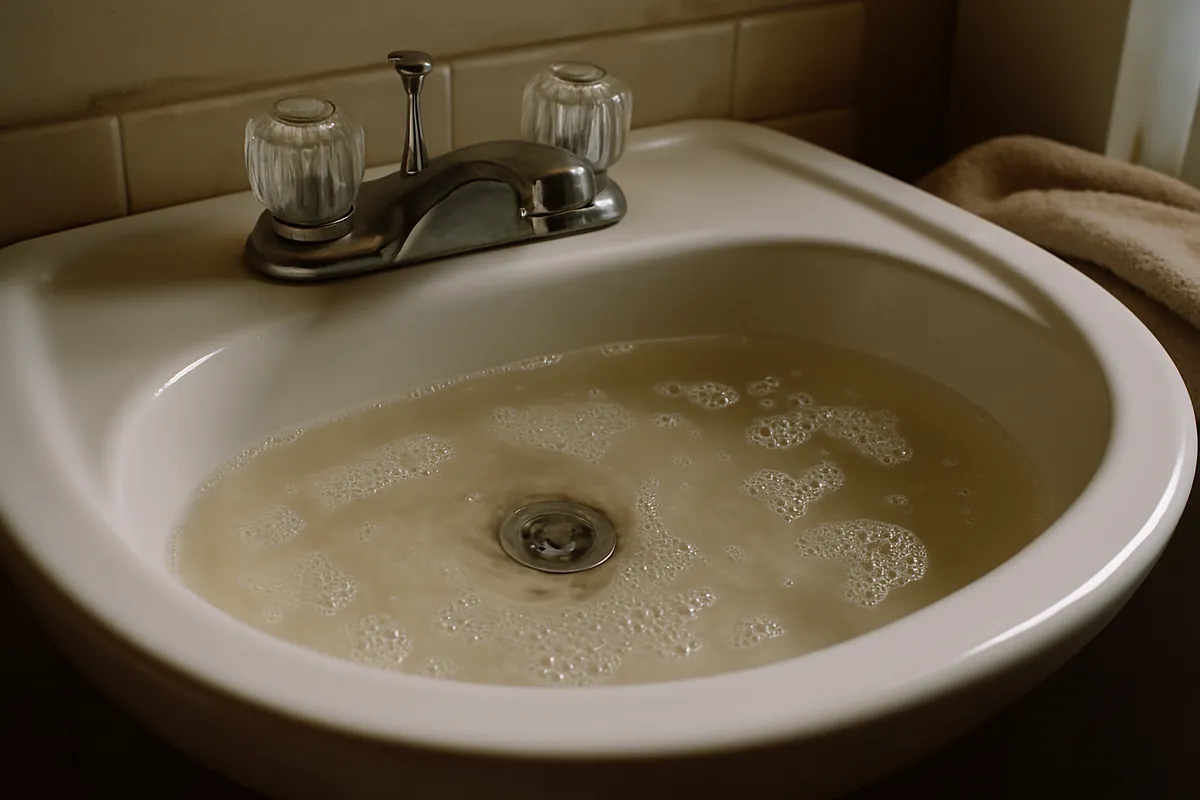
Where the line already has a defect this accelerates hard. A root mass gives grease something to catch on, and a sag holds cool standing water that pulls heat out of everything passing through. Both become collection points, which is why hydro jetting restores the full bore where a cable only punches a channel through the deposit.
Holiday Fixture Load Is a Real Load
A four-person household running normally puts a predictable volume through the lateral. A house hosting twelve people for three days does not.
More showers back to back, dishwasher cycles running consecutively, roasting pans scraped into the sink, extra laundry, and a garbage disposal handling volumes it was never sized for. A marginal lateral that copes with baseline flow has no headroom left for that, and this is exactly why late December is a peak week for backup calls across the county.
It is also the worst possible timing. Emergency work over a holiday costs more, and the decision gets made under pressure instead of with a camera survey and two written quotes.
Frozen Cleanout Caps and Frozen Access
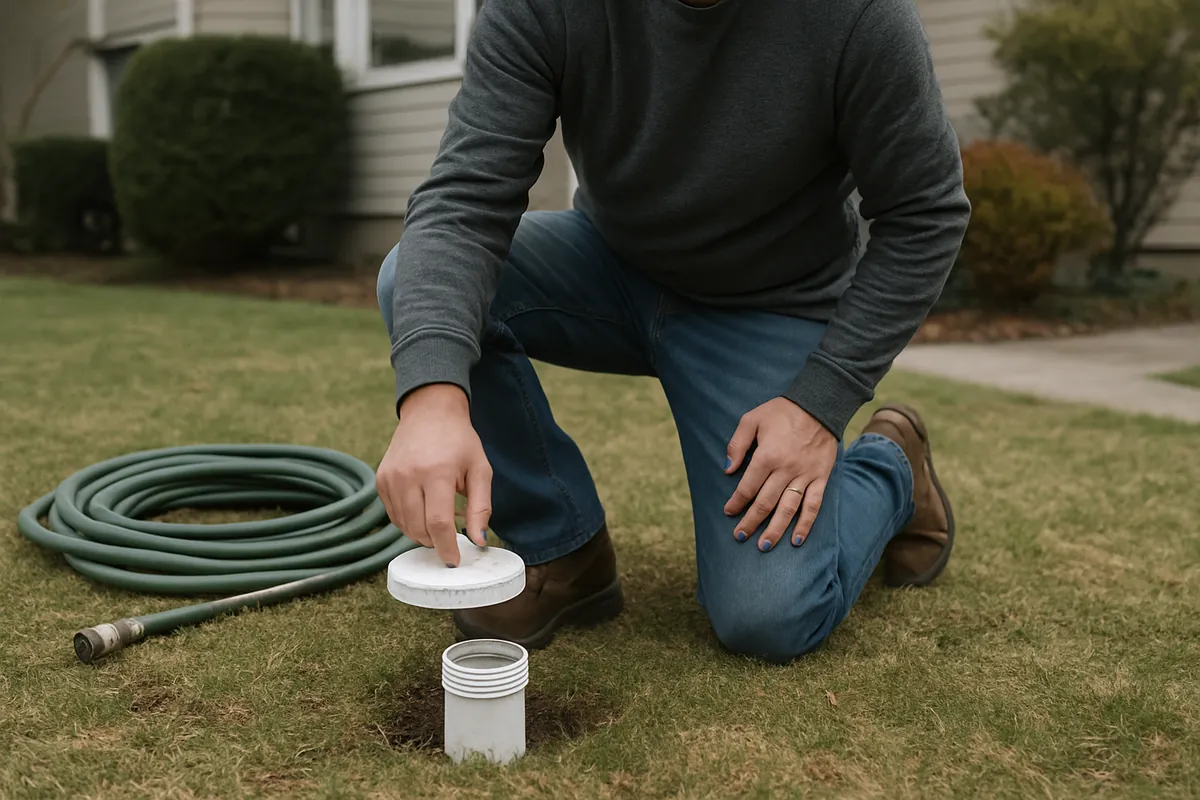
The cleanout is how anyone gets into your line without coming through a toilet. In winter it is routinely the thing that turns a one-hour job into a three-hour job.
Common problems, all avoidable in October:
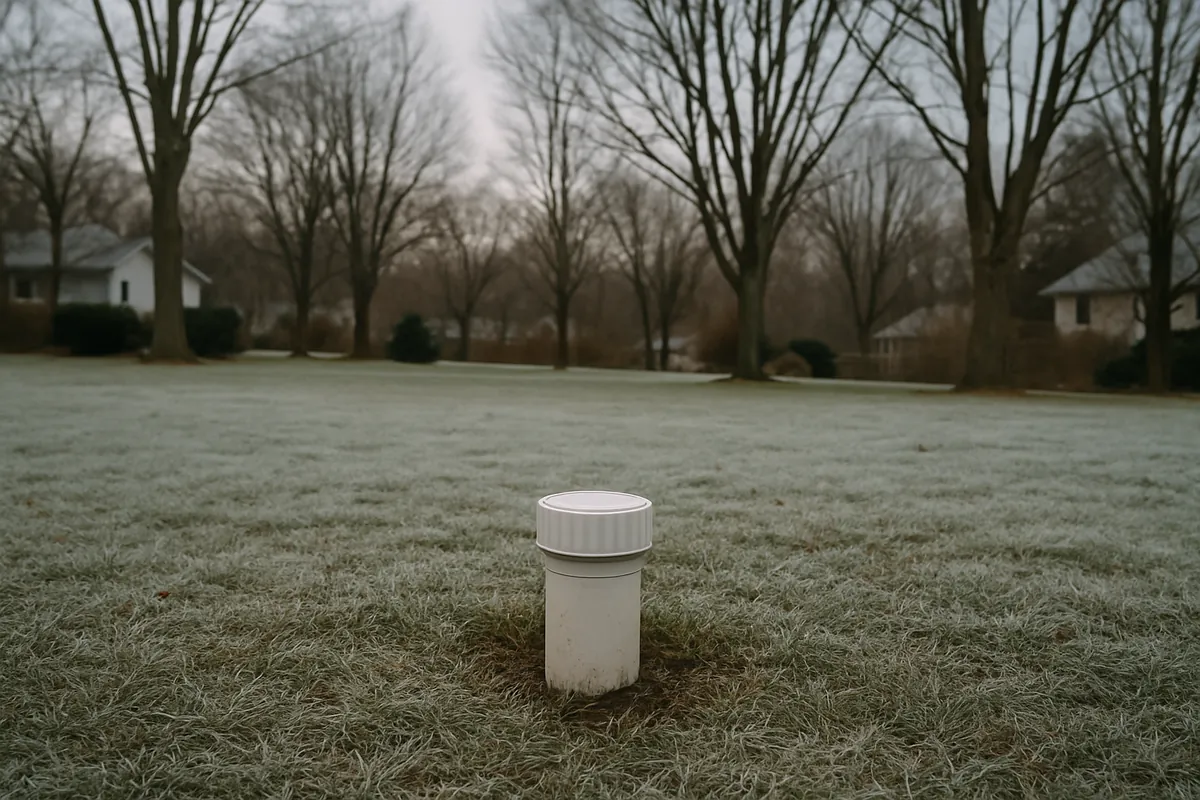
- The cap is buried under snow and nobody knows where it is
- The riser filled with water, froze, and the cap will not turn
- There is no exterior cleanout at all, so access comes through the basement
Find yours before the ground hardens and mark it with a stake tall enough to show above snow. If there is no exterior cleanout, adding a two-way cleanout is standard work while an access pit is already open.
Winter Symptoms and What They Usually Mean
| What happens in winter | Likely cause | What it points to |
|---|---|---|
| Backup after a hard freeze | Standing water in a sag froze | Bellied or back-pitched line |
| Backups only during hosting weekends | Reduced capacity, no headroom | Root intrusion or grease buildup |
| Slow drains that improve in a thaw | Ice in a shallow or exposed section | Insufficient cover or a failed cleanout riser |
| Odor in the yard over melting snow | Wastewater reaching soil | Cracked or offset pipe |
| Line surcharges during a January thaw | Groundwater infiltration | Open joints, high water table |
| Recurring backup that started in fall | Defect that cold made worse | Structural failure, not a clog |
Why Trenchless Matters More in Winter
The gap between trenchless and open cut widens in cold weather, and it widens in the customer’s favor.
An open-cut replacement in July is a trench, a few days, and reseeding. The same job in January is frozen ground, heavier equipment, poor backfill compaction, a destroyed lawn that cannot be restored until April, and settlement to deal with when the thaw comes.
Pipe bursting confines all of that to two pits. The rest of the run stays under undisturbed frozen ground, which is inconvenient to dig and perfectly fine to leave alone. Lining avoids excavation almost entirely.
Cold does affect one thing genuinely: cure time. Resin sets more slowly against cold pipe and cold soil, so hot water or steam cure gets used where ambient cure would be fine in summer. That is a scheduling adjustment, not an obstacle.
Groundwater is the other winter variable. The low ground around Congers carries a high water table and January thaw events push it higher, as USGS groundwater monitoring tracks. A trench in saturated soil needs dewatering pumps running continuously, while an access pit can be pumped and closed the same day. In the older stock up in Stony Point, where some laterals predate 1940, that saturated ground has been washing bedding fines out through open joints for decades.
What to Do Before the First Hard Freeze
Three things, none of which require a contractor on site.
- Find and clear the cleanout. Stake it so it is visible above snow.
- Keep grease out. Wipe pans into the trash, not the sink, and run hot water after washing up. This matters more from November to March than at any other time.
- Deal with anything that has already backed up this year. A line that needed snaking once in 2026 is a line with a defect, and winter is when defects stop being tolerable.
That third item is the one that saves money. A sewer camera inspection runs $250 to $500 and is often credited against the work if you proceed. It puts a camera through the full run and a locating sonde over the top, so you finish with the defect on video, the footage where it sits, the material, and the depth marked across the yard.
Book that in the fall and a repair is a planned job with quotes to compare. Discover the same defect on December 26 and it is an emergency, at emergency pricing, in frozen ground, with guests in the house.
Related Rockland County Sewer Guides
Follow the Rockland County sewer maintenance guide, recognize the signs that a sewer line is failing, and see what a camera inspection records inside the pipe.
Common Questions
Can a sewer line actually freeze?
A working lateral rarely freezes solid, because wastewater leaves the house warm and moves through. What freezes is a line that is already failing: a sag holding standing water, a shallow section under a driveway that gets plowed clear of insulating snow, or an exposed cleanout riser. Freezing is a symptom of a defect, not usually the cause.
Why does frost depth matter for sewer work?
Frost depth sets how deep the ground is frozen solid, and frozen ground has to be broken before an excavator reaches undisturbed soil. That slows every open-cut job, adds equipment, and means backfill goes in with frozen chunks that settle unevenly once spring thaw arrives. Trenchless work confines that problem to two small pits or avoids it entirely.
Is grease worse in winter?
Yes. Fats and oils congeal at temperatures they stay liquid at in summer, and a lateral running under cold ground cools wastewater faster along its length. Add holiday cooking and a house full of guests and you get more grease entering a line that is less able to carry it. This is the classic late-December backup.
Should I wait until spring to repair a sewer line?
If it is leaking or backing up, no. Waiting means months of wastewater saturating the soil around your foundation while freeze-thaw keeps working the defect open. Trenchless methods work through the winter because they do not need a full-length trench. The one thing cold genuinely affects is liner cure time, which is a scheduling detail rather than a barrier.
What should I do before the first hard freeze?
Locate your cleanout and clear a path to it, so nobody is chipping ice off a buried cap during a backup. Keep grease out of the drains. If the line was snaked in the last year, get it camera inspected before the holidays rather than after, because a defect found in October is a scheduled job and the same defect found on December 26 is an emergency.