New City Trenchless explains why a Rockland County sewer lateral project must account for permits as well as pipe condition. This guide covers the general shape of the process. It is not a substitute for calling the relevant building department because municipal rules and procedures can change.
Why Lateral Work Is Permitted Work
A sewer lateral is not landscaping. It is a sanitary drainage line carrying wastewater under pressure of gravity and grade, connected to a public collection system, buried below frost depth, and installed to a code that specifies material, slope, bedding, cleanout placement and connection method.
New York regulates that work through the Uniform Fire Prevention and Building Code, administered statewide by the Department of State and enforced locally by each town or village building department. Plumbing work on the building sewer falls inside the plumbing provisions of that code, which is why a repair that never leaves your own front yard still goes through a permit and an inspection.
The public interest is real. A badly connected or badly graded lateral pushes groundwater into the collection system and sewage into the ground, which is the infiltration and exfiltration problem the EPA treats as a system level issue rather than a private one.
Who Owns What
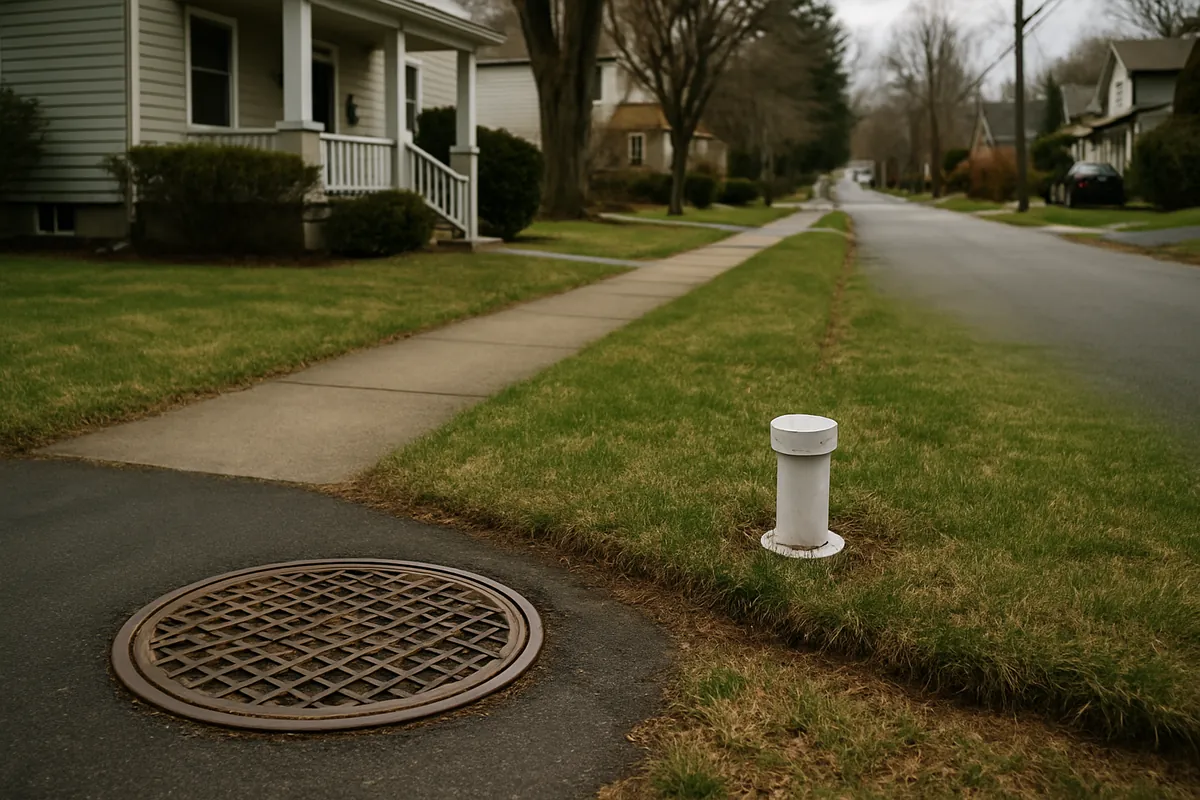
Rockland County Sewer District No. 1 maintains the mains and the treatment side. The lateral, meaning the pipe from the house to the point where it ties into the district’s main, is the homeowner’s line and the homeowner’s cost, which makes sewer line repair and replacement a private job carried out under public oversight. General county information sits at rocklandgov.com.
That boundary is the practical reason permits exist for private work. You own the pipe, but where it connects and how it performs affects a public system, so the municipality inspects it.
The General Shape of the Process
Across Clarkstown, Orangetown, Ramapo, Haverstraw and Stony Point, the sequence usually looks the same even when the forms do not.
1. Identify the right counter
New City, Nanuet, Bardonia, Congers, Valley Cottage and West Nyack sit in Clarkstown, whose building department information is at town.clarkstown.ny.us. Pearl River, Orangeburg, Blauvelt and Tappan sit in Orangetown. Monsey and the Ramapo hamlets go to Ramapo.
The important exception is villages. Suffern, Spring Valley, Nyack, Upper Nyack, Piermont and Haverstraw are incorporated villages with their own building departments, so a homeowner inside village lines files with the village, not the town. Getting this wrong is the most common way a start date slips.
2. The applicant is usually the contractor
Most departments require the permit applicant to be a plumbing contractor licensed or registered with that municipality. The homeowner signs as property owner. Ask any bidder to state in writing that the permit and inspections are inside the quoted price.
3. Scope documentation
Departments generally want to know what is being done and where. That means a description of the work, the pipe material and diameter going in, the connection method, and a sketch or survey showing the run and the property line. A recorded sewer camera inspection with a located depth makes this part fast, because the scope is already documented before anyone fills in a form.
4. Utility locates
Independent of any permit, underground utilities have to be marked before excavation in New York. That is a statutory call, not an optional courtesy, and it applies to a two foot access pit exactly as it applies to a full trench.
Road Opening Permits
Once the work crosses the property line into the public right of way, a second permit usually enters the picture, issued by the highway department rather than the building department.
A road opening or street opening permit typically covers any cut, excavation or bore in the roadway, shoulder, sidewalk area or verge. It commonly carries a restoration standard, a bond or deposit held against the quality of the patch, and traffic control conditions. County roads, town roads and state routes are administered by different authorities, so a lateral crossing under a county road may involve a different office than one under a town street.
This is the single largest variable in a sewer job’s paperwork, and it is decided by one fact: how close to the main the work has to reach.
Inspection and Sign-Off
Permitted plumbing work is inspected. In broad terms, an inspector wants to see the connection and the new pipe before it is covered, which means the contractor calls for inspection while the pit is still open and does not backfill until it has been passed.
The paper trail matters later. A closed out permit with a passed inspection is what a buyer’s attorney or home inspector looks for when your house sells, and an unclosed permit on a sewer replacement is a real complication at closing. Keep the final sign-off with your deed papers.
Why Trenchless Usually Means a Smaller Permit Footprint
Trenchless does not exempt anything. It changes the physical scope, and permit scope follows physical scope.
| Method | Ground disturbed | Right of way likely | Restoration obligation |
|---|---|---|---|
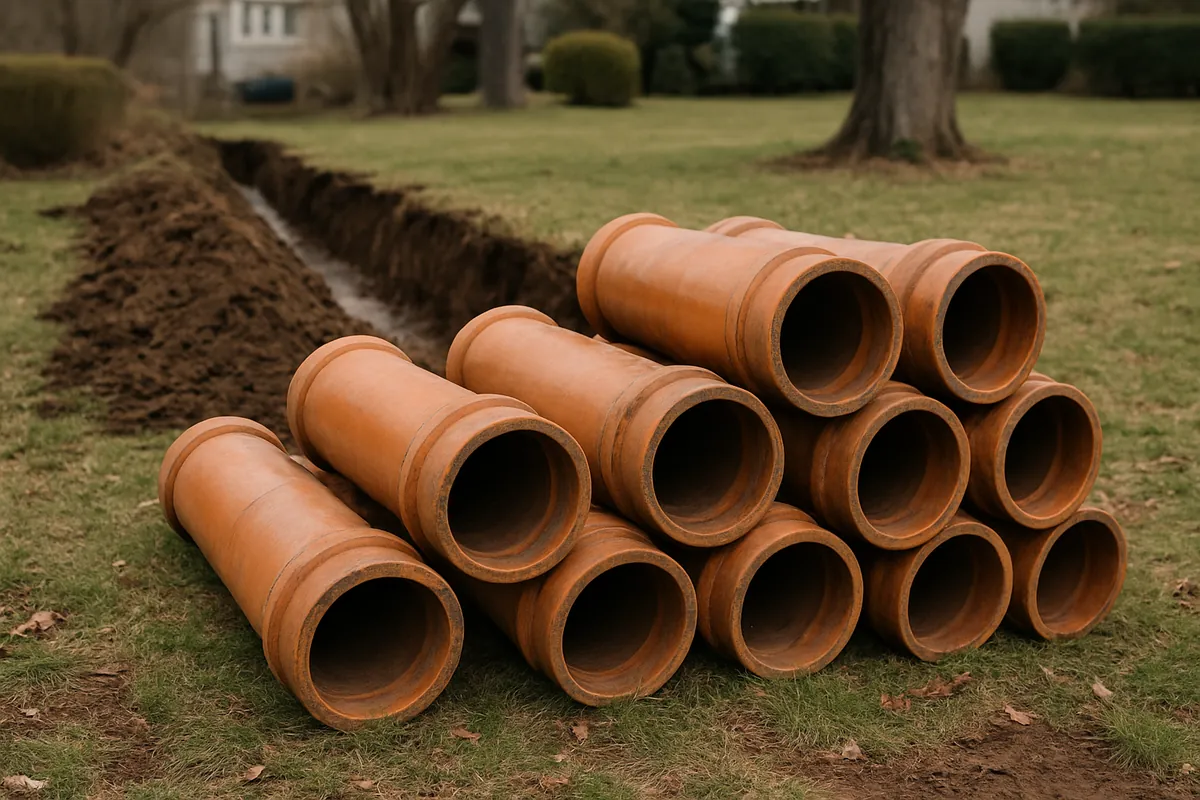
| Open cut replacement | Continuous trench the full run, often into the street | Frequently yes | Full trench restoration, pavement patch, landscape rebuild |
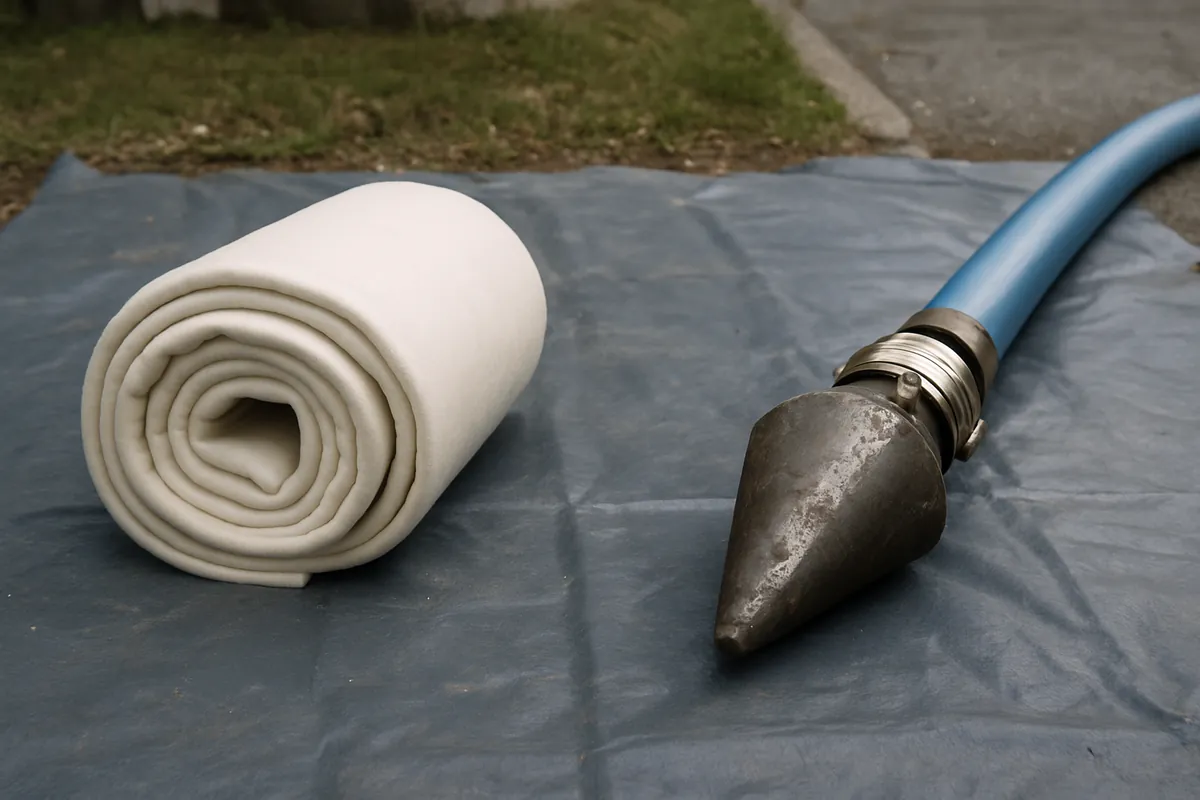
| Pipe bursting | Two access pits, one at the house, one at the tie-in | Only if the tie-in pit lands in the right of way | Two small patches |
| CIPP lining | Existing cleanout or one small pit, no new trench | Often avoidable entirely | Minimal to none |
| Spot repair | One localized excavation at the failed joint | Depends on where the defect sits | One patch |
The practical effect on a Rockland lot is that trenchless sewer replacement can often finish the work inside the property line, while the same job open cut runs a trench across the lawn, through the driveway apron and into the street. Restoration on a lined driveway or a mature front yard is frequently the largest single cost of an open cut job, which is part of why open cut lands at 1.5x to 2x the trenchless price once excavation and landscape repair are counted.
Winter adds another reason. Frost depth governs how deep trench work has to go and how hard the ground is to open, so a method that avoids a long trench in Suffern or up the Stony Point slope in February is not only cheaper, it is more likely to happen at all.
What Actually Delays Jobs
Not the permit itself, most of the time. The usual delays are avoidable:
- Filing with the town when the property is inside a village.
- No documented scope, so the department asks for detail that requires a camera run nobody has done yet.
- Discovering at the pit that the failed section sits under the street, which triggers a right of way permit mid-job.
- Assuming a bid includes permits and inspections when it does not.
A camera inspection and a sonde locate before anyone applies removes three of those four.
Confirm Locally, Always
Nothing here overrides your own municipality. Fees, forms, required documents, licensing and inspection scheduling are set by each town and village, and they are the only authority on their own process. Call the building department for the address in question, or have your contractor do it and report back, before work is scheduled.
Homeowners planning work in Pearl River go to Orangetown, homeowners a few miles north go to Clarkstown, and the answers are not always identical.
Your Next Step
Permits follow scope, and scope comes from the camera. A $250 to $500 camera inspection tells you the pipe material, the defect, the depth and how far the failure sits from the main, and that last number is what decides whether a road opening permit is in your future.
Get the line inspected first, then let the paperwork follow a defined job instead of a guess.
Related Rockland County Sewer Guides
Confirm who owns each part of the sewer lateral, review Rockland County sewer replacement costs, and understand the value of a pre-purchase sewer inspection.
Common Questions
Do I need a permit to replace my sewer lateral in Rockland County?
In practice, yes. Every Rockland town treats work on the building sewer as regulated plumbing work under the state code, so a permit and an inspection sign-off are expected even when the whole job sits on private property. The exact application, fee and required documents are set locally, so confirm with your own town or village building department before work starts.
Who pulls the permit, me or the contractor?
Normally the contractor doing the work. Most Rockland building departments want the applicant to be a plumbing contractor registered or licensed with that municipality, which means the homeowner signs as owner and the contractor files. Ask any bidder to confirm in writing that permits and inspections are included in the price rather than billed later as an extra.
What is a road opening permit and when do I need one?
It is a separate permit that covers cutting, excavating or boring within a public right of way. If the repair reaches the connection at the main under the street, or the pit lands in the road, shoulder or sidewalk area, the highway department issues it alongside the building permit. It usually carries its own bond or restoration deposit and its own restoration standard.
Does trenchless work still need a permit?
Yes. Trenchless changes the amount of excavation, not the legal status of the work. What it usually changes is the scope, because two small access pits inside the property line may avoid a full road opening where an open cut trench to the main would not. Confirm the requirement with your building department in every case.
How long does the permit step add to a sewer repair?
That is entirely local and depends on the department, the season and whether a right of way permit is stacked on top. Emergency work with an active backup is generally handled differently from planned replacement. The realistic move is to have the camera inspection done early so the scope is defined and the application is not waiting on a diagnosis.